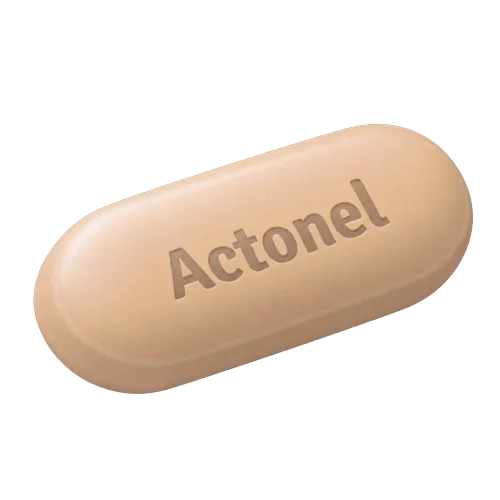
What it is used for
Clinicians prescribe Actonel mainly for postmenopausal osteoporosis, where declining oestrogen accelerates bone loss and raises fracture risk at the hip, spine, and wrist. It's also used to prevent osteoporosis in women who have risk factors but haven't yet fractured, and for Paget's disease of bone, a condition where bone turnover becomes disorganised and bones can thicken, weaken, or deform. Men with osteoporosis and patients on long-term corticosteroid therapy, which accelerates bone thinning, are sometimes prescribed risedronate as well.
If you've had a bone density scan (DEXA), bring the T-score to your prescriber's attention. Risedronate dosing decisions and monitoring intervals often reference that number directly.
Ingredients
Actonel tablets contain risedronate sodium as the active ingredient, a synthetic pyridinyl bisphosphonate. The drug class works by altering the bone remodeling cycle rather than masking symptoms. Risedronate sodium is the salt form of risedronic acid, the molecule that actually binds to bone tissue; pharmacists sometimes refer to the free acid and the sodium salt almost interchangeably, but the sodium salt is what's formulated into the tablet for oral absorption.
Active Ingredient Profile
The chemical name is risedronic acid, 1-hydroxy-2-(3-pyridinyl)ethylidene bisphosphonic acid, formulated as its monosodium salt for tablet manufacturing. This is a third-generation nitrogen-containing bisphosphonate, more potent at the cellular level than earlier agents like etidronate [1].
How it affects the body
Bone isn't static. It's constantly being broken down by cells called osteoclasts and rebuilt by cells called osteoblasts. In osteoporosis and Paget's disease, that balance tips toward breakdown, and bone becomes porous or structurally abnormal faster than the body can repair it.
Risedronic acid has a strong chemical attraction to hydroxyapatite, the mineral crystal that makes up the hard structure of bone. Once ingested, it travels to skeletal tissue and binds preferentially at sites of active bone turnover. Osteoclasts that then try to resorb this treated bone absorb the risedronic acid and essentially stop functioning. Disrupted energy metabolism inside the osteoclast triggers programmed cell death. Fewer active osteoclasts means less bone is broken down, so osteoblasts gain the upper hand and bone mineral density gradually improves over months.
This mechanism also explains why risedronate specifically prevents the formation of new hydroxyapatite crystal degradation sites — it interrupts the resorption process at its source rather than simply adding calcium to the blood. Clinical trials reviewed by EMA have shown measurable increases in lumbar spine and hip bone mineral density within the first year of continuous treatment [2].
How to use it
Risedronate is manufactured in several strengths and schedules to fit different patient routines and clinical needs.
The amount taken at each intake is set individually by the prescriber for each person rather than following one fixed universal number.
- Take the tablet first thing in the morning, at least 30 minutes before any food, drink (other than plain water), or other medication.
- Swallow it whole with a full glass of plain tap water. Mineral water, coffee, tea, and juice all reduce absorption.
- Stay fully upright — sitting or standing, not reclining — for at least 30 minutes after swallowing.
- Do not chew or suck the tablet.
Set a recurring morning alarm rather than relying on memory. Missing the 30-minute upright window even once in a while is the single most common reason patients report the tablet "not agreeing with them."
Lying down too soon is not a minor inconvenience. The tablet can lodge against the oesophageal lining and cause localised irritation or, in rare cases, ulceration severe enough to require medical review.
Comparison
Actonel is an oral tablet approach that works systemically by blocking cells responsible for breaking down bone. This differs from treatments delivered by other routes or approaches, while sharing the goal of slowing bone loss and reducing fracture risk.
When this is not for you
Actonel is not appropriate for everyone, and ruling out the wrong candidates matters as much as prescribing it to the right ones.
People with a history of oesophagitis, Barrett's oesophagus, or difficulty swallowing tablets in general should discuss alternatives, such as intravenous bisphosphonates, with their prescriber rather than attempting oral risedronate.
Possible side effects
| Category |
Examples |
Frequency |
| Common |
Abdominal pain, dyspepsia, diarrhoea, arthralgia |
Reported in clinical trials at rates above 1% |
| Less common |
Headache, rash, oesophagitis |
Occasional |
| Rare, serious |
Osteonecrosis of the jaw, atypical femur fracture, severe oesophageal reaction |
Very rare with oral dosing, more associated with long-term or high-dose use |
Arthralgia (joint pain) and musculoskeletal aches are among the most frequently reported complaints, usually manageable with standard analgesia and not typically a reason to stop treatment on their own. Gastrointestinal upset, including heartburn and abdominal discomfort, is the other common complaint and is often reduced by strict adherence to the administration protocol above.
Osteonecrosis of the jaw (ONJ) is rare but serious. It involves exposed, non-healing bone in the jaw, usually following dental extractions or oral surgery during bisphosphonate treatment. The MHRA recommends a dental check-up and completion of any necessary invasive dental work before starting long-term bisphosphonate therapy where possible [3]. Atypical femur fractures, unusual breaks in the thigh bone that occur with minimal trauma, have also been linked to prolonged bisphosphonate use, typically after several years of continuous treatment. These risks don't mean the drug is unsafe for most patients; they mean long-term use benefits from periodic reassessment rather than indefinite, unreviewed continuation.
Mention any planned dental surgery, including implants, to both your dentist and your prescriber before it's scheduled — not after. Some clinicians arrange a short treatment pause around major dental procedures.
What doctors say
In clinical practice, prescribers often see two very different patient trajectories with the same starting prescription. Patients who stick rigidly to the morning routine, plain water, upright posture, no food for 30 minutes, tend to report fewer gastrointestinal complaints and better adherence to the full course. Patients who treat the timing rules loosely often come back reporting heartburn or "it's not doing anything," when the real issue is technique rather than the drug itself.
Bone density improvements from risedronate aren't usually dramatic month to month. A DEXA scan repeated after one to two years is the standard way to confirm the treatment is working, since day-to-day symptoms rarely change. Clinicians following NICE and EMA guidance typically reassess the need for continued bisphosphonate therapy after three to five years, weighing ongoing fracture risk against the rare long-term risks like atypical femur fracture [4].