took the prescribed Cytotec schedule with an NSAID for several weeks: “The first few days brought loose stools and stomach cramps, especially after breakfast. Taking it with food helped, and the symptoms became easier to manage. I still needed the dose reviewed because the bowel effects did not disappear completely.”
Southampton Several weeks 30 Sept 2026
Cytotec
Misoprostol, the active ingredient of Cytotec, is a synthetic prostaglandin E1 analogue supplied as oral tablets. It is used under prescription to reduce the risk of NSAID-associated gastric ulcers…
Misoprostol, the active ingredient of Cytotec, is a synthetic prostaglandin E1 analogue supplied as oral tablets. It is used under prescription to reduce the risk of NSAID-associated gastric ulcers in adults at increased risk. Misoprostol acid lowers gastric acid secretion and strengthens protective mechanisms in the stomach.
Product information
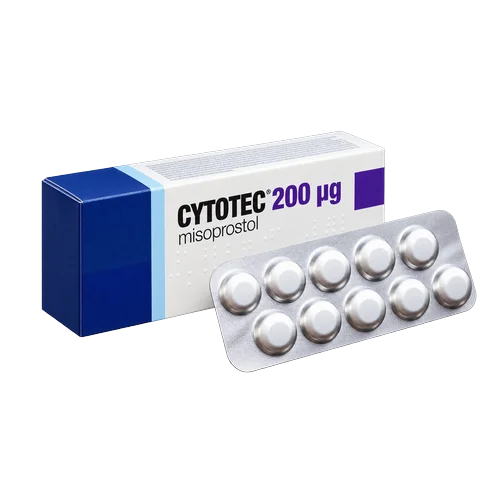
Cytotec contains misoprostol, a prostaglandin analogue related to naturally occurring protective prostaglandins in the stomach. The product is supplied as 200 microgram tablets for oral administration. Its licensed gastric use is the prevention of ulcers caused by non-steroidal anti-inflammatory drugs, including NSAIDs used for pain and inflammatory conditions.
What it is used for
Its licensed gastric use is the prevention of ulcers caused by non-steroidal anti-inflammatory drugs, including NSAIDs used for pain and inflammatory conditions.
Misoprostol is also used in obstetric and gynaecological care under specific clinical protocols. Its uterine effects can support cervical ripening, labour induction, management of miscarriage, and medical termination of pregnancy. These uses differ from the licensed gastric-ulcer indication for Cytotec tablets.
In reproductive healthcare, misoprostol may be used alone or sequentially with mifepristone, depending on the clinical situation and the applicable national protocol. The regimen, route, timing, follow-up, and emergency plan are determined by a trained clinical service.
WHO guidance describes misoprostol as an important medicine in reproductive healthcare while stressing regimen-specific clinical assessment and follow-up [4].
Ingredients
Active Ingredient and Pharmacological Class
The active ingredient is misoprostol. Its pharmacological class is synthetic prostaglandin E1 analogue.
Misoprostol acid has a short plasma half-life, so the prescribed regimen divides administration across the day rather than relying on one prolonged exposure. The gastrointestinal effect is useful for ulcer prevention, while the same prostaglandin activity can stimulate uterine contractions.
How it affects the body
After absorption, misoprostol is rapidly converted to misoprostol acid. This active metabolite binds to prostaglandin receptors in the gastric mucosa. It reduces basal and stimulated gastric acid secretion, supports bicarbonate and mucus production, and helps maintain blood flow within the stomach lining [1].
How to use it
Cytotec is supplied as 200 microgram tablets. The tablet is taken by mouth, and the amount per intake is set individually for each person rather than being one fixed number. The prescribing clinician selects the schedule according to ulcer risk, NSAID treatment, tolerability, age, kidney function, and relevant medical history.
For gastric ulcer prevention, prescribing practice commonly uses divided doses during the day alongside the NSAID. The precise regimen must come from the prescription because gastrointestinal side effects can increase with higher individual doses or more frequent administration.
- Swallow the tablet by mouth with food unless the prescriber gives different instructions.
- Take each dose at the planned time.
- Keep the NSAID schedule separate from any medicines that the prescriber has discontinued.
- Do not take extra tablets to compensate for a missed dose.
- Do not give Cytotec to another person, even if that person also uses an NSAID.
- Keep the medicine away from children.
Cytotec is a prescription-only medicine in the UK. The MHRA regulates medicines supplied for clinical use in the UK, and the licensed route for this formulation is oral administration.
Comparison
The choice of gastric protection depends on ulcer history, the reason for NSAID treatment, other medicines, and individual tolerability.
Ulcer history changes the balance. Previous bleeding raises concern. Kidney disease can alter NSAID safety. Other medicines may increase bleeding risk. Tolerability also affects the final choice.
| Approach | Main pharmacological action | Practical limitation |
|---|---|---|
| Misoprostol | Replaces prostaglandin activity, reduces acid secretion, and supports gastric mucus and bicarbonate | Diarrhoea and abdominal cramping can limit treatment |
| Proton pump inhibitor | Suppresses the gastric acid pump for prolonged acid reduction | Requires review of long-term use and interactions |
| H2-receptor antagonist | Reduces histamine-stimulated acid secretion | Acid suppression may be less consistent for some NSAID-related risks |
Misoprostol has a direct prostaglandin-like action, while proton pump inhibitors act directly on the final acid-secretion pathway. A prescriber may favour an acid-suppressing approach when bowel side effects are unacceptable. Misoprostol may be selected when prostaglandin replacement is clinically suitable and the patient can tolerate its gastrointestinal effects.
NICE guidance on NSAID prescribing supports individual assessment of gastrointestinal risk, ulcer history, age, and coexisting medicines rather than choosing one protective approach for every patient [2].
Common mistakes
Several avoidable errors can make Cytotec harder to tolerate or less suitable:
- Taking additional tablets after a missed dose.
- Using Cytotec during pregnancy or after a positive pregnancy test.
- Continuing the medicine despite severe diarrhoea and signs of dehydration.
- Assuming that ulcer protection permits unlimited NSAID use.
- Taking magnesium-containing antacids without reporting them.
- Giving tablets to another person with stomach pain.
- Crushing or chewing tablets without a specific instruction from the prescriber.
- Forgetting to mention kidney disease, inflammatory bowel disease, or previous gastrointestinal bleeding.
- Combining Cytotec with a self-selected abortion regimen without clinical assessment.
- Ignoring black stools or vomiting blood because the medicine was prescribed for prevention.
Who should not use it
Cytotec is not suitable for ulcer prevention during pregnancy. Misoprostol can cause uterine contractions, cervical softening, bleeding, miscarriage, premature birth, and fetal harm. Exposure during pregnancy can produce serious congenital abnormalities if the pregnancy continues.
People who could become pregnant need reliable contraception during treatment when prescribed for NSAID-associated ulcer prevention. A clinician may require confirmation that pregnancy has been excluded before starting treatment and may recommend contraception for the relevant treatment period.
This warning applies even when Cytotec is being used for stomach protection rather than for an obstetric indication. Unplanned exposure requires urgent clinical assessment because the level of risk depends on timing, dose, route, and pregnancy status.
The MHRA has repeatedly highlighted the reproductive risks of misoprostol and the need for clear counselling when it is prescribed to people who may become pregnant [3].
When this is not for you
NOT for you if...
Cytotec is not for you if you are pregnant, have unexplained vaginal bleeding, or cannot follow the prescribed regimen safely; ask a clinician about alternatives.
Possible side effects
Gastrointestinal effects are the main tolerability concern. They often appear early and may be more troublesome when the dose is increased or when the person already has irritable bowel symptoms.
Common or clinically recognised effects include:
- Diarrhoea
- Abdominal pain or cramping
- Nausea
- Flatulence
- Dyspepsia
- Vomiting
- Headache
- Dizziness
- Uterine or pelvic cramping in people who can become pregnant
Misoprostol-related diarrhoea can be sudden. It may occur several hours after a dose and can lead to weakness or light-headedness if fluid losses are substantial. Abdominal cramps can feel different from ordinary indigestion because prostaglandins affect smooth muscle as well as gastric secretion.
Seek urgent medical help for heavy vaginal bleeding, severe pelvic pain, fainting, severe allergic symptoms, black stools, vomiting blood, or signs of dehydration. These symptoms may reflect a serious condition rather than a routine side effect.
The FDA prescribing information identifies diarrhoea and abdominal pain as dose-related adverse reactions associated with Cytotec, with gastrointestinal symptoms forming the main reason for discontinuation in some patients .
What doctors say
In clinical practice, doctors usually assess Cytotec as part of the whole NSAID plan rather than as an isolated stomach tablet. They review whether the NSAID remains necessary, whether the patient has had an ulcer or gastrointestinal bleed, and whether kidney, heart, or blood-pressure problems alter the balance of treatment.
A clinician will usually explain that Cytotec reduces ulcer risk but cannot guarantee that bleeding will never occur. New black stools, vomiting blood, fainting, or severe persistent abdominal pain require urgent assessment.
Treatment often works best when the patient takes each prescribed dose consistently with food. Stopping and restarting around NSAID doses can reduce the intended protective schedule and make side effects harder to interpret.
One practical point is often missed: diarrhoea may be mistaken for a food reaction. Its timing after starting or increasing misoprostol can help the prescriber decide whether the treatment is responsible.

Common questions
Is Cytotec suitable for people under 18?
Cytotec is not routinely used for NSAID-related ulcer prevention in children or adolescents unless a specialist has made a specific decision. Paediatric dosing depends on age, body size, diagnosis, organ function, and the treatment objective. The MHRA’s medicines framework in 2026 continues to require age-appropriate prescribing and clear clinical responsibility for paediatric use. Misoprostol’s uterine effects also make reproductive safety essential in adolescents who could become pregnant.
What should be done after a missed dose?
Take the missed Cytotec dose when remembered unless the next scheduled dose is close, in which case skip it. Never take two doses together to compensate. The 2009 FDA Cytotec prescribing information describes supportive management after excessive exposure and confirms that treatment should not be intensified by doubling the next intake. Persistent diarrhoea, vomiting, dizziness, or faintness after a dosing error requires urgent medical advice.
Can Cytotec tablets be split, crushed, or chewed?
Cytotec tablets should be swallowed as prescribed rather than crushed or chewed, unless a clinician has specifically instructed a different method. Altering a tablet can change how it is taken and may increase local gastrointestinal irritation. The EMA approach to oral medicines in 2026 remains to match administration instructions to the authorised formulation and patient circumstances. People with swallowing difficulties should request an appropriate clinical solution instead of modifying the tablet independently.
Can alcohol be used while taking Cytotec?
Alcohol can worsen nausea, indigestion, dizziness, diarrhoea, and dehydration during Cytotec treatment. Avoiding alcohol is sensible while symptoms are present or while the response to treatment is being assessed. NHS clinical practice in the UK in 2026 treats dehydration and gastrointestinal loss as reasons for prompt review, especially in people also taking NSAIDs. Alcohol does not cancel the uterine risks of misoprostol in pregnancy.
Is Cytotec suitable for older adults?
Older adults may receive Cytotec when their NSAID-related ulcer risk justifies gastric protection. Age-related kidney impairment, dehydration, multiple medicines, and previous gastrointestinal bleeding can change the treatment decision. NICE guidance used in UK prescribing during 2026 supports individual assessment of NSAID risk and gastroprotection rather than automatic treatment for every older patient. New confusion, reduced urination, severe diarrhoea, weakness, or black stools need rapid medical evaluation.
Does Cytotec cause diarrhoea?
Yes. Diarrhoea is one of the best-known adverse effects of misoprostol and may be dose-related. The 2009 FDA Cytotec label identifies diarrhoea as a clinically recognised gastrointestinal reaction, and symptoms may appear soon after treatment begins or after the prescribed amount is increased. Replace lost fluids, avoid taking extra doses, and seek medical advice if diarrhoea is severe, persistent, bloody, or accompanied by dizziness.
Do you offer anonymous delivery?
Your order will be securely packed and shipped within 24 hours. This is exactly what your package will look like (images of an actual item sent). It has the size and look of a regular private letter (24x11x0.7 cm) and its contents cannot be seen.
Storage Conditions and Pharmaceutical Stability
Store Cytotec tablets in their original pharmaceutical packaging at room temperature, away from excessive heat and moisture. A dry cupboard away from bathrooms and kitchen sinks is more suitable than a humid area.
Keep the tablets out of the reach of children and animals. Unused or unwanted tablets should be returned through an appropriate medicines-disposal service rather than flushed down a toilet or placed loose in household waste.
The EMA and MHRA require storage and handling information to support medicine quality throughout its authorised use. The practical goal is to protect tablets from moisture, heat, and accidental access.
Reviews: Cytotec
Based on 3 reviews
used Cytotec during a course of anti-inflammatory treatment: “I found the tablets straightforward to take, and I did not have the burning stomach pain I had experienced previously. Nausea was noticeable in the first week, so I avoided alcohol and took the tablets with meals. The treatment was useful, though I would not describe the side effects as minor.”
Bradford A course of anti-inflammatory treatment 19 Oct 2026stopped early after gastrointestinal symptoms: “Diarrhoea started soon after the medicine was added to my regular pain treatment. I initially took an extra tablet after forgetting one, which made the cramps worse. The prescriber changed the plan and explained why doubling a missed dose was unsuitable.”
Middlesbrough 28 Oct 2026Sources
- U.S. Food and Drug Administration (2009). CYTOTEC (misoprostol) Prescribing Information
- National Institute for Health and Care Excellence (2019). Non-steroidal anti-inflammatory drugs (NSAIDs): prescribing issues
- Medicines and Healthcare products Regulatory Agency (2019). Drug Safety Update on misoprostol and pregnancy risks
- World Health Organization (2022). Abortion care guideline