After about three weeks, night waking had reduced and I was using my reliever less often. The first few days gave me a slight tremor, and I had to practise inhaling firmly because my first attempts were too gentle.
Bath Three weeks 29 Oct 2026
Symbicort
Patients aged 12 years and over with asthma, or adults with COPD requiring inhaled corticosteroid and long-acting bronchodilator treatment, may be prescribed Symbicort. It combines budesonide to…
Patients aged 12 years and over with asthma, or adults with COPD requiring inhaled corticosteroid and long-acting bronchodilator treatment, may be prescribed Symbicort. It combines budesonide to reduce airway inflammation with formoterol to relax bronchial muscle and improve airflow through a Turbuhaler dry-powder inhaler.
Product information
Symbicort is a combination inhaler containing budesonide and formoterol. It belongs to the inhaled corticosteroid and long-acting beta-2 agonist category and is delivered through a Turbuhaler dry-powder inhaler.
What it is used for
Symbicort is prescribed for asthma and, in suitable adults, chronic obstructive pulmonary disease. The treatment goal differs slightly between these conditions.
Asthma is characterised by variable airway narrowing, inflammation, and symptoms such as wheezing, chest tightness, cough, or breathlessness. NICE asthma guidance places inhaled corticosteroid treatment at the centre of long-term control, with treatment intensity adjusted according to symptoms, exacerbations, lung function, and inhaler technique [1].
COPD involves persistent airflow limitation, often with exertional breathlessness, cough, and sputum production. A combination containing an inhaled corticosteroid and long-acting bronchodilator may be selected when exacerbation risk and airway inflammation justify corticosteroid treatment.
Symbicort may be used:
- As regular maintenance therapy for asthma.
- As maintenance and reliever therapy for selected asthma patients.
- As maintenance treatment for COPD in an appropriate clinical plan.
- When symptoms remain inadequately controlled with a single inhaled medicine.
- When the prescriber wants anti-inflammatory treatment and long-acting bronchodilation in one device.
The diagnosis matters. Persistent cough alone does not establish asthma or COPD. Breathlessness can have cardiac, infectious, allergic, or other causes. Clinical assessment may include spirometry, symptom history, exacerbation history, and response to previous inhaled treatment. These findings help determine whether combination therapy is appropriate.
Ingredients
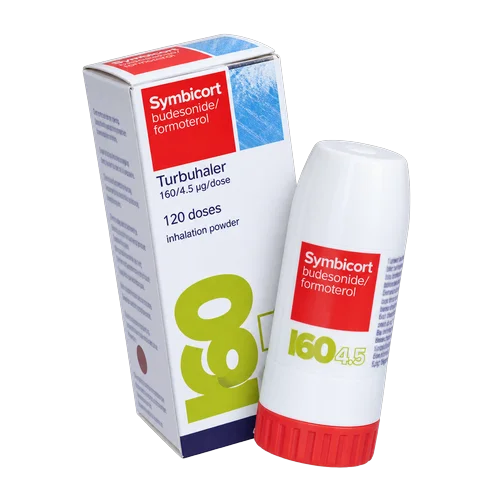
Symbicort contains budesonide and formoterol in a single inhaler. The available product is a Turbuhaler delivering 160 micrograms of budesonide and 4.5 micrograms of formoterol per inhalation, with 120 doses.
Budesonide is an inhaled corticosteroid. It reduces inflammatory activity inside the airways, helping to limit swelling, mucus production, and sensitivity to triggers. Formoterol is a long-acting beta-2 agonist bronchodilator. It relaxes the smooth muscle surrounding the bronchi, allowing air to move more freely.
The two ingredients address different parts of obstructive airway disease:
- Budesonide: reduces chronic airway inflammation.
- Formoterol: relaxes narrowed bronchial muscle.
- Turbuhaler: delivers the medicine as a dry powder inhaled through the mouth.
- Combination treatment: provides anti-inflammatory control alongside bronchodilation.
The inhaler does not contain a short-acting rescue ingredient such as salbutamol. In some asthma treatment plans, budesonide/formoterol can be prescribed as both maintenance and reliever therapy, but the exact regimen must be established by the prescriber.
Budesonide and airway inflammation
Asthma symptoms can arise from airway inflammation even when wheezing is absent. Inhaled corticosteroids form the foundation of long-term asthma control because they target the inflammatory process that makes the bronchi overreactive.
Budesonide acts locally in the lungs after inhalation. A small amount may be swallowed, so mouth and throat care still matters. The main benefit develops through regular use rather than occasional inhalations during symptoms.
Formoterol and bronchial dilation
Formoterol starts relaxing airway muscle relatively quickly and continues working for an extended period. This makes it different from a short-acting reliever, which is designed for brief relief.
A useful practical detail is the inhalation itself. The Turbuhaler releases powder when the user breathes in firmly and deeply through the mouthpiece. A shallow breath may deliver less medicine to the lower airways, even when the dose has been loaded correctly.
How it affects the body
Budesonide reduces inflammatory signalling in the airways, limiting swelling, mucus production, and bronchial sensitivity. Formoterol activates beta-2 receptors in bronchial smooth muscle, producing sustained muscle relaxation and wider airways. Together, the two active ingredients combine anti-inflammatory control with long-acting bronchodilation.
How to use it
This product contains 160/4.5 micrograms per inhalation and provides 120 doses. The amount used and frequency depend on the purpose of treatment and are agreed with a doctor or pharmacist.
The usual administration principles are:
- Use the Turbuhaler by mouth.
- Load one dose by twisting the base as directed for the device.
- Breathe out away from the mouthpiece.
- Seal your lips around the mouthpiece.
- Inhale firmly and deeply.
- Remove the inhaler before breathing out.
- Rinse your mouth after maintenance doses containing budesonide.
- Follow the prescribed maintenance or maintenance-and-reliever plan.
Do not shake a Turbuhaler. It is a dry-powder device rather than a pressurised aerosol, so shaking does not improve dose delivery. Do not breathe out into the mouthpiece because moisture from the breath can affect the powder inside the device.
If a dose is missed, take it when remembered unless the next scheduled dose is close. Do not double the next dose. A patient using Symbicort as a reliever should follow the personalised action plan rather than adding extra inhalations beyond the agreed maximum.
Comparison
Respiratory treatment is selected by diagnosis, symptom pattern, exacerbation risk, inhaler technique, and response. The active ingredients matter more than the brand name.
| Treatment approach | Main pharmacological role | Typical clinical purpose |
|---|---|---|
| Budesonide/formoterol | Inhaled corticosteroid plus long-acting beta-2 agonist | Asthma control and selected COPD treatment |
| Fluticasone/salmeterol | Inhaled corticosteroid plus long-acting beta-2 agonist | Maintenance treatment when this combination suits the patient |
| Budesonide alone | Inhaled corticosteroid | Anti-inflammatory prevention without a long-acting bronchodilator |
| Salbutamol alone | Short-acting beta-2 agonist | Rapid relief of intermittent bronchospasm |
A combination inhaler may reduce the number of separate devices a patient uses. It does not automatically suit every person with asthma. A patient with infrequent symptoms may require a different treatment approach, while someone with frequent exacerbations may need a higher treatment step or additional assessment.
The Turbuhaler requires a strong inhalation effort. Patients with very poor inspiratory flow, severe weakness, or difficulty coordinating inhalation may need another device type. Pressurised metered-dose inhalers and dry-powder inhalers deliver medicine differently, so technique training cannot be transferred automatically from one device to another.
Single-agent inhaled corticosteroids such as budesonide, beclometasone, or fluticasone focus on inflammation. Short-acting salbutamol focuses on rapid bronchial relaxation. Long-acting combinations add sustained bronchodilation, with the choice guided by the prescribing plan rather than symptom relief alone.
Common mistakes
Poor results often arise from technique or treatment-plan errors rather than from the active ingredients themselves.
Frequent mistakes include:
- Using the Turbuhaler like a pressurised inhaler and waiting for a spray.
- Shaking the device before use.
- Breathing out through the mouthpiece.
- Taking a weak, shallow inhalation.
- Failing to rinse the mouth after regular doses.
- Stopping the corticosteroid component as soon as symptoms improve.
- Using extra inhalations without knowing the prescribed maximum.
- Continuing to rely on frequent reliever doses while ignoring deteriorating control.
- Keeping the inhaler in a damp bathroom.
- Assuming a dose was not taken because no taste was noticed.
A dose counter can decrease as the device is used, but the inhalation itself is not always felt. Patients who are unsure about technique benefit from a practical demonstration and a technique check during a clinical appointment.
One subtle mistake is testing the inhaler by repeatedly twisting the base without inhaling. Each loading movement can prepare a dose, so repeated testing may waste doses.
Who should not use it
Symbicort is not suitable for people with a serious allergy to budesonide, formoterol, or an excipient in the inhaler.
Extra caution is needed with:
- Previous serious reactions to inhaled corticosteroids or beta-2 agonists.
- Significant heart disease, fast or irregular heart rhythm, or uncontrolled hypertension.
- Low blood potassium.
- Diabetes requiring close glucose monitoring.
- Thyroid disease.
- Previous tuberculosis or untreated respiratory infection.
- Osteoporosis or other risks from prolonged corticosteroid exposure.
- Narrow-angle glaucoma or cataracts.
- Severe liver impairment.
Beta-blockers can reduce or block the bronchodilator effect of formoterol. Non-selective beta-blockers may also provoke bronchospasm in susceptible people. This interaction includes some cardiovascular medicines and certain ophthalmic preparations.
Sotalol deserves specific attention because it has beta-blocking activity and can affect cardiac repolarisation. Other medicines that may require review include theophylline, some diuretics, systemic corticosteroids, monoamine oxidase inhibitors, tricyclic antidepressants, and medicines associated with QT prolongation. Atomoxetine can also require consideration because medicines affecting adrenergic activity may increase cardiovascular effects.
Formoterol can contribute to hypokalaemia, especially when combined with medicines that lower potassium. Low potassium can increase the risk of abnormal heart rhythms. The EMA product information describes these pharmacodynamic interactions and advises clinical assessment of relevant medicines and conditions [3].
Budesonide exposure can increase with potent CYP3A4 inhibitors, including some antifungal medicines and certain antiviral treatments. Pregnancy and breastfeeding require an individual treatment decision, because uncontrolled asthma also carries risks for the mother and baby.
When this is not for you
This treatment may not be suitable for you if you have previously had a serious allergic reaction to its ingredients. Tell your prescriber if you have heart problems, an irregular or fast heartbeat, high blood pressure, low potassium, diabetes, thyroid disease, glaucoma, cataracts, osteoporosis, liver problems, tuberculosis, or an untreated respiratory infection.
You should also tell the prescriber about beta-blockers, heart medicines, eye drops, water tablets, steroid tablets, antidepressants, theophylline, antifungal medicines, antiviral treatments, or medicines for attention-deficit disorders. Pregnancy and breastfeeding need an individual medical assessment.
Possible side effects
Symbicort is generally tolerated when used as prescribed, but both active ingredients can produce adverse effects. Local effects are linked mainly to inhaled budesonide, while tremor, palpitations, and changes in potassium may relate to beta-2 agonist activity.
Common or recognised effects include:
- Oral or throat candidiasis, also called thrush.
- Hoarse voice or dysphonia.
- Throat irritation or coughing after inhalation.
- Headache.
- Tremor or feeling shaky.
- Palpitations or a faster heartbeat.
- Muscle cramps.
- Nausea or mild stomach discomfort.
Rinsing and spitting after use can reduce local steroid exposure. A spacer is not used with this dry-powder Turbuhaler, because the device depends on the user's inhalation to disperse the powder.
Rare but clinically significant reactions include paradoxical bronchospasm, severe allergic reactions, hypokalaemia, cardiac rhythm disturbances, and adrenal suppression after prolonged exposure to high corticosteroid doses. The UK product information describes these risks and the need for urgent assessment when breathing worsens immediately after inhalation [2].
Seek urgent medical attention for:
- Sudden worsening wheeze or breathlessness immediately after inhalation.
- Swelling of the lips, tongue, face, or throat.
- Fainting, severe chest pain, or an irregular heartbeat.
- Severe weakness, confusion, or marked dizziness.
- Breathlessness that does not improve under the prescribed reliever plan.
A mild tremor can occur after formoterol and may settle as the body adapts. Recurrent palpitations, worsening tremor, or muscle weakness require clinical review rather than repeated self-adjustment of the dose.
What doctors say
In clinical practice, prescribers focus on control over time rather than the feeling produced by one inhalation. A patient may breathe more freely quickly because of formoterol, while the anti-inflammatory benefit of budesonide depends on regular treatment.
Doctors commonly check four practical points:
- Whether daytime and night-time symptoms are improving.
- How often additional reliever inhalations are needed.
- Whether the inhaler is being loaded and inhaled correctly.
- Whether the patient has experienced exacerbations requiring urgent treatment.
A common prescribing problem is treatment escalation before technique has been checked. A poorly sealed mouthpiece, exhaling into the device, or inhaling too gently can make an appropriate prescription appear ineffective.
The MHRA advises attention to inhaled corticosteroid risks, inhaler technique, and signs of worsening respiratory disease in safety information for inhaled treatments [4]. A clinician may also review smoking exposure, occupational triggers, allergic rhinitis, reflux, vaccination status, and adherence before changing the inhaler.
Common questions
How should the Symbicort Turbuhaler be cleaned and handled?
Keep the mouthpiece dry and wipe it with a clean, dry tissue rather than washing or immersing the inhaler. Do not use water inside the device, because moisture can affect the dry powder. MHRA inhaler-safety advice from 2024 supports checking technique and device care during routine asthma reviews.
Which symptoms mean I should stop and seek urgent medical attention?
Sudden breathing difficulty or wheezing immediately after inhalation may indicate paradoxical bronchospasm and requires urgent assessment. Swelling of the face or throat, fainting, severe chest pain, or a markedly irregular heartbeat also requires emergency care. The EMA safety information from 2025 identifies severe bronchospasm and hypersensitivity as reactions needing prompt attention [5].
Can I drink alcohol while using Symbicort?
Alcohol does not have a direct inhaled interaction with budesonide and formoterol, but it can worsen reflux, sleep quality, dehydration, or awareness of palpitations in some people. Heavy alcohol use may also make it harder to recognise worsening breathlessness or follow an asthma action plan. WHO respiratory guidance from 2024 supports reducing avoidable triggers and maintaining regular controller treatment.
Can people under 18 use Symbicort?
Symbicort may be prescribed to adolescents in appropriate asthma treatment plans, while the exact age range depends on the strength, licence, diagnosis, and prescribing decision. Children should use the inhaler only when a clinician has assessed their technique and selected the device. NICE guidance reviewed for UK practice in 2025 emphasises age-appropriate inhaler education and regular review.
What should I do after missing a dose?
Take the missed dose when remembered unless the next scheduled dose is near. Do not double the next dose to compensate. The MHRA advised in 2024 that patients using inhaled treatment should follow the prescribed action plan and seek review when missed doses become frequent because poor adherence can resemble treatment failure.
Can Symbicort affect driving, concentration, or work with machinery?
Most people can drive and work with machinery when their breathing is controlled and they do not experience troublesome dizziness, tremor, blurred vision, or palpitations. Breathlessness itself can impair concentration and physical performance. The EMA product information in 2025 describes these possible effects and supports caution until the individual response is known.
How should Symbicort be stored at home and while travelling?
Keep the Turbuhaler at room temperature in a dry place, away from excessive heat and moisture. A bathroom cabinet is a poor location because steam can enter the device environment. WHO medicine-storage principles from 2024 support keeping inhalers protected from humidity and carrying them in hand luggage during travel rather than leaving them in a hot vehicle.
Do you offer anonymous delivery?
Your order will be securely packed and shipped within 24 hours. This is exactly what your package will look like (images of an actual item sent). It has the size and look of a regular private letter (24x11x0.7 cm) and its contents cannot be seen.
How should Symbicort be stored at home and while travelling?
Keep the Turbuhaler at room temperature in a dry place, away from excessive heat and moisture. A bathroom cabinet is a poor location because steam can enter the device environment. WHO medicine-storage principles from 2024 support keeping inhalers protected from humidity and carrying them in hand luggage during travel rather than leaving them in a hot vehicle.
Reviews: Symbicort
Based on 5 reviews
Breathing on stairs became easier over the first month. I still had a cough during cold weather, so it did not solve every symptom. Rinsing after each dose helped because my throat felt rough when I forgot.
Wolverhampton One month 25 Oct 2026The device was compact and simpler than carrying separate inhalers. I made the mistake of breathing out into it twice, then had a technique check and stopped doing that.
Reading Several weeks 13 Oct 2026I noticed fewer early-morning symptoms after several weeks. Palpitations appeared occasionally after extra inhalations, so my prescriber reviewed the maximum use and checked my other medicines.
Belfast Several weeks 8 Oct 2026The inhaler helped with exercise-related tightness, but I disliked the dry throat at first. It improved when I rinsed and spat after use, although I still needed a separate plan for sudden severe attacks.
Manchester Several weeks 30 Sept 2026Sources
- National Institute for Health and Care Excellence (NICE) (2025). Asthma: diagnosis, monitoring and chronic asthma management (NG80).
- Electronic Medicines Compendium (2025). Symbicort Turbohaler 100/6, 200/6 and 400/12 Summary of Product Characteristics.
- European Medicines Agency (EMA) (2025). Symbicort: Summary of Product Characteristics.
- Medicines and Healthcare products Regulatory Agency (MHRA) (2024). Drug Safety Update: Inhaled corticosteroids and the risk of systemic adverse effects.
- World Health Organization (WHO) (2024). Chronic respiratory diseases: asthma and chronic obstructive pulmonary disease.