Skip to content
Fast & Discreet Delivery Save up to 80%
In Stock Triamcinolone
Anti-inflammatory

Triamcinolone

Triamcinolone is a topical cream applied in a thin layer to inflamed skin, usually as directed for the affected area. It contains triamcinolone acetonide 0.1% for corticosteroid-responsive conditions…

Guaranteed quality Original product
Delivery: from 4 days Discreet delivery
24/7 Support Always available
Active ingredient: Triamcinolone
Select pack Package Per tablet Price
£ 1.29 £ 38.70
£ 1.06 £ 77.40 £ 63.64 Save 18%
£ 0.95 £ 116.10 £ 85.14 Save 27%
£ 0.85 £ 154.80 £ 102.34 Save 34%
£ 0.77 £ 232.20 £ 138.46 Save 40%
Best value Free Standard Delivery £ 0.69 £ 464.40 £ 248.54 Save 46%

Free delivery on orders from £ 172.00, free express delivery from £ 258.00

Secure payment methods:
VISA AMEX JCB DISCOVER

Triamcinolone is a topical cream applied in a thin layer to inflamed skin, usually as directed for the affected area. It contains triamcinolone acetonide 0.1% for corticosteroid-responsive conditions such as eczema, dermatitis and psoriasis, reducing redness, swelling and itching [1].

Product information

Triamcinolone contains triamcinolone acetonide 0.1% in a topical cream formulation. Triamcinolone acetonide belongs to the corticosteroid family, also called glucocorticoids.

What it is used for

Triamcinolone acetonide cream is used for corticosteroid-responsive dermatoses, including inflammatory eczema, contact dermatitis, atopic dermatitis and selected cases of psoriasis. It can reduce the visible and sensory features of inflammation, but the diagnosis still matters because several skin conditions look alike during a flare.

Triamcinolone cream is most suitable for localised inflammation where a low-strength hydrocortisone preparation has not provided enough relief. The 0.1% strength is stronger than mild hydrocortisone products, so it should be used with more attention to treatment area, duration and skin thickness.

The cream should not be used as a general moisturiser. Emollients remain useful for restoring the skin barrier, while triamcinolone is reserved for inflamed patches. Applying both can be practical: allow the corticosteroid to settle before applying the emollient, unless a prescriber has given different instructions.

Common treatment areas

Typical areas may include:

  • Inflamed patches on the arms, legs or trunk.
  • Eczema affecting thicker skin.
  • Contact dermatitis after the responsible irritant has been removed.
  • Localised psoriasis plaques when a topical corticosteroid is clinically appropriate.
  • Itchy inflammatory rashes diagnosed as corticosteroid-responsive.

Skin folds, the face, eyelids and genital skin absorb topical corticosteroids more readily than thicker skin on the limbs. These areas often need a weaker product or a shorter treatment plan.

Cream use and skin absorption

A cream vehicle is useful for many inflamed areas because it spreads easily and is less greasy than an ointment. Ointments can feel more protective on very dry, cracked skin, while lotions may spread more easily over hairy areas. Those differences concern other formulations, not a reason to substitute them for Triamcinolone without clinical direction.

A thin film is normally enough. A thick layer does not produce a proportionally stronger result and may increase local adverse effects. Covering the treated area with plastic, waterproof clothing or a tight dressing can increase absorption substantially.

Wash hands after application unless the hands are the treatment area. This prevents accidental transfer to the eyes, mouth and thinner facial skin.

Eczema often produces dryness, itching, redness and recurrent flares. Triamcinolone can reduce the inflammatory part of an eczema flare, while regular emollient use supports the damaged skin barrier. Scratching can reopen the skin and increase the chance of secondary infection.

Psoriasis produces well-defined, scaly plaques caused by accelerated skin-cell turnover and immune signalling. A topical corticosteroid may flatten plaques and reduce redness, though treatment selection depends on site, thickness and extent. Scalp, facial and flexural psoriasis require different approaches from thick plaques on the elbows or knees.

Ingredients

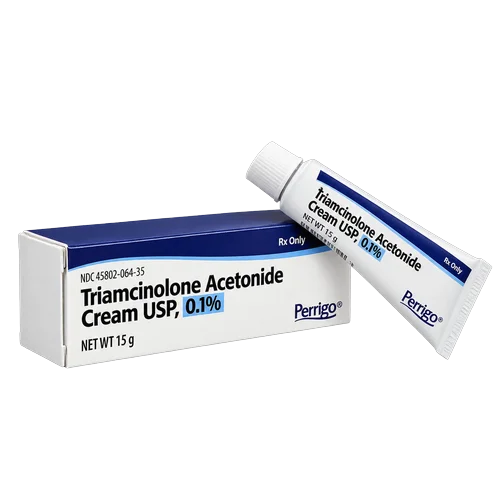
The product is supplied as a 15 g tube.

Triamcinolone cream is intended for external skin use. It is not an oral tablet, nasal spray or injection, so the information about whole-body corticosteroid treatment does not apply automatically to this product. Absorption through the skin rises when large areas, broken skin, occlusive dressings or prolonged courses are involved.

A useful practical distinction is the treatment target. Triamcinolone addresses inflammation rather than the underlying trigger of every rash. Eczema caused by irritants still requires avoidance of the irritant, while a fungal infection requires antifungal treatment rather than corticosteroid cream alone. Treatment should follow the confirmed cause.

Apply the cream only to the affected skin. Spreading it over clear areas increases steroid exposure without adding anti-inflammatory benefit.

How it affects the body

Corticosteroids resemble hormones produced naturally by the adrenal glands. When applied to inflamed skin, triamcinolone reduces the release of inflammatory chemicals and dampens excessive immune activity in the treated area. This helps settle itching, redness, swelling and irritation.

How to use it

Dosing differs between strengths and between users, so there is no single amount that suits everyone. The prescribing plan determines how often Triamcinolone is applied and how long the course continues.

Use the cream as follows:

  • Apply a thin layer to the affected skin.
  • Rub it in gently until it disappears.
  • Use it only at the frequency prescribed for the condition.
  • Keep it away from the eyes, inside the mouth and other mucous membranes.
  • Wash hands after use unless treating the hands.
  • Do not place a dressing over the area unless specifically instructed.
  • If an application is missed, apply it when remembered unless the next scheduled application is near; do not apply extra cream to compensate.

The fingertip-unit method can help estimate topical quantities, but the appropriate amount depends on the body site and the size of the inflamed area. A clinician may also recommend intermittent treatment for recurrent eczema rather than continuous daily use.

Do not use extra cream to compensate for a slow response. Persistent inflammation may signal infection, an incorrect diagnosis or the need for a different treatment plan.

Comparison

Corticosteroids differ in potency, duration and preferred treatment site. The prescriber chooses among them according to the diagnosis, skin thickness and extent of disease rather than by strength alone.

Corticosteroid molecule Typical role Common route
Hydrocortisone Mild inflammation and sensitive sites Topical
Triamcinolone acetonide Moderate inflammatory skin conditions Topical
Betamethasone or mometasone Stronger topical treatment for selected plaques Topical
Fluticasone Local inflammatory skin or nasal conditions, depending on formulation Topical or nasal
Dexamethasone Systemic or specialised anti-inflammatory treatment Oral, injectable or other prescribed forms

Hydrocortisone may be preferred for the face or mild dermatitis because it has lower topical potency. Betamethasone and mometasone may be selected for thicker or more resistant plaques, with greater attention to exposure and duration. Fluticasone and dexamethasone are different molecules with different formulations, so they are not direct substitutions for Triamcinolone cream.

Triamcinolone cream is not interchangeable with triamcinolone injections, oral corticosteroids or nasal corticosteroids. Route changes alter absorption, indications, monitoring requirements and adverse-effect patterns. The MHRA and EMA both emphasise that corticosteroid treatment should match the formulation and clinical indication.

Common mistakes

Several habits reduce benefit or increase risk:

  • Applying the cream to every itchy area without confirming that the rash is inflammatory.
  • Using it on fungal or infected skin because the redness initially looks better.
  • Applying a thick layer in the belief that more cream works faster.
  • Covering the area with a dressing, cling film or tight clothing.
  • Continuing treatment on clear skin after the flare has settled.
  • Using the same tube for facial, genital and body rashes without guidance.
  • Applying moisturiser immediately over the corticosteroid and wiping it away.
  • Stopping a prescribed course too early after the first reduction in itching.
  • Sharing the tube with another person whose rash may have a different cause.

A common practical error is using the cream on a rash around the mouth. Perioral dermatitis and rosacea can worsen with topical corticosteroids, even when the first few applications appear calming.

Another is applying it immediately before swimming or bathing. Much of the cream may be removed, and repeated reapplication can lead to excess exposure. Timing should allow the treatment to remain on the skin for the period advised by the prescriber.

Who should not use it

Triamcinolone is not suitable for every rash or every body site. The product should not be used on untreated skin infections, infected wounds or ulcerated lesions unless a clinician has specifically included it in a treatment plan.

  • Allergic reaction to triamcinolone acetonide or an ingredient in the cream.
  • Untreated fungal, bacterial or viral infection.
  • Application to the eyes or eyelids without specific medical direction.
  • Use beneath an airtight dressing without clinical instructions.

Interactions are mainly local and treatment-related. Applying another corticosteroid to the same area can increase total exposure. Combining Triamcinolone with medicines that suppress immunity may also increase infection concerns when substantial skin absorption occurs.

When this is not for you

This medicine is not for you if:

  • You have had an allergic reaction to triamcinolone acetonide or an ingredient in the cream.
  • The rash may be caused by untreated fungal, bacterial or viral infection.
  • You intend to apply it to the eyes or eyelids without specific medical direction.
  • You plan to use it on the face, groin or skin folds without advice about potency and duration.
  • You want to cover a large body area without a prescribed treatment plan.
  • You are considering it for acne, rosacea or an undiagnosed facial rash.
  • You plan to use it beneath an airtight dressing without clinical instructions.

Children may absorb proportionally more topical corticosteroid through the skin because their skin surface is larger relative to body weight. Nappy areas can behave like an occlusive dressing, so applying Triamcinolone beneath a nappy requires specific clinical direction.

Tell the prescriber about diabetes, glaucoma, recurrent skin infections, poor wound healing, psoriasis, pregnancy or breastfeeding. These conditions do not always rule out treatment, but they can alter the preferred strength, body site or duration.

Corticosteroid creams should not be used to mask a reaction to a new cosmetic, adhesive or topical medicine.

Possible side effects

Topical Triamcinolone is usually tolerated when used on a limited area for the prescribed period. Local reactions remain possible, and absorption can become clinically relevant when treatment covers large areas or continues for a long time.

Possible local effects include:

  • Burning, stinging or irritation after application.
  • Dryness or increased sensitivity.
  • Folliculitis, acne-like spots or changes in hair growth.
  • Skin thinning, stretch marks or visible small blood vessels.
  • Lightening or darkening of the treated skin.
  • Delayed healing of damaged skin.

Skin thinning deserves special attention. It may be subtle at first and is more likely on the face, skin folds and genital area. The risk also rises with strong corticosteroids, frequent application and occlusive coverings.

Systemic effects are less common with appropriate topical use, yet high exposure can affect the body. Possible effects include raised blood glucose, fluid retention, mood changes, sleep disturbance and suppression of the hypothalamic-pituitary-adrenal axis. These concerns matter more in children, older adults, people with diabetes and patients treating extensive or broken skin [2].

Seek prompt medical assessment for worsening pain, pus, rapidly spreading redness, fever, facial swelling, breathing difficulty or a severe allergic reaction. A rash that becomes more inflamed after initial improvement may represent infection rather than a need for more cream.

A brief warm or tingling sensation can occur after application. Persistent burning, marked swelling or new blistering is different and warrants stopping the application until the reaction has been assessed.

What doctors say

In clinical practice, doctors usually assess three things before prescribing a topical corticosteroid: the likely diagnosis, the body site and the required treatment strength. A medicine that is suitable for a thick elbow plaque may be unsuitable for eyelid dermatitis.

A clinician will also look for infection. Weeping, crusting, spreading warmth, pus or marked tenderness can change the treatment plan. Corticosteroid-only treatment may worsen an untreated infection or make its signs less obvious.

Doctors often advise patients to use the smallest area and shortest course that controls the flare. This does not mean applying too little to the active patch; it means avoiding routine use on unaffected skin and avoiding automatic continuation after the prescribed course.

Another practical point concerns recurrent eczema. If flares return frequently, the long-term plan may include emollients, trigger reduction and intermittent anti-inflammatory treatment. Repeating unsupervised courses can expose the skin to more corticosteroid than intended.

Common questions

What should be checked or discussed with a doctor before starting Triamcinolone?

The rash diagnosis, treatment site and history of skin infection should be discussed before starting. The MHRA (2018) advises careful use of topical corticosteroids on thin skin, large areas and under occlusion because absorption can rise. Mention diabetes, pregnancy, breastfeeding, glaucoma, recurrent infections and previous reactions to corticosteroids. The product should not be used on the face, groin, eyelids or broken skin without specific direction.

How soon does Triamcinolone usually become noticeable?

Itching and redness may begin to settle after several applications, while thicker plaques can take longer to flatten. The FDA prescribing information (2022) for triamcinolone acetonide topical preparations describes response as dependent on the condition, site and treatment duration. Lack of improvement, rapid worsening or new pain should prompt reassessment rather than repeated application. A visible response does not prove that the original diagnosis was correct.

What happens when Triamcinolone is stopped, and does it need tapering?

A short course of topical Triamcinolone on a limited area can usually be stopped according to the prescribed plan. The British Association of Dermatologists (2023) explains that rebound inflammation can occur when corticosteroids are stopped after prolonged or frequent use, especially in susceptible skin conditions. Tapering may be considered after extensive or long-term treatment, but the plan depends on the body site and previous exposure. Do not restart frequent applications simply because mild dryness remains.

Is Triamcinolone suitable for older adults?

Older skin is thinner and more vulnerable to bruising, tearing and corticosteroid-related atrophy. NICE guidance (2023) on eczema care supports using topical corticosteroids according to disease severity while avoiding unnecessary exposure on fragile sites. Older adults should take extra care with facial skin, skin folds and large treatment areas. New bruising, persistent burning or slow healing deserves review.

Can Triamcinolone be combined with other medicines or supplements?

Using another corticosteroid cream on the same area can increase exposure, and immunosuppressive treatment may increase infection concerns when substantial absorption occurs. The NHS (2024) advises patients to disclose prescribed medicines, over-the-counter treatments and supplements when a topical corticosteroid is being used. Avoid layering multiple anti-inflammatory creams unless the treatment plan specifically includes them. A moisturiser is different from another corticosteroid and is commonly used as part of eczema care.

Can Triamcinolone be applied with food or on an empty stomach?

Food does not affect a topical cream in the way it can affect an oral medicine. Triamcinolone should be applied to the skin rather than swallowed, regardless of meals. The FDA topical corticosteroid information (2022) focuses on skin application, affected area and exposure rather than food timing. Keep the cream away from the mouth and wash hands after application.

How long does a course last, and is long-term use acceptable?

Course length depends on the diagnosis, skin site, severity and response. The EMA approach (2018) to topical corticosteroid safety supports limiting duration and reviewing treatment when repeated or prolonged use is needed. Long-term continuous application, especially on thin skin or under occlusion, can cause atrophy and increased absorption. Recurrent flares need a structured plan rather than indefinite daily use.

Do you offer anonymous delivery?

Your order will be securely packed and shipped within 24 hours. This is exactly what your package will look like (images of an actual item sent). It has the size and look of a regular private letter (24x11x0.7 cm) and its contents cannot be seen.

Reviews: Triamcinolone

Based on 3 reviews

Peter, 64 Verified
Rating: 4.5 out of 5

The itching eased quickly, and the patch looked less angry. I had been putting on far too much at first, so the thin layer made the tube last longer. I still needed moisturiser because the skin remained dry.

York Over several days 30 Sept 2026
James, 35 Verified
Rating: 3 out of 5

The redness improved during the first week, but the area stung after one application. I stopped using it on broken skin and arranged a review. The cream helped the inflammation, though it was not the answer for every itchy patch.

Ipswich Over a week 11 Oct 2026
Simon, 32 Verified
Rating: 3 out of 5

The thick patch became flatter after several applications. I made the mistake of covering it tightly overnight, which caused more irritation. Using a small amount without the covering was more comfortable.

Wolverhampton Over several days 26 Oct 2026

Sources

  1. U.S. Food and Drug Administration (2022). Triamcinolone Acetonide Cream — Prescribing Information.
  2. DailyMed, National Library of Medicine (2023). Triamcinolone Acetonide Cream — Drug Label Information.
Get our free app Shop faster and track your orders 3.5 · 225 reviews Install