The scale became less noticeable and the itching settled first. I found it easy to spread, though I had to remind myself not to keep applying it once the skin looked clear.
Norwich Several weeks 22 Oct 2026
Wynzora
Plaque psoriasis causes raised, inflamed, scaly patches that can persist or recur. Wynzora contains calcipotriol and betamethasone dipropionate, combining vitamin D activity with topical…
Plaque psoriasis causes raised, inflamed, scaly patches that can persist or recur. Wynzora contains calcipotriol and betamethasone dipropionate, combining vitamin D activity with topical corticosteroid action to slow excess skin-cell growth and reduce inflammation.
Product information
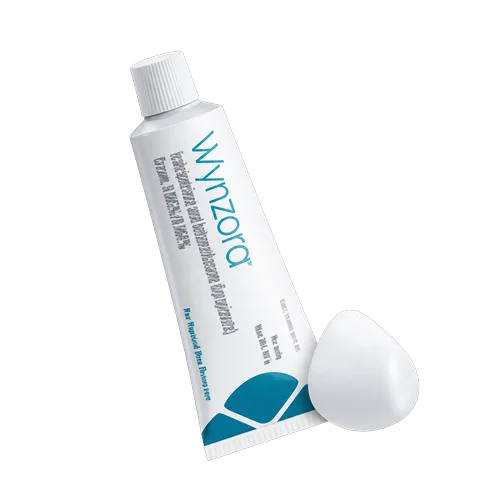
Wynzora is a topical antipsoriatic cream for plaque psoriasis. It combines calcipotriol, a vitamin D analogue, with betamethasone dipropionate, a corticosteroid.
What it is used for
Wynzora is used for plaque psoriasis, also called psoriasis vulgaris. Plaques are usually well-defined areas of raised, inflamed skin covered by silvery or white scale. Common sites include the elbows, knees, trunk and scalp.
A rash that resembles psoriasis can also result from eczema, fungal infection, contact dermatitis or another skin disorder. Diagnosis should be established before applying a combination corticosteroid treatment, especially when the rash is new, rapidly changing or affecting an unusual site.
Plaque Psoriasis and Psoriasis Vulgaris
Plaque psoriasis can remain confined to a few areas or affect a larger body surface. The appearance may change with stress, illness, skin injury, seasonal conditions or interruption of treatment. Wynzora controls treated plaques; it does not guarantee that new plaques will never appear.
Thin skin on the face, genitals, groin, armpits and other folds absorbs topical corticosteroids more readily. These areas require specific prescriber advice because the risk of skin thinning and other steroid-related effects differs by site.
Scalp Psoriasis Considerations
Wynzora may be included in a treatment plan for scalp psoriasis. Separate the hair to expose the affected scalp skin, apply a thin layer only to the involved area and keep the cream away from the eyes.
Persistent scalp scale, extensive scalp disease, bleeding or significant hair shedding needs clinical review. Do not assume every flaky scalp rash is psoriasis.
Ingredients
Wynzora is a topical antipsoriatic cream for plaque psoriasis. It combines calcipotriol, a vitamin D analogue, with betamethasone dipropionate, a corticosteroid. The two ingredients act on different features of psoriasis: excessive growth of epidermal cells and inflammatory activity in the skin.
Calcipotriol is related to vitamin D activity, but it is not a dietary vitamin supplement. Betamethasone dipropionate reduces inflammatory signalling, redness, swelling and itching. Together, these actions can improve the appearance and symptoms of plaques. This benefit applies while treatment is being used. Wynzora does not remove the long-term tendency to develop psoriasis.
Calcipotriol and Betamethasone Actions
Keratinocytes are the main cells in the outer layer of skin. In plaque psoriasis, their growth and maturation become abnormal, creating thickened, flaky plaques. Calcipotriol helps regulate keratinocyte activity through vitamin D receptors.
Betamethasone is a potent topical corticosteroid. It reduces local immune and inflammatory responses in treated skin. This may ease redness, itch and swelling, though stronger or more frequent application does not produce proportionally better results.
Topical Antipsoriatic Classification
Wynzora belongs to the topical antipsoriatics. This means it is applied directly to affected skin rather than taken as a tablet or administered by injection. Topical treatment is often considered for limited or accessible plaques, while widespread, difficult-to-control or frequently recurring disease may require a broader psoriasis management plan.
The amount used differs between strengths and between users, so there is no single amount that suits everyone. The product is supplied in tubes for external use.
Calcipotriol and calcipotriene are naming variants for the same vitamin D analogue. Wynzora contains one vitamin D analogue, not two separate vitamin D ingredients.
| Component | Amount per gram | Pharmacological role |
|---|---|---|
| Calcipotriol | Varies by product strength and user | Vitamin D analogue regulating keratinocyte activity |
| Betamethasone dipropionate | Varies by product strength and user | Topical corticosteroid reducing inflammation |
The FDA prescribing information describes the combined calcipotriene and betamethasone formulation for topical psoriasis treatment [1].
How it affects the body
Calcipotriol regulates keratinocyte activity through vitamin D receptors, helping address the abnormal growth and maturation of epidermal cells in plaque psoriasis. Betamethasone dipropionate is a potent topical corticosteroid that reduces local immune and inflammatory responses in treated skin. Together, these actions target excessive skin-cell growth and inflammatory activity.
How to use it
Use Wynzora exactly at the frequency and for the duration prescribed for the affected area. Dosing differs between strengths and between users, so there is no single amount that suits everyone.
Application Technique for Plaques
- Wash and dry the hands before application.
- Apply a thin, even layer to the psoriasis plaque.
- Rub it in gently until the affected skin is covered.
- Avoid the eyes, eyelids, mouth, nostrils and other mucous membranes.
- Wash the hands after application unless the hands are being treated.
- Do not cover treated skin with airtight or occlusive dressings unless specifically instructed.
A fingertip unit can provide a rough estimate of topical cream quantity, but the prescribed amount remains the controlling instruction. Large areas, repeated courses and occlusive coverings can increase absorption of betamethasone.
Scalp Application Technique
For scalp psoriasis, separate the hair and apply the cream directly to the affected skin rather than coating the hair. Avoid contact with the eyes and wash the hands after use. Scalp application can require product-specific instructions, so follow the regimen given for that treatment area.
Missed Applications and Treatment Course
Apply a missed dose when remembered if the next scheduled application is not close. If the next application is due soon, skip the missed application and continue with the normal schedule. Do not apply a double layer.
Treatment duration depends on the affected area, previous treatment, response and corticosteroid exposure. Long-term or repeated use should be reviewed rather than continued indefinitely without clinical oversight.
Comparison
Wynzora and injectable biologics have different routes, mechanisms and roles. Wynzora acts locally on treated skin, while Tremfya, Cosentyx and Skyrizi are systemic biologic options used for selected patients with plaque psoriasis.
| Treatment | Route and class | Practical role |
|---|---|---|
| Wynzora | Topical calcipotriol plus corticosteroid cream | Local treatment for selected plaques |
| Tremfya, Cosentyx or Skyrizi | Injectable biologic medicines | Systemic treatment for selected moderate-to-severe disease |
These options are not interchangeable. Treatment choice depends on severity, body surface area, scalp or nail involvement, joint symptoms, previous response and the patient’s medical history. A topical combination can be useful for accessible plaques, while systemic biologics may be considered when disease is extensive or difficult to control.
NICE guidance on psoriasis assessment and management describes treatment selection according to severity, location, impact and response rather than using one medicine for every patient [3].
Common mistakes
Poor results often come from application errors rather than a failure of the active ingredients.
- Applying a thick layer does not reliably produce faster clearance.
- Extending treatment onto normal skin increases exposure to betamethasone.
- Using Wynzora on an undiagnosed rash can mask infection or delay the correct treatment.
- Applying it to the face or skin folds without advice increases the risk of steroid-related skin changes.
- Covering plaques with airtight material can increase absorption.
- Stopping and restarting repeatedly without review can lead to uncontrolled exposure.
- Using another calcipotriol or corticosteroid product at the same time may increase total exposure.
- Applying the cream to hair instead of the affected scalp skin wastes product and may leave the plaque untreated.
One practical point is easy to miss: psoriasis can recur after a successful course because the underlying tendency remains. Wynzora controls active plaques; it does not permanently remove psoriasis.
Who should not use it
Wynzora is not suitable for every rash or every body site. The product should not be applied to untreated bacterial, fungal or viral skin infections, ulcerated skin, or areas affected by certain forms of psoriasis unless specifically directed.
Known allergy to calcipotriol, betamethasone dipropionate or an excipient in the cream is a contraindication. Calcium-balance disorders or conditions causing high calcium levels require avoidance. Combining other products containing calcipotriol, calcipotriene or a potent topical corticosteroid over the same areas without a coordinated plan is contraindicated.
When this is not for you
- You have a known allergy to calcipotriol, betamethasone dipropionate or an excipient in the cream.
- The affected skin has an untreated infection.
- The rash is on the face, genitals or skin folds and no clinician has approved treatment there.
- You have been told that you have a calcium-balance disorder or a condition causing high calcium levels.
- You plan to cover the treated area with an airtight dressing without medical instruction.
- You are already using other products containing calcipotriol, calcipotriene or a potent topical corticosteroid over the same areas without a coordinated plan.
Tell the prescriber about pregnancy, breastfeeding, childhood use, extensive psoriasis, recurrent courses and any history of skin infection. Combining multiple vitamin D products can increase total calcipotriol exposure, while combining corticosteroid products can increase steroid-related risks.
Possible side effects
Local irritation, redness, itching, burning or discomfort can occur where Wynzora is applied. Mild irritation may settle, but a rapidly spreading rash, marked swelling, facial swelling or breathing difficulty requires urgent assessment.
Common Local Reactions
A small amount of stinging can occur on inflamed or scratched skin. Stop applying the cream to severely irritated areas and obtain prompt clinical advice if the reaction is intense, widespread or worsening.
Contact with the eyes can cause irritation. Accidental eye exposure should be rinsed with clean water; persistent pain, blurred vision or marked redness needs urgent medical assessment.
Corticosteroid Exposure Risks
Betamethasone-related risks increase with large treated areas, prolonged use, repeated unsupervised courses and occlusive dressings. Possible problems include skin thinning, visible small blood vessels, stretch marks, changes in pigmentation and suppression of the body’s normal corticosteroid response.
The face, genital skin and skin folds are more vulnerable. These sites should only be treated when the prescriber has specifically included them in the plan.
Calcipotriol-Related Precautions
Excessive calcipotriol exposure can disturb calcium balance. Nausea, constipation, unusual thirst, increased urination, weakness or abdominal discomfort should prompt medical advice, especially after extensive or prolonged application.
Pregnancy and breastfeeding require an individual assessment of the treatment area, amount and duration. Children are more susceptible to corticosteroid absorption and should use Wynzora only when specifically prescribed.
The FDA prescribing information for Wynzora describes local reactions, corticosteroid exposure risks and precautions related to excessive vitamin D analogue exposure .
What doctors say
A clinician assessing Wynzora considers whether the diagnosis is plaque psoriasis, how much skin is affected, which sites are involved and whether infection is present. Previous treatments, pregnancy status, other topical products and the pattern of relapse also influence the plan.
The All Wales Therapeutics and Toxicology Centre and AWMSG have evaluated calcipotriol/betamethasone treatment within UK prescribing discussions [2]. Such assessments do not replace an individual review of diagnosis, body site and response.
A dermatologist may reconsider the treatment plan when plaques remain widespread, return quickly after treatment or interfere with sleep, work or mobility. Persistent joint pain, swollen fingers or toes, or morning stiffness may suggest psoriatic arthritis and warrants clinical assessment.
Treatment Response Review
Improvement should be judged by reduced thickness, scale, redness, itching and the number of active plaques. A patch that remains unchanged may need reassessment rather than repeated layers of cream.
Do not treat every flare indefinitely with the same corticosteroid regimen. A prescriber may use intermittent courses, another topical approach or systemic treatment depending on disease severity.
Common questions
Can alcohol be used while applying Wynzora?
Alcohol does not create the same direct interaction concern as it does with many oral medicines, because Wynzora is applied to the skin. The MHRA product information available in 2025 focuses on topical corticosteroid exposure, treated area, duration and skin-site precautions rather than a specific alcohol interaction. Heavy alcohol use may still aggravate psoriasis in some people, so monitor whether flares follow drinking.
Which condition rules out Wynzora?
Untreated bacterial, fungal or viral infection at the application site rules out self-directed use until the skin has been assessed. The FDA prescribing information from 2020 also identifies infection, certain psoriasis types and hypersensitivity as reasons for caution or avoidance. A rash that is painful, oozing, rapidly spreading or associated with fever needs clinical assessment before treatment.
What should be done if the expected result does not come?
Do not respond by applying thicker layers or extending the course without review. NICE guidance updated in 2023 supports reassessment when psoriasis does not respond, especially when the diagnosis, site or disease severity may require a different approach. Persistent plaques can reflect incorrect diagnosis, infection, inadequate application, extensive disease or the need for another treatment category.
Which symptoms mean stopping Wynzora and seeking urgent medical help?
Stop using the cream and seek urgent help for facial or throat swelling, breathing difficulty, widespread blistering, collapse or a rapidly spreading severe rash. The FDA label reviewed in 2020 treats severe hypersensitivity as a reason for immediate medical attention. Marked eye pain or visual disturbance after accidental exposure also requires urgent assessment.
How long does a Wynzora course last, and is long-term use acceptable?
The course length depends on the treated site, plaque extent, response and the prescriber’s plan. The MHRA safety approach in 2025 supports limiting prolonged corticosteroid exposure and reviewing repeated courses rather than continuing them automatically. Long-term management can include planned intermittent treatment, but unsupervised continuous use is unsuitable.
What should be done after a missed application?
Apply the missed dose when remembered unless the next scheduled application is close, then resume the normal schedule. Do not compensate by applying twice or using a thicker layer. The FDA prescribing information from 2020 supports avoiding double application after a missed dose.
Can Wynzora be used with moisturisers or sunscreen?
Moisturisers may be useful for dry psoriasis, but apply separate products at different times if advised so the treatment is not diluted or spread beyond the intended area. The NHS Wales clinical assessment material from 2021 supports considering the complete topical regimen, including other preparations and treated sites. Sunscreen should not be applied into the eyes or over irritated skin, and extensive psoriasis may need a more structured plan.
Do you offer anonymous delivery?
Your order will be securely packed and shipped within 24 hours. This is exactly what your package will look like (images of an actual item sent). It has the size and look of a regular private letter (24x11x0.7 cm) and its contents cannot be seen.
Reviews: Wynzora
Based on 5 reviews
The first few applications stung slightly on scratched skin. That eased after a few days, and the thicker patches improved, but one area returned after I stopped.
Stoke-on-Trent Several days 28 Oct 2026Separating the hair took more patience than I expected. It helped one patch near the hairline, but I needed a review when the scalp symptoms continued elsewhere.
Belfast Several weeks 30 Sept 2026The redness reduced during the course, and the tube was convenient. I initially used too much because I thought a thicker layer would work faster.
Derby Several weeks 12 Oct 2026The cream improved the areas I treated, but I was disappointed that new patches appeared later. A review helped clarify which areas to treat and when to stop.
Milton Keynes Several weeks 4 Oct 2026Sources
- U.S. Food and Drug Administration (2020). Wynzora (calcipotriene and betamethasone dipropionate) cream prescribing information.
- All Wales Therapeutics and Toxicology Centre (2021). Calcipotriol/betamethasone (Wynzora®).
- National Institute for Health and Care Excellence (2023). Psoriasis: assessment and management.