Skip to content
Fast & Discreet Delivery Save up to 80%
In Stock Atarax
Allergies

Atarax

Atarax is a prescription medicine containing hydroxyzine hydrochloride for adults and adolescents with short-term anxiety tension or persistent itching linked to allergic skin conditions. Its…

Guaranteed quality Original product
Delivery: from 4 days Discreet delivery
24/7 Support Always available
Active ingredient: Hydroxyzine
Select dosage:
Select pack Package Per tablet Price
£ 1.00 £ 90.30
£ 0.91 £ 120.40 £ 109.22 Save 9%
£ 0.86 £ 180.60 £ 154.80 Save 14%
Free Standard Delivery £ 0.79 £ 270.90 £ 212.42 Save 22%
Best value Free Express Delivery £ 0.77 £ 361.20 £ 276.92 Save 23%
£ 0.93 £ 83.42
£ 0.86 £ 111.22 £ 103.20 Save 7%
£ 0.79 £ 166.84 £ 141.90 Save 15%
Free Standard Delivery £ 0.74 £ 250.26 £ 199.52 Save 20%
Best value Free Standard Delivery £ 0.70 £ 333.68 £ 252.84 Save 24%

Free delivery on orders from £ 172.00, free express delivery from £ 258.00

Secure payment methods:
VISA AMEX JCB DISCOVER

Atarax is a prescription medicine containing hydroxyzine hydrochloride for adults and adolescents with short-term anxiety tension or persistent itching linked to allergic skin conditions. Its sedative action helps address both symptoms through central H1 histamine receptor blockade.

Product information

Atarax contains hydroxyzine hydrochloride, a first-generation antihistamine with pronounced central nervous system effects. Hydroxyzine sits in two overlapping drug classes: antihistamines and the broader category of miscellaneous anxiolytics, sedatives and hypnotics [1].

What it is used for

Atarax is approved for several distinct clinical pictures, though the underlying mechanism — central H1 antagonism — stays the same across all of them.

Indication Target Symptom Therapeutic Goal
Generalised anxiety (short-term) Tension, restlessness, apprehension Symptom reduction during acute episodes
Chronic urticaria / pruritus Itching from allergic skin reactions Interrupt the itch-scratch cycle
Pre- and post-operative sedation Procedural anxiety, nausea Light sedation, antiemetic support

For anxiety, Atarax is typically reserved for brief courses rather than continuous long-term therapy — the sedation that helps in week one becomes a liability if tolerance doesn't offset it and daytime function suffers. For pruritus linked to chronic urticaria, hydroxyzine remains one of the few agents that treats both the itch and the associated sleep disruption in one dose, which is why dermatologists often favour it over non-sedating antihistamines for severe night-time flares.

Ingredients

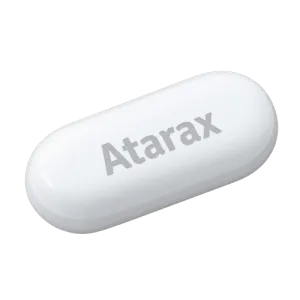
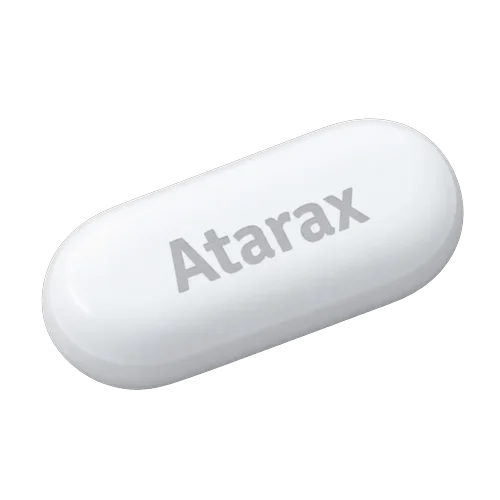
Atarax contains hydroxyzine hydrochloride, a first-generation antihistamine with pronounced central nervous system effects. The tablet form is white and oblong, meant for oral administration. Unlike newer antihistamines designed to avoid drowsiness, hydroxyzine's sedating property is the reason it gets prescribed at all for anxiety-related indications — the side effect became the therapeutic target.

Mechanism of Action in the Central Nervous System

Hydroxyzine blocks H1 histamine receptors in both the brain and peripheral tissues. In the periphery, this reduces the itch-scratch cycle associated with urticaria and allergic dermatitis. In the central nervous system, H1 blockade produces sedation, anxiolysis, and mild antiemetic effects.

Hydroxyzine also has secondary activity at serotonin 5-HT2A receptors and modest anticholinergic properties, which contribute to its calming profile but also explain some of the drug's tolerability issues, covered below. It does not act on GABA receptors, which is the pharmacological basis for its non-addictive classification [2].

How it affects the body

Hydroxyzine blocks H1 histamine receptors in both the brain and peripheral tissues. In the periphery, this reduces the itch-scratch cycle associated with urticaria and allergic dermatitis. In the central nervous system, H1 blockade produces sedation, anxiolysis, and mild antiemetic effects.

Hydroxyzine also has secondary activity at serotonin 5-HT2A receptors and modest anticholinergic properties, which contribute to its calming profile but also explain some of the drug's tolerability issues, covered below. It does not act on GABA receptors, which is the pharmacological basis for its non-addictive classification [2].

How to use it

  • Take Atarax tablets by mouth with water.
  • The dose in mg and the number of times per day depend on whether it is being used for short-term anxiety, allergic itching, or pre-operative sedation; a doctor or pharmacist sets the amount and frequency.
  • For pre-operative sedation, take the prescribed single oral dose before the procedure, at the time specified by the treating clinician.
  • Take it for the short duration agreed with a doctor or pharmacist; ongoing use is not specified here.
  • Take the tablets with or without food unless your doctor or pharmacist gives different instructions.

Comparison

Several drug classes treat overlapping symptoms, and the choice between them usually comes down to dependency risk, speed of onset, and side effect tolerance.

Drug Class Dependency Risk
Atarax (hydroxyzine) First-gen antihistamine None — not controlled
Xanax (alprazolam) Benzodiazepine High — Schedule IV controlled substance
Benadryl (diphenhydramine) First-gen antihistamine None, but stronger anticholinergic burden

Xanax's generic name is alprazolam, and it acts on GABA-A receptors rather than histamine receptors — a fundamentally different mechanism that produces faster anxiolysis but carries real dependency and withdrawal risk with regular use. Atarax doesn't touch GABA pathways, so physical dependence isn't part of its risk profile, which is often the deciding factor for patients with a personal or family history of substance dependency.

Compared with Benadryl, both drugs block H1 receptors, but hydroxyzine tends to produce a longer, steadier sedative effect rather than Benadryl's sharper, shorter peak. Trazodone, an antidepressant sometimes used off-label for sleep, and venlafaxine, an SNRI for anxiety and depression, work through serotonin and noradrenaline pathways entirely separate from antihistamine action — they're considered when a patient needs longer-term mood regulation rather than short-course symptom control. Propranolol, a beta-blocker, is sometimes used for the physical symptoms of anxiety like tremor and palpitations, but it does nothing for itching or sedation. Ambien (zolpidem) targets insomnia specifically through GABA receptors and isn't interchangeable with hydroxyzine's broader anxiety-and-itch profile.

Honestly, if someone needs itch relief with a side benefit of calm, hydroxyzine is usually the first reasonable option before reaching for a controlled substance.

Common mistakes

  • Taking it only when anxiety spikes. Hydroxyzine for anxiety works best with a short, consistent course rather than sporadic as-needed dosing, since its sedative build-up is part of the therapeutic effect.
  • Driving or operating machinery in the first days. The sedation is strongest early in treatment and catches people off guard, especially those switching from a non-sedating antihistamine.
  • Combining it with alcohol or sleep aids "just to sleep better." This compounds CNS depression rather than simply adding to it.
  • Stopping abruptly after weeks of nightly use for itching. While hydroxyzine isn't physically addictive, the underlying itch-scratch cycle can rebound hard if stopped cold rather than tapered under guidance.

Who should not use it

Known QT interval prolongation, severe hepatic impairment, or a hypersensitivity to hydroxyzine or related piperazine compounds are contraindications. Concomitant use with other QT-prolonging medications should also be avoided. Hydroxyzine should be avoided during early pregnancy unless a physician determines the benefit outweighs the risk, since animal studies have raised concerns about fetal effects at high exposure .

When this is not for you

This medication is not for you if you have a known QT interval prolongation, severe hepatic impairment, or a hypersensitivity to hydroxyzine or related piperazine compounds. It should also be avoided during early pregnancy unless a physician determines the benefit outweighs the risk. Mention any heart rhythm history to your prescriber before starting — this is one of the few checks that genuinely changes the dosing decision for hydroxyzine.

Atarax is available only on prescription in the UK and across EU markets, and hydroxyzine is not scheduled as a controlled substance under any national or international drug schedule [4].

Possible side effects

Drowsiness is the most frequently reported effect of hydroxyzine, and it's dose-related — higher doses sedate more reliably, which is both the point and the problem. Dizziness and fatigue often accompany the first few doses as the body adjusts.

Dry mouth, blurred vision, and mild constipation can occur due to hydroxyzine's anticholinergic activity. These tend to be mild and transient for most patients, though they're worth flagging before starting treatment rather than discovering them mid-course.

The first two to three days are usually the roughest for daytime drowsiness. Many patients find dosing in the evening minimises how much the sedation interferes with work or driving.

A less commonly discussed point: hydroxyzine's sedative effect compounds with alcohol, other CNS depressants, and even some over-the-counter sleep aids. Combining them isn't just unnecessary — it measurably increases impairment.

  • Common: drowsiness, dry mouth, dizziness
  • Less common: blurred vision, headache, mild tremor
  • Rare but serious: QT interval prolongation at high doses, reported in European pharmacovigilance data [3]

The MHRA and EMA have both flagged dose-dependent cardiac conduction effects at higher exposures, which is why hydroxyzine carries dose-ceiling guidance rather than being titrated freely upward for resistant symptoms.

What doctors say

Clinicians who prescribe hydroxyzine regularly tend to describe it as a bridge drug — useful for getting a patient through an acute flare of anxiety or itching without opening the door to benzodiazepine dependency. In clinical practice, the trade-off is almost always daytime alertness: patients who take it in the morning often call back within a week asking to switch the dose to evening.

Prescribers also flag that hydroxyzine's anxiolytic effect is noticeably milder than a benzodiazepine's — it calms the edges rather than eliminating the anxiety outright. That's often framed as an advantage for patients who need to function at work, but it can disappoint someone expecting benzodiazepine-level relief.

Common questions

What should I discuss with my doctor before starting Atarax?

Flag any personal or family history of heart rhythm problems, since hydroxyzine carries dose-dependent QT-prolongation risk documented by the MHRA . Mention any other sedating medications, antidepressants, or antihistamines you're taking, as combined CNS depression is additive. Pregnancy, breastfeeding, and liver function should also come up, since dosing adjustments or alternative options may be more appropriate in those situations. The MHRA's 2015 safety update describes the QT-related precautions that make this review important.

Do diet, alcohol, or lifestyle factors affect how well Atarax works?

Alcohol intensifies hydroxyzine's sedative effect and should be avoided during treatment, even in small amounts. Caffeine late in the day can partially counteract the drowsiness that makes evening dosing effective for sleep-linked itching. Regular sleep timing helps the drug's anxiolytic effect feel more consistent, since erratic sleep patterns tend to blunt how steady the calming effect feels day to day. NHS advice available in 2025 also warns that alcohol can worsen drowsiness from sedating medicines.

How long does a typical course of Atarax last, and is long-term use appropriate?

For anxiety, courses are generally short — often a matter of weeks rather than months, reflecting guidance that first-generation antihistamines aren't intended as a long-term anxiolytic strategy . For chronic pruritus linked to persistent urticaria, longer courses under medical supervision are more common, since the underlying skin condition itself may be chronic. Long-term continuous use for anxiety specifically is usually reassessed by a prescriber rather than continued indefinitely. The EMA's 2015 safety referral supports periodic review when hydroxyzine is used beyond a short course.

How does Atarax differ from other antihistamines used for similar purposes?

Atarax (hydroxyzine hydrochloride) produces stronger and more reliable central sedation than second-generation antihistamines like cetirizine or loratadine, which are designed specifically to avoid crossing into the brain. Compared with diphenhydramine (Benadryl), hydroxyzine tends to have a longer duration of action and is more frequently chosen for anxiety-related prescribing rather than purely allergic symptoms. The EMA notes this sedating profile as the basis for hydroxyzine's dual classification across both antihistamine and anxiolytic categories. The EMA's 2015 safety referral explains why hydroxyzine's sedating and cardiac-risk profile affects antihistamine selection.

Do you offer anonymous delivery?

Your order will be securely packed and shipped within 24 hours. This is exactly what your package will look like (images of an actual item sent). It has the size and look of a regular private letter (24x11x0.7 cm) and its contents cannot be seen.

Comparison

All options for Allergies at a glance

Reviews: Atarax

Based on 5 reviews

Michael H., 56 Verified
Rating: 3 out of 5

I was prescribed hydroxyzine 25mg for anxiety before a hospital procedure. Took it the night before as instructed. Slept properly for the first time in weeks, but I was groggy well into the next afternoon. Worth it for that one use, wouldn't want to be on it daily though.

Portsmouth 30 Sept 2026
Susan, 30 Verified
Rating: 4 out of 5

Using this for chronic hives that flare up every autumn. Three weeks in and the itching has calmed down a lot. First few days I was useless at work, kept nodding off at my desk around 2pm. Switched to taking it at night and that sorted it.

Manchester Three weeks 12 Oct 2026
Lee, 51 Verified
Rating: 3 out of 5

Dry mouth was the main issue for me, constantly reaching for water. The anxiety relief was mild, not dramatic, but enough to get through a stressful month without reaching for anything stronger.

Exeter A stressful month 14 Oct 2026
Rachel, 57 Verified
Rating: 3 out of 5

My GP put me on this instead of a benzodiazepine because of my history with addiction in the family. Appreciated that choice. It's not as strong as I expected but it took the edge off enough to function.

York 23 Oct 2026
Oliver, 29 Verified
Rating: 4.5 out of 5

Took it for hives after a reaction to a new detergent. Worked well on the itching within a day or two. Felt pretty foggy in the mornings for the first week, which I didn't love, but it settled down once my body adjusted.

Coventry The first week 26 Oct 2026

Sources

  1. EMA Summary of Product Characteristics (SmPC) — Hydroxyzine
  2. WHO (2023). WHO Model List of Essential Medicines — 23rd list
  3. MHRA (2015). Drug Safety Update — Hydroxyzine: risk of QT interval prolongation and Torsade de Pointes
  4. EMA (2015). Hydroxyzine-containing medicinal products: referral under Article 31 of Directive 2001/83/EC
Get our free app Shop faster and track your orders 3.5 · 225 reviews Install