What it is used for
Ezetimibe reduces the amount of cholesterol entering the bloodstream from the intestine. Lower LDL cholesterol can reduce exposure of arteries to cholesterol deposition, which forms part of coronary heart disease risk management. NICE lipid-modification guidance places ezetimibe among the options used when statin treatment alone does not achieve the required lipid reduction or cannot be used [1].
Primary medical uses and indications
Doctors may prescribe Ezetimibe in several situations:
- As monotherapy when statins are unsuitable or poorly tolerated.
- With a statin when LDL cholesterol remains above the agreed treatment target.
- For primary hypercholesterolaemia, including familial forms.
- For sitosterolaemia under specialist care.
- As part of long-term lipid management after cardiovascular disease has been identified.
The treatment decision depends on LDL cholesterol, cardiovascular history, diabetes status, kidney and liver health, other medicines, and previous response to lipid-lowering therapy.
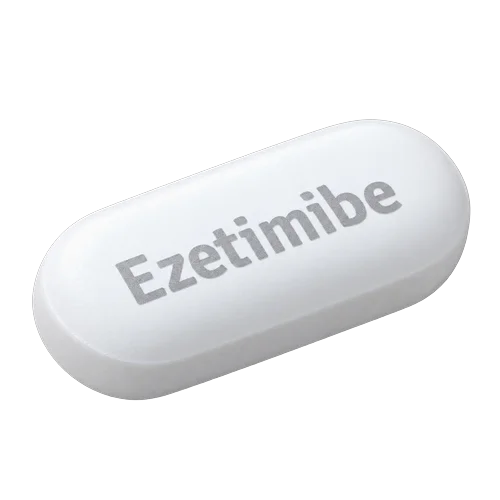
Ezetimibe is taken as tablets. It does not treat chest pain directly, dissolve an existing arterial plaque, or replace dietary and cardiovascular risk management.
Keep a record of the lipid test used to assess treatment response. LDL cholesterol is usually reviewed after treatment has had time to produce a stable effect, rather than judged from symptoms.
Ingredients
Ezetimibe tablets contain ezetimibe as the active substance. The medicine is an intestinal cholesterol absorption inhibitor rather than a statin. Its pharmacological action is directed at cholesterol transport in the small intestine.
The distinction matters. Statins mainly reduce cholesterol production in the liver, while ezetimibe reduces cholesterol entry from the gut. Combining the two mechanisms can produce a larger LDL reduction than either approach alone when clinically appropriate.
Commercially supplied products may use different pharmaceutical names, but the relevant clinical facts are the active substance, tablet formulation, prescribed strength, and treatment plan. The dose is decided individually, taking age, other medicines and health conditions into account.
How it affects the body
Ezetimibe blocks the Niemann-Pick C1-Like 1, or NPC1L1, transporter on the brush border of the small intestine. This transporter helps move cholesterol from the intestinal contents into intestinal cells. By inhibiting NPC1L1, ezetimibe reduces absorption of dietary cholesterol and cholesterol released into the intestine through bile.
Less cholesterol reaches the liver from the intestine. The liver then increases its uptake of circulating LDL particles, which lowers LDL cholesterol in the blood. This process explains why ezetimibe can work even when the main problem is cholesterol absorption rather than cholesterol production.
The medicine does not remove all cholesterol absorption. It reduces the pathway sufficiently to produce a clinically useful fall in LDL cholesterol. The degree of response varies between patients and depends on baseline LDL, genetic factors, concurrent treatment, adherence, and diet. Follow-up testing helps show whether the prescribed regimen is achieving its intended LDL reduction. Clinicians can adjust the plan when the response or tolerability does not meet expectations.
The European Medicines Agency describes ezetimibe as a selective inhibitor of intestinal cholesterol and related phytosterol absorption [2]. The mechanism also explains its role in sitosterolaemia, where excessive plant-sterol absorption contributes to abnormal blood levels.
Ezetimibe can be useful when a statin has already reduced liver cholesterol production but LDL cholesterol remains above the agreed target. The two medicines act at different points in the cholesterol pathway.
How to use it
Ezetimibe tablets are taken by mouth. The prescribed dose is taken once daily, with or without food, at approximately the same time each day.
- Swallow the tablet with water.
- Use the dose selected for your age, other medicines, liver health, kidney health, and lipid profile.
- Continue treatment for the duration specified in the treatment plan.
- Take ezetimibe at the same time as a statin if the prescriber has selected a combined regimen.
- If a bile acid sequestrant is also prescribed, timing may need to be separated because that class can reduce ezetimibe absorption.
- Do not double the next dose after a missed tablet.
When treatment is combined with a statin, both medicines should be used according to the prescribed schedule. Ezetimibe does not provide an immediate symptom-based effect, so stopping it because you feel no different can remove its lipid-lowering benefit.
The U.S. prescribing information for ezetimibe describes once-daily administration and use with or without food [3]. Dose selection becomes more individual when liver disease, several interacting medicines, or multiple lipid-lowering treatments are present.
If a missed dose is remembered near the next scheduled dose, skip the missed tablet and return to the normal timetable. Taking two doses together does not improve cholesterol control and can increase adverse effects.
Comparison
Ezetimibe occupies a different position from bile acid sequestrants and fibrates. The choice depends on the dominant lipid abnormality, cardiovascular risk, tolerability, kidney and liver function, and previous treatment response.
| Treatment category |
Main action and clinical role |
| Ezetimibe |
Reduces intestinal cholesterol absorption; mainly lowers LDL cholesterol and can be used alone or with a statin |
| Statins |
Reduce hepatic cholesterol production; first-line LDL-lowering treatment for many adults |
| Fibrates |
Act mainly on triglyceride-rich lipoproteins; considered when triglycerides are elevated or mixed dyslipidaemia is present |
Bile acid sequestrants, including cholestyramine, bind bile acids in the intestine and increase their faecal loss. They can lower LDL cholesterol but may cause constipation, bloating, and medicine-absorption problems. Their administration schedule can be inconvenient for some patients.
Fibrates are not simply stronger versions of ezetimibe. They target a different lipid pattern, with greater emphasis on triglycerides and HDL-related changes. A patient with isolated LDL elevation may receive a different strategy from a patient with severe hypertriglyceridaemia.
Common mistakes
Several practical errors can reduce the benefit of treatment:
- Stopping the tablet because high cholesterol has no symptoms.
- Taking an extra tablet after a missed dose.
- Assuming ezetimibe replaces all dietary changes.
- Forgetting to mention non-prescription medicines, supplements, or fibrates.
- Treating new muscle weakness as ordinary exercise soreness.
- Missing lipid blood tests that are used to assess response.
- Taking a bile acid sequestrant at the same time without checking the required separation.
- Sharing tablets with a family member who has a similar cholesterol result.
One overlooked issue is timing around blood tests. A lipid result is most useful when the treatment routine has been stable and the clinician knows about missed doses or recent medicine changes.
Another common error is changing the statin dose without changing the rest of the plan. Ezetimibe and a statin may be prescribed together for a reason, and altering one component can change LDL control or adverse-effect risk.
Tell the prescriber about persistent muscle pain even if it began after a new exercise routine. The timing, severity, weakness, and urine colour help distinguish routine soreness from a medicine-related problem.
Who should not use it
Ezetimibe should be used carefully in liver impairment. Liver blood tests may be required when it is combined with a statin. Bile acid sequestrants can interfere with ezetimibe absorption, so administration times may need to be separated. Cyclosporine can increase ezetimibe exposure. Fibrates may increase the risk of gallbladder-related problems, and some combinations require specialist judgement.
Pregnancy precautions apply with special force to statin-containing regimens. The treatment plan should be reviewed before conception rather than after pregnancy has begun.
Possible side effects
Many people tolerate ezetimibe without major problems. Reported adverse effects include headache, abdominal discomfort, diarrhoea, fatigue, and muscle symptoms. When ezetimibe is combined with a statin, some adverse effects may reflect the combination rather than ezetimibe alone.
Possible effects include:
- Headache or tiredness.
- Abdominal pain, loose stools, or nausea.
- Muscle aches or weakness.
- Raised liver enzymes, especially with statin therapy.
- Allergic reactions such as swelling, rash, or breathing difficulty.
- Rare inflammation of the pancreas or hepatitis.
Clinical trials of ezetimibe added to statin treatment have shown additional LDL reduction, while monitoring remains necessary for muscle and liver-related problems. The IMPROVE-IT trial found cardiovascular benefit from adding ezetimibe to statin therapy after acute coronary syndrome [4].
Muscle pain deserves context. Mild soreness after exercise is common and does not automatically indicate a medicine reaction, but persistent weakness, severe tenderness, fever, or dark urine needs urgent assessment. The risk of muscle injury can rise when ezetimibe is combined with certain statins or fibrates.
A practical nuisance is that some people notice gastrointestinal symptoms before any change appears on a lipid test. Taking the tablet with food is permitted, but changing the timing does not always remove the problem. Persistent symptoms may require a review of the complete treatment combination.
What doctors say
In clinical practice, doctors usually explain that ezetimibe is a preventive treatment. Patients rarely feel a direct change when LDL cholesterol falls, so the treatment response is measured through blood testing rather than symptoms.
A clinician will usually consider three questions:
- Has LDL cholesterol fallen by the expected amount?
- Is the treatment tolerated over time?
- Does the result match the person’s cardiovascular risk and treatment target?
Ezetimibe can be a sensible option after statin intolerance, but intolerance needs careful assessment. Muscle symptoms may arise from the statin, another medicine, thyroid disease, intense training, or an unrelated condition. A structured treatment review can prevent unnecessary abandonment of lipid-lowering therapy.
Doctors also look for secondary causes of high cholesterol, such as untreated hypothyroidism, kidney disease, diabetes, alcohol excess, or medicines that alter lipid levels. Addressing these factors can improve the response to treatment.
The WHO describes cardiovascular disease prevention as a combined process involving lipid management, blood-pressure control, smoking cessation, physical activity, and dietary measures [5]. Ezetimibe addresses one part of that risk profile.