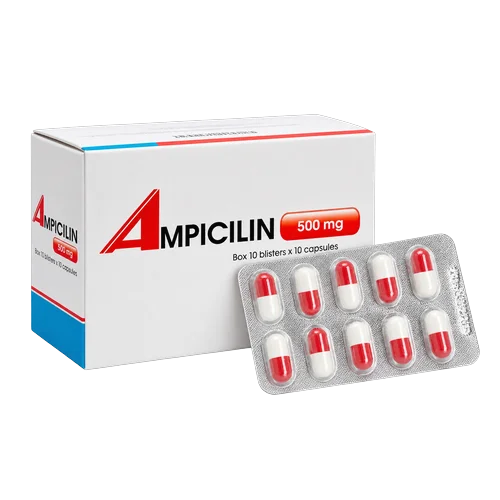
I took this for a sinus infection that wouldn't clear with decongestants alone. Five days in I felt mostly normal, but I pushed through the full ten-day course anyway. Mild stomach upset the first two days, nothing after that.
Cambridge Ten days 26 Oct 2026
Ampicillin
Ampicillin, the active ingredient of Ampicillin, is a broad-spectrum aminopenicillin antibiotic prescribed for respiratory, urinary tract, and gastrointestinal infections. It interferes with…
Ampicillin, the active ingredient of Ampicillin, is a broad-spectrum aminopenicillin antibiotic prescribed for respiratory, urinary tract, and gastrointestinal infections. It interferes with bacterial cell wall synthesis, stopping susceptible pathogens from growing and dividing. As a member of the penicillin family, it remains a foundational antibacterial agent used widely across hospital and community medicine.
Product information
Ampicillin belongs to the aminopenicillin group, a subclass of penicillin antibiotics distinguished by an added amino group that extends their reach against Gram-negative bacteria. The drug sits within the larger beta-lactam family of antibiotics, which also includes cephalosporins and carbapenems — all sharing the characteristic four-membered beta-lactam ring responsible for their antibacterial action.
What it is used for
Clinicians prescribe ampicillin across a genuinely wide range of bacterial infections, which explains its long-standing place on hospital formularies.
Systemic and Respiratory Tract Infections
Pneumonia caused by susceptible organisms responds well to ampicillin, especially in community-acquired cases where the pathogen hasn't shown resistance. Middle ear infection and sinus infection are common targets too, especially in patients where first-line alternatives aren't suitable. The drug reaches therapeutic concentrations in middle ear fluid and sinus mucosa fairly efficiently.
Urinary and Gastrointestinal Applications
Bladder infection and kidney infection are standard indications, with ampicillin cleared largely unchanged through the kidneys — a property that concentrates the drug in urine and makes it useful for urinary tract pathogens, especially when susceptibility is confirmed. Infections of the stomach and intestines, including certain bacterial gastroenteritis cases, also fall within its remit.
Ingredients
The amount of ampicillin per capsule is set individually for each person rather than being one fixed amount.
Core Pharmacological Properties
Ampicillin disrupts the final stage of bacterial cell wall construction. It binds to penicillin-binding proteins on the bacterial membrane, blocking the cross-linking of peptidoglycan strands. Without this cross-linking, the wall weakens under internal pressure and the cell ruptures. This mechanism works only against actively dividing bacteria, which is why ampicillin is classed as bactericidal rather than merely growth-suppressing [1]. The target must be actively multiplying for this effect to occur.
How it affects the body
Ampicillin disrupts the final stage of bacterial cell wall construction. It binds to penicillin-binding proteins on the bacterial membrane, blocking the cross-linking of peptidoglycan strands. Without this cross-linking, the wall weakens under internal pressure and the cell ruptures. The target must be actively multiplying for this effect to occur.
How to use it
- Dose: The amount taken at each intake is set individually for each person; no fixed amount in mg is established here.
- Frequency: Take the capsules at the frequency individually prescribed for the person; the number of intakes per day is not established here.
- Timing: The timing in relation to meals is not established here.
- Duration: Use the capsules for the individually determined treatment duration; no fixed course length is established here.
- Route: Take the capsules orally with water.
Comparison
Ampicillin sits within the penicillin family, but it's one option among several beta-lactam classes doctors choose between.
| Drug Class | Spectrum Characteristics | Primary Clinical Role |
|---|---|---|
| Aminopenicillin (ampicillin) | Gram-positive plus moderate Gram-negative coverage | First-line for uncomplicated respiratory and urinary infections |
| Cephalosporin | Broader Gram-negative coverage, beta-lactamase resistant variants available | Reserved for resistant or hospital-acquired infections |
| Older penicillin (e.g. benzylpenicillin) | Narrow, mainly Gram-positive | Streptococcal infections, syphilis |
Cephalosporins generally hold up better against beta-lactamase-producing bacteria, which makes them the preferred option when resistance is suspected or confirmed. Ampicillin's advantage is its track record in straightforward, community-acquired infections where resistance patterns remain favourable — it's narrower, cheaper to produce, and well studied over seven decades of clinical use. The EMA's assessment reports on beta-lactam antibiotics consistently note this trade-off between spectrum breadth and the selective pressure that broader-spectrum agents place on bacterial populations [2].
Common mistakes
- Stopping the course once symptoms improve. Feeling better doesn't mean the infection is cleared; stopping early is one of the most common drivers of treatment failure and resistance.
- Taking it with heavy meals out of habit. Absorption drops when ampicillin is taken alongside large or fatty meals, which can quietly undermine the drug's effectiveness.
- Ignoring a missed dose instead of adjusting. Skipping a dose and simply waiting for the next scheduled time, rather than taking it as soon as remembered, leaves a longer gap with sub-therapeutic blood levels than necessary.
- Assuming a mild rash means lifelong penicillin allergy. This leads some patients to avoid an entire antibiotic class unnecessarily for years, limiting future treatment options without medical justification.
- Mixing it with leftover antibiotics from a previous illness. Combining different unused courses to "finish faster" creates unpredictable dosing and interaction risks.
Possible side effects
Most patients tolerate ampicillin without serious issues, but side effects are real and worth knowing before starting treatment.
Gastrointestinal upset is the most frequent complaint. Diarrhea, nausea, and vomiting occur in a meaningful minority of patients, usually within the first days of treatment. Rash is also common and doesn't always signal a true penicillin allergy — some rashes with ampicillin specifically are non-allergic and resolve without stopping treatment, though any rash should be reported to a prescriber for assessment.
Colitis is the serious concern. Antibiotic-associated colitis, including the form linked to Clostridioides difficile overgrowth, can develop when ampicillin disrupts normal gut flora. Watery or bloody diarrhea that develops during or after a course, especially if it's severe or persistent, needs prompt medical attention.
One detail many patients miss: ampicillin can reduce the effectiveness of hormonal contraceptives by altering gut bacteria involved in oestrogen recycling. Anyone relying on the combined pill should use a backup method during treatment and for a short period after finishing the course.

What doctors say
In clinical practice, physicians tend to reach for ampicillin when the infection is likely from a predictable, susceptible organism and the patient has no penicillin allergy history. What experienced prescribers watch closely is completion. Patients who feel better by day three or four sometimes stop early, and that's exactly the pattern that breeds resistant survivors. A physician will usually explain the full course length at the outset specifically to head off this habit.
Another recurring observation from practice: patients on the combined contraceptive pill aren't always asked about it before a prescription is written, which means the interaction gets missed until a patient reports an unplanned pregnancy weeks later. Good prescribing habit includes asking this question every time.
Common questions
Is there a specific condition that would rule out taking Ampicillin?
A documented history of anaphylaxis or severe hypersensitivity to any penicillin-class antibiotic rules out ampicillin, since cross-reactivity within the class is well established. Patients with infectious mononucleosis should also avoid it, as ampicillin frequently triggers a widespread rash in this group that isn't a true allergic reaction but still complicates diagnosis and management. The MHRA's 2023 product guidance for penicillin antibiotics lists both of these as clear contraindications [3].
How long does a single dose of Ampicillin keep working in the body?
Ampicillin has a relatively short half-life, which is why multiple doses throughout the day are typically needed rather than one dose lasting a full 24 hours. The FDA's 2023 prescribing information explains that the dosing interval reflects the amount taken per dose and the specific infection being treated, rather than following one fixed schedule for everyone. Blood levels drop enough between doses that missing one can meaningfully reduce effectiveness against the target bacteria.
Can older adults take Ampicillin safely?
Older adults can generally take ampicillin, though reduced kidney function common with age means the drug clears more slowly and may need dose adjustment. Since ampicillin depends heavily on renal excretion, clinicians typically check kidney function markers before and during treatment in this age group. The EMA's 2023 geriatric medicines guidance flags this population for closer monitoring when medicines are cleared through the kidneys [4].
Is Ampicillin suitable for patients under 18?
The WHO's 2023 paediatric antibiotic guidance supports weight-based dosing for children and adolescents rather than using adult amounts. Paediatric prescribing requires particular attention to completing the full course, since children's symptoms often improve quickly and caregivers may be tempted to stop early. A prescriber determines the exact paediatric regimen based on the child's weight and the infection being treated.
Do you offer anonymous delivery?
Your order will be securely packed and shipped within 24 hours. This is exactly what your package will look like (images of an actual item sent). It has the size and look of a regular private letter (24x11x0.7 cm) and its contents cannot be seen.
Comparison
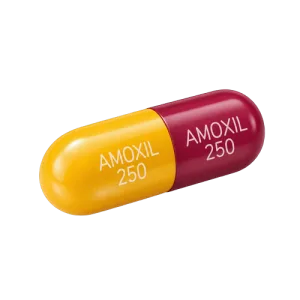
Amoxil
Ampicillin Current
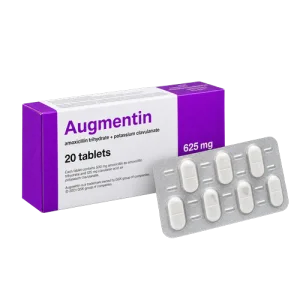
Augmentin
Erythromycin
Reviews: Ampicillin
Based on 3 reviews
Prescribed for a kidney infection last winter. Worked, but gave me loose stools for most of the week I was on it. Had to be careful with the contraceptive pill timing since I wasn't warned about that interaction until I asked the pharmacist directly.
Oxford Most of a week 30 Sept 2026Used for a chest infection after a bad cold dragged on too long. Took about four days before I noticed real improvement, which felt slower than I expected. No rash, no major issues, just wanted it to kick in faster than it did.
Portsmouth Duration not stated 13 Oct 2026Sources
- FDA Ampicillin for Injection and Oral Suspension — Prescribing Information.
- EMA Guideline on the Use of Pharmacokinetics and Pharmacodynamics in the Development of Antibacterial Medicinal Products.
- MHRA Summary of Product Characteristics — Ampicillin Capsules.
- EMA (2023). Summary of Product Characteristics (SmPC) — ampicillin.