Skip to content
Fast & Discreet Delivery Save up to 80%
In Stock Augmentin
Antibiotics

Augmentin

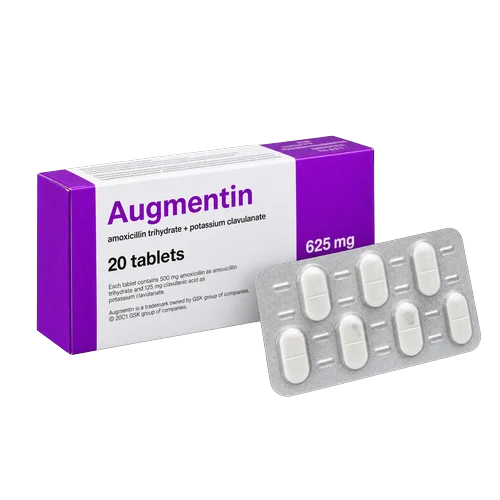
Augmentin is a tablet containing amoxicillin trihydrate and potassium clavulanate for selected bacterial infections, not viral illnesses. The dose is decided individually, taking age, other medicines…

Guaranteed quality Original product
Delivery: from 4 days Discreet delivery
24/7 Support Always available
Active ingredient: Amoxicillin
Select dosage:
Select pack Package Per tablet Price
£ 3.47 £ 104.06
Free Standard Delivery £ 3.10 £ 208.12 £ 185.76 Save 11%
Free Express Delivery £ 2.97 £ 312.18 £ 267.46 Save 14%
Free Express Delivery £ 2.91 £ 416.24 £ 349.16 Save 16%
Free Express Delivery £ 2.85 £ 624.36 £ 513.42 Save 18%
Best value Free Express Delivery £ 2.81 £ 936.54 £ 758.52 Save 19%
£ 3.12 £ 93.74
£ 2.29 £ 187.48 £ 137.60 Save 27%
Free Standard Delivery £ 2.03 £ 281.22 £ 182.32 Save 35%
Free Standard Delivery £ 1.90 £ 374.96 £ 227.90 Save 39%
Free Express Delivery £ 1.76 £ 562.44 £ 317.34 Save 44%
Free Express Delivery £ 1.68 £ 843.66 £ 452.36 Save 46%
Best value Free Express Delivery £ 1.62 £ 1,124.88 £ 584.80 Save 48%
£ 3.07 £ 92.02
£ 2.34 £ 184.04 £ 140.18 Save 24%
Free Standard Delivery £ 2.08 £ 276.06 £ 187.48 Save 32%
Free Standard Delivery £ 1.96 £ 368.08 £ 235.64 Save 36%
Free Express Delivery £ 1.84 £ 552.12 £ 331.96 Save 40%
Best value Free Express Delivery £ 1.76 £ 828.18 £ 474.72 Save 43%

Free delivery on orders from £ 172.00, free express delivery from £ 258.00

Secure payment methods:
VISA AMEX JCB DISCOVER

Augmentin is a tablet containing amoxicillin trihydrate and potassium clavulanate for selected bacterial infections, not viral illnesses. The dose is decided individually, taking age, other medicines and health conditions into account.

Product information

Augmentin is a penicillin-class antibiotic containing amoxicillin trihydrate and potassium clavulanate. The dose is decided individually, taking age, other medicines and health conditions into account. Together, these ingredients form co-amoxiclav.

What it is used for

Augmentin is prescribed for selected bacterial infections, not viral illnesses. It may be used for bacterial sinusitis, acute otitis media, lower respiratory tract infections, urinary tract infections, skin and soft-tissue infections, dental infections, and some bone or joint infections when the clinical assessment supports its use.

A clinician considers the infection site, likely bacteria, local resistance patterns, kidney function, allergy history, recent antibiotic exposure, and the severity of illness. The MHRA product information describes co-amoxiclav use for infections caused by susceptible organisms and stresses that treatment should reflect official antimicrobial guidance [2].

Respiratory tract infections

Co-amoxiclav may be considered for bacterial sinusitis, acute exacerbations of chronic bronchitis, pneumonia, and some middle-ear infections. It is not useful for the common cold, influenza, or most uncomplicated viral coughs. Coloured mucus alone does not prove a bacterial infection.

Beta-lactamase protection can be useful when organisms such as certain Haemophilus influenzae or Moraxella catarrhalis strains are suspected. The choice still depends on the clinical picture and local prescribing guidance.

Urinary, skin, dental, and other infections

Augmentin may be used for susceptible urinary tract infections, cellulitis, infected animal or human bites, dental infections, and selected abdominal or bone infections. A urine culture, wound sample, or other microbiological test may be needed when the diagnosis is uncertain, the infection has recurred, or initial treatment has failed.

The medicine does not treat every bacterial infection. For example, some urinary pathogens have resistance patterns that make co-amoxiclav unsuitable, while some skin infections require a different antibiotic or drainage of an abscess.

Antibiotics do not replace drainage, wound cleaning, or dental treatment when pus, an abscess, or a trapped source of infection is present.

Ingredients

Augmentin is a penicillin-class antibiotic containing amoxicillin trihydrate and potassium clavulanate. The tablet contains these two active ingredients, which together form co-amoxiclav.

Active ingredient synergy

The combination has two linked actions:

  • Amoxicillin: an aminopenicillin that binds to bacterial penicillin-binding proteins and disrupts cell-wall synthesis.
  • Clavulanic acid: a beta-lactamase inhibitor that protects amoxicillin from selected bacterial enzymes.
  • Co-amoxiclav: the combined formulation used in Augmentin tablets.

Inhibition of bacterial resistance

Beta-lactamases are enzymes produced by some bacteria. They can hydrolyse the beta-lactam structure shared by medicines such as amoxicillin and render them inactive.

The WHO AWaRe antibiotic guidance places co-amoxiclav among antibiotics requiring careful selection because broader antibacterial coverage can increase pressure for resistance [1].

How it affects the body

Amoxicillin interferes with bacterial cell-wall construction. Without a stable cell wall, susceptible bacteria cannot maintain their structure and die. Clavulanic acid has little antibacterial activity by itself, but it blocks some beta-lactamase enzymes that would otherwise break down amoxicillin. This gives amoxicillin activity against certain bacteria that would resist amoxicillin alone.

Clavulanic acid binds to several clinically relevant beta-lactamases and reduces this enzyme-mediated breakdown.

The combination does not overcome every form of antibiotic resistance. A bacterium may resist co-amoxiclav through altered binding proteins, reduced drug entry, active drug efflux, or beta-lactamases that clavulanic acid does not inhibit.

How to use it

Augmentin is supplied here as tablets. The dose is decided individually, taking age, other medicines and health conditions into account. Kidney function can alter the interval or strength selected, and children are often dosed by body weight rather than by the adult tablet schedule.

Take each prescribed dose at the start of a meal. This timing improves absorption and can reduce nausea or stomach discomfort. Swallow the tablet with water unless a prescriber has given different instructions.

Practical dosing principles

  • Take doses at evenly spaced times.
  • Complete the prescribed course unless the prescriber changes it.
  • If a dose is missed, take it when remembered unless the next dose is close; do not double the next dose.
  • Do not share tablets with another person.
  • Do not use leftover antibiotics for a later illness.
  • Do not crush or chew the tablet unless a prescriber or pharmacist has confirmed that the particular tablet can be altered.

The full course matters because symptoms may improve before all susceptible bacteria have been cleared. Stopping early can leave viable bacteria behind and may contribute to treatment failure. Treatment duration depends on the infection, severity, response, and local clinical guidance; many uncomplicated infections require a short course, while deeper or complicated infections may need longer treatment.

One practical detail is easy to miss: taking Augmentin after several bites of food is usually more comfortable than taking it on an empty stomach. The tablet should still be taken at the prescribed interval rather than postponed until a large meal.

Comparison

The most suitable antibiotic depends on the organism, infection site, allergy profile, kidney function, and local resistance data. Augmentin offers beta-lactamase inhibition, while narrower or mechanistically different options may be preferable in other circumstances.

Antibiotic approach Pharmacological profile When it may be selected
Augmentin: amoxicillin plus clavulanic acid Aminopenicillin with beta-lactamase inhibition Susceptible infections where beta-lactamase-producing organisms are a concern
Amoxicillin alone Aminopenicillin without beta-lactamase inhibition Susceptible infections where added clavulanic acid is unnecessary
Cefuroxime or cephalexin Cephalosporins with beta-lactam activity Selected infections when microbiology and allergy history support use
Azithromycin Macrolide that inhibits bacterial protein synthesis Selected respiratory or other infections when a macrolide is clinically appropriate
Ciprofloxacin Fluoroquinolone that inhibits bacterial DNA gyrase and topoisomerase Restricted situations involving susceptible organisms when safer options are unsuitable

Amoxicillin alone may be preferred when it covers the likely organism, because adding clavulanic acid can increase gastrointestinal and liver-related adverse effects. Cefuroxime or cephalexin may be selected for some infections, but severe immediate penicillin allergy requires careful specialist assessment because beta-lactam cross-reactivity is possible. Azithromycin has a different mechanism and does not provide the same beta-lactamase protection. Ciprofloxacin is reserved more carefully because fluoroquinolones can cause serious tendon, nerve, cardiovascular, and central nervous system adverse effects.

Plain amoxicillin is not automatically an inferior option. It is often the more focused choice when susceptibility is expected. Augmentin is selected when its broader coverage is justified.

Common mistakes

Several everyday errors can reduce treatment success or increase adverse effects:

  • Taking doses only when symptoms feel severe.
  • Stopping after feeling better without a prescriber’s instruction.
  • Taking the tablet on an empty stomach despite repeated nausea.
  • Doubling a dose after forgetting one.
  • Crushing a tablet without confirming that it can be altered.
  • Using Augmentin for a cold, influenza, or another viral illness.
  • Taking leftover tablets from a previous infection.
  • Omitting warfarin, methotrexate, or allergy information from the medication history.
  • Ignoring persistent diarrhoea because the infection itself seems to be improving.

One easily missed issue is dehydration. Vomiting, fever, and diarrhoea can reduce kidney function temporarily, which may increase exposure to medicines cleared through the kidneys. This is relevant when Augmentin is used with methotrexate or other renally cleared medicines.

Write down the time of each dose if the schedule is difficult to remember. A simple record can prevent both missed doses and accidental double dosing.
Keep the medicine out of reach of children and return unused tablets to a pharmacy for safe disposal.

Who should not use it

  • A previous serious immediate allergic reaction to penicillin, amoxicillin, clavulanic acid, or another beta-lactam antibiotic.
  • A previous episode of jaundice or liver injury linked to co-amoxiclav.
  • Suspected glandular fever or mononucleosis, where amoxicillin-containing medicines can cause a widespread rash.
  • Severe kidney impairment when the selected tablet strength or dosing interval is unsuitable.
  • A history of severe antibiotic-associated colitis, which increases concern about recurrent Clostridioides difficile infection.

When this is not for you

Augmentin is not suitable for everyone. Augmentin is not for you if you have had a serious immediate allergy to penicillins or a previous co-amoxiclav-related liver injury. It should not be used in the following situations unless a specialist has specifically determined otherwise:

Tell the prescriber about liver disease, kidney disease, previous antibiotic-associated diarrhoea, pregnancy, breastfeeding, and any history of allergy to cephalosporins or carbapenems. A non-blanching rash, facial swelling, wheezing, collapse, or difficulty breathing may indicate anaphylaxis and requires emergency treatment.

Persistent watery or bloody diarrhoea can occur during treatment or weeks afterwards. Do not self-treat this with anti-diarrhoeal medicine before receiving clinical advice, because some cases represent antibiotic-associated colitis.

Possible side effects

The most common adverse effects are diarrhoea, nausea, vomiting, abdominal discomfort, and thrush. Taking the tablet with the first part of a meal can reduce stomach upset. Drinking enough fluid is sensible when diarrhoea or vomiting occurs, unless a clinician has restricted fluid intake.

Skin rash can occur for several reasons. It may represent a mild medicine-related rash, an allergy, or a rash associated with glandular fever. A widespread blistering rash, skin peeling, mouth or eye involvement, facial swelling, or breathing difficulty requires urgent medical care.

Less common but serious reactions include:

  • Liver inflammation, cholestatic jaundice, or abnormal liver tests.
  • Severe allergic reactions, including anaphylaxis.
  • Antibiotic-associated colitis caused by C. difficile.
  • Seizures, more often with high concentrations or significant kidney impairment.
  • Severe skin reactions such as Stevens–Johnson syndrome or toxic epidermal necrolysis.
  • Crystalluria or kidney problems, especially with dehydration or high doses.

The EMA product information identifies gastrointestinal effects, hypersensitivity, and hepatic reactions among the key safety issues requiring patient awareness and clinical monitoring [3].

A practical detail: diarrhoea that starts on day two is not automatically an allergy. It still matters, but allergy usually involves features such as hives, swelling, wheezing, or rapid onset after a dose.

Another detail concerns oral contraceptives. Vomiting or severe diarrhoea can reduce absorption of an oral contraceptive, even when Augmentin itself is not directly reducing hormone levels. Follow the contraceptive product’s missed-dose advice if gastrointestinal symptoms occur.

What doctors say

In clinical practice, doctors usually judge Augmentin by the infection’s response, not by whether every symptom disappears after the first tablet. Fever and pain may take time to settle, while worsening swelling, breathlessness, confusion, dehydration, or persistent high fever suggests that reassessment is needed.

A prescriber may choose a narrower antibiotic when it is likely to work. Broader coverage is reserved for situations where the expected bacteria, recent treatment history, infection site, or microbiology results justify it. This approach supports antimicrobial stewardship and limits avoidable resistance.

Doctors also pay close attention to previous reactions. “Penicillin allergy” can describe anything from mild nausea to anaphylaxis, and those histories do not carry the same clinical meaning. A detailed description of the reaction helps determine whether Augmentin is appropriate.

The WHO antimicrobial stewardship principles and UK prescribing guidance support selecting the narrowest suitable treatment and reviewing therapy when culture results become available [4].

Common questions

How long does an Augmentin course last, and is long-term use acceptable?

Course length is set by the infection and the clinical response; common courses are short, while bone, joint, or complicated infections may require longer treatment. MHRA product information from 2024 advises regular review when co-amoxiclav is used beyond the usual short course, especially because liver injury and antibiotic-associated diarrhoea can occur. Long-term use should only continue under prescriber supervision with a clear reason and review plan. Do not extend treatment with leftover tablets. The prescriber should document the reason for continuing treatment.

Can an Augmentin tablet be split, crushed, or chewed?

Augmentin tablets should generally be swallowed with water rather than chewed, because altering a tablet can make administration difficult and may increase unpleasant taste or stomach irritation. NHS medicine-safety information from 2025 supports checking whether a particular tablet is suitable for splitting or crushing before changing its form. A scored tablet is not automatically suitable for dose adjustment, and crushing should not be used to create a smaller dose without professional confirmation. Children or adults unable to swallow tablets may need a different formulation.

How does Augmentin differ from amoxicillin alone?

Augmentin combines amoxicillin with clavulanic acid, while amoxicillin alone does not contain a beta-lactamase inhibitor. EMA product information from 2023 explains that clavulanic acid protects amoxicillin against selected beta-lactamases, allowing activity against some organisms that would resist amoxicillin alone. Augmentin can cause more diarrhoea and other adverse effects than narrower amoxicillin treatment, so the combination is not required for every infection. The choice should match likely or proven bacterial susceptibility.

How soon should Augmentin’s effect become noticeable?

Symptoms often begin to improve within a few days when the infection is caused by susceptible bacteria and the selected dose is suitable. NICE antimicrobial guidance reviewed in 2024 advises reassessment when symptoms worsen rapidly, fail to improve within the expected clinical window, or new serious symptoms appear. Pain, cough, or fatigue can persist after bacterial growth has been controlled, so improvement is not always immediate or complete. Worsening breathlessness, confusion, severe pain, dehydration, or spreading redness requires prompt medical assessment.

Can Augmentin be used during pregnancy and breastfeeding?

Pregnancy and breastfeeding do not automatically rule out co-amoxiclav, but the prescriber should consider the infection, timing of pregnancy, allergy history, and alternatives. UKTIS information from 2025 describes penicillin antibiotics as commonly used in pregnancy when clinically indicated, with treatment decisions based on individual circumstances. Amoxicillin and clavulanic acid pass into breast milk in small amounts; infants should be observed for diarrhoea, oral thrush, or rash. Seek medical advice promptly if the breastfed infant develops marked symptoms.

Do you offer anonymous delivery?

Your order will be securely packed and shipped within 24 hours. This is exactly what your package will look like (images of an actual item sent). It has the size and look of a regular private letter (24x11x0.7 cm) and its contents cannot be seen.

Comparison

All options for Antibiotics at a glance

Reviews: Augmentin

Based on 4 reviews

Daniel H., 52 Verified
Rating: 5 out of 5

The tooth pain eased after a couple of days, and the swelling went down. The first two doses made my stomach feel unsettled, so taking them with food helped.

Belfast Seven days 30 Sept 2026
Emily, 51 Verified
Rating: 3.5 out of 5

Breathing and fever improved after several days, but I had loose stools during the course. It was manageable, although I would not have wanted to take it on an empty stomach.

Sunderland Seven days 11 Oct 2026
Alan T., 59 Verified
Rating: 3.5 out of 5

It helped more than the first antibiotic I had tried. I developed an itchy rash near the end, so the treatment was stopped and reviewed rather than simply carried on.

Swansea Seven days 18 Oct 2026
Hannah, 66 Verified
Rating: 5 out of 5

The redness reduced within the week. I had to be careful with the timing because I take warfarin, and my INR needed extra monitoring.

Reading Seven days 27 Oct 2026

Sources

  1. World Health Organization (2022). The WHO AWaRe Antibiotic Book: Antibiotic Choices for Common Bacterial Infections.
  2. Medicines and Healthcare products Regulatory Agency (2024). Summary of Product Characteristics for co-amoxiclav tablets.
  3. European Medicines Agency (2023). Co-amoxiclav product information.
  4. National Institute for Health and Care Excellence (2024). Antimicrobial prescribing guidelines.
Get our free app Shop faster and track your orders 3.5 · 225 reviews Install