Product information
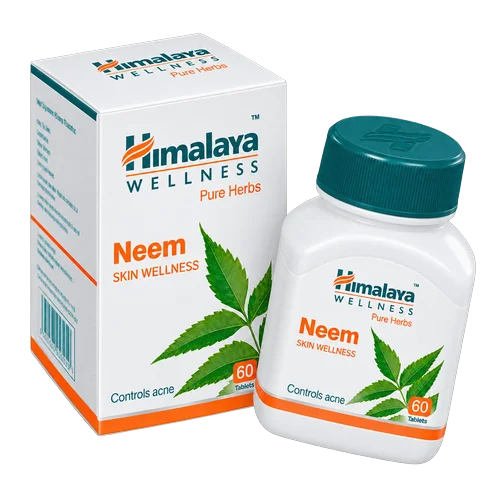
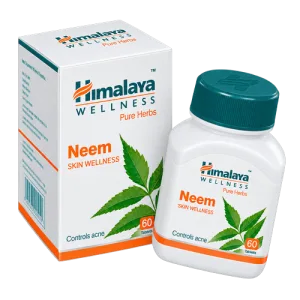
Neem refers to the botanical species Azadirachta indica, a tree traditionally used in South Asian herbal practice. The tablets sold here are intended for skin wellness and are supplied as a 60-tablet oral format. Neem is taken orally.
The World Health Organization places emphasis on identifying the plant material, preparation method, route of administration, and quality controls when evaluating medicinal plants [1].
What it is used for
Neem tablets provide an oral botanical format for people who prefer a measured tablet rather than fresh leaves, loose powder, or oil. The product is marketed for skin wellness and acne control. It should be viewed as a supportive supplement, not as a replacement for established acne treatment when lesions are painful, widespread, scarring, or infected.
Skin changes take time. Acne can fluctuate with hormonal changes, stress, sleep, cosmetics, and menstrual cycles, so a short-term change does not prove that Neem caused or prevented a flare.
Ingredients
Neem contains several naturally occurring limonoids and other plant compounds. Azadirachtin is best known for its insecticidal activity in agricultural research. Nimbin and nimbidin are additional neem constituents studied in laboratory settings. Their presence in the plant does not establish their amount in this tablet product. These distinctions matter when interpreting claims about skin effects.
Neem oil is obtained mainly from seeds and kernels. It has a different composition from leaf material and should not be assumed to represent the contents of an oral tablet. The same botanical name can describe products with very different chemical profiles.
| Neem-related material |
Main practical distinction |
Relevance to Neem tablets |
| Leaves |
Traditional botanical material used in herbal preparations |
The product is identified as neem, but a leaf dose is not stated |
| Neem oil |
Fatty seed-derived preparation used mainly in topical or horticultural products |
It should not be assumed to be present in the tablets |
| Azadirachtin and related limonoids |
Naturally occurring plant compounds studied in laboratory research |
No individual compound amount is provided for this product |
Azadirachtin is not a synonym for the whole neem plant. Neem oil is not equivalent to neem leaf powder. Nimbin and nimbidin are research compounds, not confirmed active doses for this product.
The European Medicines Agency evaluates herbal products according to the quality, safety, traditional use, and evidence linked to the specific preparation rather than to a plant name alone [2].
How to use it
The amount per intake is selected individually rather than fixed as one universal number. Use the dose assigned to your personal regimen and do not increase it because acne has not changed quickly.
- Swallow the tablets by mouth with water.
- Keep the intake schedule consistent when possible.
- Do not take extra tablets after a missed intake.
- Avoid combining Neem with another neem supplement unless a clinician has reviewed the total exposure.
- Stop the product if a severe allergic reaction or concerning systemic symptom develops.
- Seek urgent medical help for breathing difficulty, facial swelling, fainting, or rapidly spreading hives.
The 60-tablet format may support a planned course, but the appropriate duration depends on the individual regimen and the skin concern. Acne that is scarring, nodular, painful, or suddenly severe needs medical assessment rather than prolonged self-treatment.
Do not crush tablets into a face mask or mix them with creams. Oral tablets are formulated for swallowing, while improvised topical use can irritate the skin and gives no reliable dose.
A missed dose should not be doubled. Take the next intake according to the established schedule unless an authorised prescriber has given different instructions.
Comparison
Neem is best compared with preparation categories rather than unrelated branded products.
| Approach |
Route and role |
Main limitation |
| Neem tablets |
Oral botanical support for skin wellness |
Evidence and composition may vary between preparations |
| Topical neem preparation |
Direct application to the skin |
May cause irritation or contact allergy |
| Standard acne treatment |
Directly studied treatment for a defined acne severity |
May require professional assessment and can have medicine-specific adverse effects |
A topical approach places ingredients directly on the affected area. An oral supplement has systemic exposure and therefore deserves more attention to medicines, pregnancy, liver health, and allergy history. Standard acne medicines are selected according to lesion type and severity; Neem does not replace that clinical classification.
Common mistakes
Several habits can reduce the chance of a useful result:
- Taking extra tablets after a missed intake.
- Combining Neem with neem oil, leaf powder, or another concentrated extract.
- Using oral tablets as a facial scrub or homemade mask.
- Starting multiple new skincare products at the same time.
- Expecting rapid clearance of longstanding acne.
- Ignoring painful nodules or early scarring.
- Continuing despite facial swelling, widespread hives, or breathing symptoms.
- Assuming a plant-based product cannot interact with medicines.
- Giving the tablets to a child because the product is described as herbal.
- Stopping prescribed acne treatment without reviewing the change with the prescriber.
Photographing the affected area privately once a week under similar lighting can show gradual change more reliably than checking the mirror several times a day.
Diet and exercise can support general health, but they do not guarantee acne clearance. A balanced eating pattern, regular sleep, moderate activity, and avoidance of picking may help some people. Scrubbing, squeezing lesions, frequent product changes, and heavy occlusive cosmetics can hinder skin recovery.
When this is not for you
Neem is not for you if a listed precaution applies, including pregnancy, breastfeeding, significant liver disease, allergy, planned surgery, or use of medicines that may interact with it. Obtain specific clinical advice before use when any listed precaution applies:
Neem should not be used by children unless a paediatric clinician has specifically selected it. Human safety data for many neem preparations are limited, and products made from different plant parts cannot be treated as identical.
People taking diabetes medicines may need extra caution because some neem preparations have shown glucose-lowering effects in experimental research. A similar concern applies to medicines affecting clotting, although the size of any interaction with this tablet product cannot be predicted from plant studies alone.
Possible side effects
Allergic reactions can occur after oral exposure. Symptoms may include hives, swelling of the lips or eyelids, wheezing, throat tightness, or sudden dizziness. These symptoms require urgent medical attention.
Skin improvement is not the only outcome to monitor. New digestive symptoms, unusual fatigue, yellowing of the skin or eyes, dark urine, or persistent upper abdominal pain should prompt discontinuation and medical assessment because they may indicate a problem requiring investigation.
The MHRA advises consumers to treat herbal products as pharmacologically active preparations, with attention to interactions, adverse reactions, and reporting of suspected side effects [3].
If a rash appears after starting Neem, avoid adding new skincare products at the same time. Changing several products together makes it harder to identify the trigger.
What doctors say
Doctors also separate mild comedonal acne from inflammatory or nodular disease. Blackheads and small whiteheads may be managed differently from deep painful lesions. Scarring acne deserves early treatment because scars can persist after active inflammation settles.
One practical prescribing point is medication history. A clinician will want to know about diabetes treatment, anticoagulants, immune medicines, pregnancy status, allergies, and other supplements before recommending an oral botanical product.
Neem has a narrower evidence base than established acne medicines. That does not make it unsuitable for every adult, but it does mean that worsening acne, persistent inflammation, or suspected adverse effects should change the plan rather than lead to dose escalation.