Skip to content
Fast & Discreet Delivery Save up to 80%
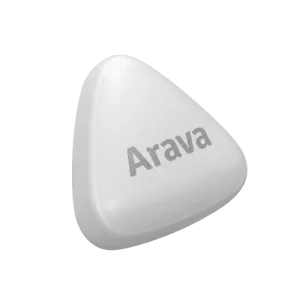
In Stock Arava
Immunosuppressants

Arava

Arava tablets are taken by mouth as part of an individually prescribed treatment plan for adults with active inflammatory joint disease. The treatment aims to reduce immune-driven inflammation and…

Guaranteed quality Original product
Delivery: from 4 days Discreet delivery
24/7 Support Always available
Active ingredient: Leflunomide
Select dosage:
Select pack Package Per tablet Price
£ 3.12 £ 93.74
£ 2.52 £ 187.48 £ 151.36 Save 19%
Free Standard Delivery £ 2.31 £ 281.22 £ 208.12 Save 26%
Free Express Delivery £ 2.20 £ 374.96 £ 264.02 Save 30%
Free Express Delivery £ 2.11 £ 562.44 £ 379.26 Save 33%
Best value Free Express Delivery £ 2.04 £ 843.66 £ 549.54 Save 35%
£ 3.67 £ 110.08
Free Standard Delivery £ 2.98 £ 220.16 £ 178.88 Save 19%
Free Standard Delivery £ 2.75 £ 330.24 £ 247.68 Save 25%
Free Express Delivery £ 2.64 £ 440.32 £ 316.48 Save 28%
Free Express Delivery £ 2.52 £ 660.48 £ 453.22 Save 31%
Best value Free Express Delivery £ 2.45 £ 990.72 £ 660.48 Save 33%

Free delivery on orders from £ 172.00, free express delivery from £ 258.00

Secure payment methods:
VISA AMEX JCB DISCOVER

Arava tablets are taken by mouth as part of an individually prescribed treatment plan for adults with active inflammatory joint disease. The treatment aims to reduce immune-driven inflammation and improve joint symptoms. It is used as a long-term disease-modifying treatment.

Product information

Arava is a disease-modifying antirheumatic medicine containing leflunomide. It belongs to the disease-modifying antirheumatic drug group and is intended to influence the immune processes that maintain inflammation in conditions such as rheumatoid arthritis.

What it is used for

Arava tablets are taken by mouth as part of an individually prescribed treatment plan for adults with active inflammatory joint disease.

Ingredients

Arava belongs to the disease-modifying antirheumatic drug group. It is intended to influence the immune processes that maintain inflammation in conditions such as rheumatoid arthritis. Unlike a simple pain-relief medicine, a disease-modifying treatment addresses the disease process and may help protect joint function over time.

The tablets are taken orally. The prescribed amount is individualised according to the person’s diagnosis, previous treatment, liver function, blood-count results, other medicines, and response during follow-up.

Treatment decisions are based on clinical assessment rather than pain intensity alone. A person may have active inflammatory disease even when pain varies from day to day, while a short period of reduced pain does not always mean that the underlying inflammation has settled.

Arava is a long-term treatment. Keep a simple record of blood-test appointments, new symptoms, infections, and changes in other medicines so these can be discussed during clinical reviews.

How it affects the body

Inflammatory arthritis develops when immune activity becomes directed against tissues around the joints. This can produce swelling, warmth, stiffness, pain, and progressive loss of movement. Arava reduces immune-cell activity involved in the inflammatory response, which can lower disease activity rather than simply masking discomfort.

Disease-modifying treatment works more slowly than an ordinary analgesic. The aim is sustained control of inflammation, fewer flares, better function, and reduced risk of ongoing joint damage.

The European Medicines Agency describes this treatment approach within the disease-modifying management of active rheumatoid arthritis. The MHRA also emphasises monitoring for clinically significant effects involving the liver, blood counts, pregnancy, and infection risk [1].

Difference from symptom-relief medicines

Painkillers may reduce discomfort for several hours, but they do not normally change the immune process driving rheumatoid arthritis. Arava is used to modify disease activity, which explains why it can remain part of treatment even when pain varies.

This benefit comes with extra monitoring. A medicine that affects immune activity may cause problems that are not immediately obvious, so blood tests and clinical review remain part of responsible treatment.

How to use it

  • Dose: The amount per intake is set individually for each person; no fixed dose in mg or ml is established here.
  • Frequency: Take the prescribed number of tablets at the frequency specified in the individual treatment plan.
  • Timing: Take the tablets by mouth at the time directed in the individual treatment plan; meal timing is not established here.
  • Duration: Use as a long-term disease-modifying treatment for the duration prescribed by the clinician.
  • Route: Swallow the tablets by mouth.

Comparison

Arava and methotrexate are disease-modifying antirheumatic medicines, but they act through different biochemical pathways. Arava reduces immune-cell proliferation through inhibition of dihydroorotate dehydrogenase, while methotrexate affects folate-dependent pathways and immune signalling. Both can affect the liver and blood counts, so neither should be selected or combined casually. NICE guidance published in 2020 treats these medicines as options requiring individual assessment and monitoring [5].

Common mistakes

Several patterns can reduce benefit or increase risk:

  • Stopping after a few days because joint pain has not changed.
  • Taking extra tablets after a missed dose.
  • Missing blood tests because the person feels well.
  • Continuing treatment through a high fever without seeking advice.
  • Assuming a mild rash cannot become serious.
  • Failing to mention a new antibiotic or short course of steroids.
  • Drinking heavily while liver tests are being monitored.
  • Planning pregnancy without discussing drug elimination.
  • Taking live vaccines without checking the treatment plan.
  • Describing only pain while omitting swelling, stiffness, weakness, cough, bruising, or infections.

One easily missed detail is persistent diarrhoea. It can cause dehydration and may also signal intolerance, so it should be reported if it does not settle.

Another is a new cough. People often attribute it to seasonal illness, but breathlessness or a persistent dry cough deserves assessment during immune-modifying treatment.

Who should not use it

Arava is not suitable for everyone. It may be inappropriate for a person with significant liver disease, severely reduced liver function, serious impairment of blood-cell production, uncontrolled severe infection, or a known allergy to the medicine or its components.

It is not suitable during pregnancy because exposure can harm fetal development. Pregnancy must be avoided during treatment and for the required period after stopping, unless a clinician has confirmed that drug elimination has been completed. Breastfeeding is also generally incompatible with treatment because the medicine may pass into breast milk.

Potential interactions include other disease-modifying antirheumatic medicines, immunosuppressants, medicines that affect the liver, and treatments with significant effects on blood counts. Warfarin and some other medicines may require closer monitoring because changes in liver function or drug metabolism can alter their effect.

When this is not for you

Arava is NOT for you if required monitoring cannot be completed or if pregnancy prevention requirements cannot be followed. Extra caution is required if you have previous liver disease, recurrent or serious infections, reduced blood counts, chronic lung disease with unexplained breathlessness, peripheral neuropathy, diabetes, uncontrolled high blood pressure, or treatment with other medicines that suppress immune activity.

Vaccination plans should be reviewed before treatment. Live vaccines may carry extra risk during immune-modifying therapy. The World Health Organization’s vaccination principles support individual assessment when immune function is altered [3].

Avoid starting an over-the-counter pain remedy, herbal preparation, or supplement without checking its compatibility with the full medicine list. Liver-related interactions are easy to overlook when a product is marketed as natural.

Possible side effects

Arava can cause adverse effects, although not every person experiences them. Commonly reported problems include diarrhoea, nausea, headache, dizziness, mouth ulcers, skin reactions, reduced appetite, and temporary changes in hair texture or hair loss. Blood pressure may rise, and liver blood tests may become abnormal.

Several practical details matter:

  • Diarrhoea can lead to dehydration if it is persistent.
  • A new rash may be mild, but a rapidly spreading or blistering rash needs urgent assessment.
  • Unusual tiredness can occur for many reasons, including anaemia, liver problems, or infection.
  • Hair shedding may be distressing even when it is medically mild.
  • Alcohol can add to the burden on the liver.
  • A cough or fever may signal infection when immune activity is reduced.

The Summary of Product Characteristics for Arava describes liver injury, blood disorders, serious skin reactions, severe infection, lung problems, and peripheral nerve symptoms as clinically significant risks [2]. Routine monitoring is used to detect some complications before they become severe.

Laboratory monitoring

Monitoring commonly includes liver-function tests and a full blood count. Blood pressure checks may also be used. The frequency depends on the stage of treatment, local monitoring protocols, results from earlier tests, and other medicines being taken.

A useful practical habit is to mention every new medicine, including short antibiotic courses and herbal products, before the next Arava review. Interactions can be missed when only regular medicines are discussed.

Urgent symptoms

Seek urgent medical assessment for:

  • Yellowing of the skin or whites of the eyes.
  • Dark urine with marked fatigue or upper-abdominal discomfort.
  • Severe or spreading rash, blistering, peeling skin, or sores in the mouth.
  • Breathing difficulty, persistent dry cough, or chest tightness.
  • High fever, chills, painful urination, or other signs of serious infection.
  • Unusual bruising, bleeding, or extreme pallor.
  • New numbness, burning, weakness, or loss of coordination.
  • Facial swelling, wheezing, or difficulty swallowing.

These symptoms do not prove that Arava is responsible, but they warrant prompt medical assessment.

What doctors say

In clinical practice, physicians usually set expectations early: Arava is judged by disease activity, swollen joints, morning stiffness, function, blood tests, and flare frequency rather than by pain relief after one dose.

A rheumatology team may continue treatment when the early response is modest if inflammation is moving in the right direction and monitoring results remain acceptable. The plan may change when there is persistent disease activity, serious intolerance, a clinically significant laboratory abnormality, or a new infection.

Doctors also assess the treatment context. A patient taking several immune-modifying medicines may need a different monitoring schedule from someone using one medicine alone. Age, liver function, kidney function, vaccination history, alcohol intake, and future pregnancy plans can influence the decision.

The MHRA’s safety approach supports regular monitoring and prompt investigation of warning symptoms rather than waiting for the next routine appointment [4].

Common questions

Can Arava be used during pregnancy or breastfeeding?

Arava should not be used during pregnancy because it may harm fetal development. The EMA's 2024 product information requires pregnancy prevention during treatment and a clinician-directed elimination procedure after stopping when necessary . Breastfeeding is generally avoided during treatment because the medicine may pass into breast milk. Anyone planning pregnancy should discuss timing before stopping or changing treatment.

How does Arava differ from methotrexate?

Arava and methotrexate are disease-modifying antirheumatic medicines, but they act through different biochemical pathways. Arava reduces immune-cell proliferation through inhibition of dihydroorotate dehydrogenase, while methotrexate affects folate-dependent pathways and immune signalling. Both can affect the liver and blood counts, so neither should be selected or combined casually. NICE guidance published in 2020 treats these medicines as options requiring individual assessment and monitoring [5].

Which symptoms require urgent medical attention?

Urgent assessment is needed for yellow skin or eyes, severe rash, blistering, breathing difficulty, persistent dry cough, high fever, unusual bleeding, or marked weakness. These symptoms can indicate liver injury, serious skin reactions, infection, lung complications, or blood-cell abnormalities. Do not wait for a routine appointment when symptoms are severe or rapidly worsening. The FDA's 2018 prescribing information for leflunomide also highlights serious hepatic, haematological, infectious, and dermatological reactions .

Is Arava suitable for older adults?

Older adults may use Arava when the expected benefit outweighs the risks, but clinicians often review liver function, blood counts, kidney status, blood pressure, infection history, and the full medicine list more closely. Age alone does not determine the dose, since treatment remains individualised. Falls, dizziness, frailty, and reduced ability to recover from infection can affect the monitoring plan. The WHO's 2019 principles for medication safety support regular review when several medicines are used together .

Can alcohol be used during Arava treatment?

Alcohol can place additional strain on the liver, so limiting or avoiding it is the safer approach while liver tests are being monitored. The risk is greater with previous liver disease, abnormal liver results, heavy alcohol intake, or other liver-affecting medicines. Ask for patient-specific guidance before drinking regularly. The EMA's 2024 product information also supports liver monitoring during treatment. A new illness, unusual fatigue, dark urine, or yellowing of the skin should prompt urgent medical assessment rather than waiting for a scheduled test.

What happens after stopping Arava, and is tapering required?

Arava has a long persistence in the body, so its effects do not disappear immediately after the last tablet. Symptoms of inflammatory arthritis may return when disease-modifying control is lost, while adverse effects can also take time to resolve. Tapering is not usually the central issue in the way it is with corticosteroids, but stopping should still follow a clinician’s plan. A drug-elimination procedure may be considered in specific situations, including pregnancy planning or serious toxicity, under medical supervision. The EMA's 2024 product information describes this option for selected clinical circumstances.

How long does a course last, and can Arava be used long term?

Arava is commonly used as a continuing treatment rather than a short course. Long-term use may be appropriate when joint inflammation is controlled and blood tests remain acceptable. Treatment can be changed if the response is inadequate, adverse effects develop, pregnancy is planned, or another clinical concern arises. Long-term suitability is reviewed through symptoms, physical examination, laboratory monitoring, and the person’s wider health history. NICE guidance published in 2020 supports this continuing clinical review.

Do you offer anonymous delivery?

Your order will be securely packed and shipped within 24 hours. This is exactly what your package will look like (images of an actual item sent). It has the size and look of a regular private letter (24x11x0.7 cm) and its contents cannot be seen.

Comparison

All options for Immunosuppressants at a glance

Reviews: Arava

Based on 4 reviews

Alison, 32 Verified
Rating: 3.5 out of 5

I had been dealing with stiff hands for months before starting Arava. The first few weeks were not dramatic, but morning stiffness became easier after continued treatment. I also had loose stools at the beginning, which settled after I reported it.

Milton Keynes 21 Oct 2026
Lisa, 28 Verified
Rating: 3 out of 5

My joints felt less swollen after several weeks, and I could manage work more comfortably. I missed one monitoring appointment because I felt better, then had to rearrange it before continuing the next review. That was frustrating but a useful reminder.

Liverpool 27 Oct 2026
Megan, 44 Verified
Rating: 3 out of 5

Arava helped reduce my flare frequency, although I noticed more hair shedding during treatment. It was not severe, but it bothered me enough to discuss alternatives and monitoring with the rheumatology team.

Bournemouth 30 Sept 2026
Rebecca, 59 Verified
Rating: 5 out of 5

I had taken the tablets for a long period and found the routine manageable. A chest infection later meant that treatment was reviewed before the next dose, and I was glad I had reported the fever instead of waiting.

Plymouth A long period 14 Oct 2026

Sources

  1. European Medicines Agency (2024). Arava: Summary of Product Characteristics and Product Information.
  2. U.S. Food and Drug Administration (2018). Arava (leflunomide) Prescribing Information.
  3. World Health Organization (2019). Medication Safety in Polypharmacy: Technical Report.
  4. Medicines and Healthcare products Regulatory Agency (2019). Monitoring of disease-modifying antirheumatic drugs in adults.
  5. National Institute for Health and Care Excellence (2020). Rheumatoid arthritis in adults: management.
Get our free app Shop faster and track your orders 3.5 · 225 reviews Install