Kate, 47 - Dundee, used Protopic 0.1% on facial eczema for several weeks: “The first two applications felt hot and prickly, especially around my nose. That settled after a few days, and the itching became much easier to manage. I had to remember not to apply it straight after a shower.”
Dundee Several weeks 21 Oct 2026
Protopic
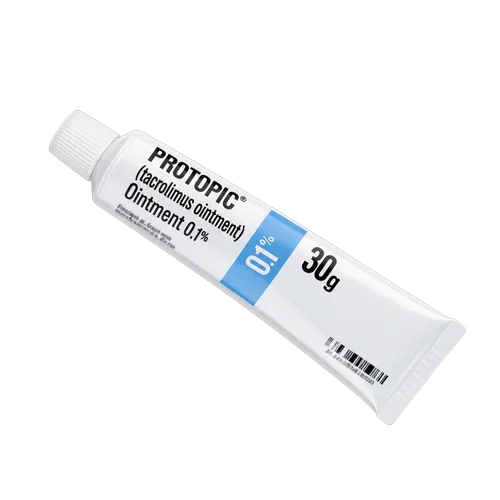
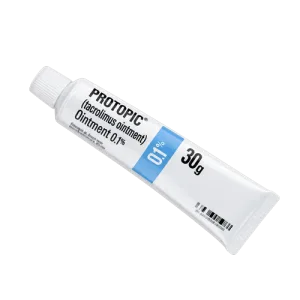
Protopic 0.1% ointment is applied as a thin layer to affected skin for moderate to severe atopic dermatitis in adults and eligible adolescents. Its active ingredient, tacrolimus, calms excessive skin…
Protopic 0.1% ointment is applied as a thin layer to affected skin for moderate to severe atopic dermatitis in adults and eligible adolescents. Its active ingredient, tacrolimus, calms excessive skin inflammation without corticosteroids. The 30 g tube is intended for external use only.
Product information
Protopic contains tacrolimus monohydrate, a topical calcineurin inhibitor and non-steroidal topical immunomodulator. It is prescribed for moderate to severe atopic dermatitis when conventional topical treatment has not provided sufficient control, or when a steroid-sparing option is clinically appropriate.
Atopic dermatitis involves an overactive immune response, impaired skin-barrier function and recurrent inflammation.
The European Medicines Agency describes tacrolimus ointment as a treatment for atopic dermatitis in selected patients, with use determined by age, disease severity and previous treatment response [1].
What it is used for
It is prescribed for moderate to severe atopic dermatitis when conventional topical treatment has not provided sufficient control, or when a steroid-sparing option is clinically appropriate.
Ingredients
Protopic contains tacrolimus monohydrate, a topical calcineurin inhibitor and non-steroidal topical immunomodulator.
How it affects the body
Tacrolimus penetrates the affected skin and reduces the activation of T lymphocytes. This lowers the release of inflammatory cytokines that contribute to redness, itching, swelling and eczema flares.
Tacrolimus belongs to the calcineurin-inhibitor class. Calcineurin is an enzyme involved in switching on immune-cell signalling. By inhibiting this pathway locally, Protopic reduces inflammatory activity in the skin without producing the skin-thinning effect associated with prolonged topical corticosteroid exposure.
How to use it
Protopic 0.1% ointment is applied to areas affected by atopic dermatitis. The regimen for the selected strength should be confirmed with a healthcare professional before starting, especially for adolescents, people with extensive eczema, and patients using other immunomodulating treatments.
- Apply a thin layer to the affected skin twice daily during active treatment.
- Use it only on areas affected by eczema.
- Avoid application inside the eyes, mouth, nose or other mucous membranes.
- Wash and dry the hands before application.
- Wash the hands after application unless the hands themselves are being treated.
- Do not cover treated skin with airtight dressings unless specifically instructed.
- Allow the ointment to absorb before applying clothing over the area.
- Avoid bathing, showering or swimming immediately after application because water can remove the ointment.
- Keep the ointment away from children’s reach.
The usual active-treatment course continues until the eczema has cleared or is adequately controlled. Some patients with frequent relapses may receive intermittent maintenance treatment, such as application on two non-consecutive days each week to previously affected sites. Maintenance treatment requires a clinician’s assessment of the person’s flare pattern.
If a scheduled application is missed, apply the ointment when remembered if it is not nearly time for the next application. If the next application is due soon, skip the missed application and resume the normal schedule. Do not apply extra ointment to compensate.
Sun protection matters during treatment. Avoid prolonged exposure to strong sunlight, tanning beds and ultraviolet phototherapy unless a dermatology team has specifically arranged it.
Comparison
Comparative Analysis with Topical Corticosteroid Therapy
Topical corticosteroids reduce inflammation through glucocorticoid receptor activity. Protopic acts through calcineurin inhibition, making it a non-steroidal option for eczema control.
| Feature | Protopic | Topical corticosteroids |
|---|---|---|
| Main action | Local calcineurin inhibition | Anti-inflammatory glucocorticoid activity |
| Skin-thinning concern | Does not cause corticosteroid-related skin atrophy | Risk rises with excessive potency, duration or use on thin skin |
| Common early issue | Burning, warmth or tingling | Stinging, irritation or steroid-related skin changes |
Topical corticosteroids remain useful for many eczema flares because they can act quickly and are available in several potencies. Protopic can be useful when repeated steroid courses are unsuitable, when eczema affects the face, eyelids, neck or skin folds, or when steroid-sparing treatment is desired.
Protopic can cause more noticeable burning during the first few applications. Corticosteroids can cause skin thinning, stretch marks, visible small blood vessels and other local changes when used too strongly or for too long. The best option depends on body site, severity, age, flare frequency and previous treatment response.
The British National Formulary and MHRA prescribing information place emphasis on applying topical treatments only to affected skin and avoiding unnecessary prolonged exposure. Protopic is not a general moisturiser and should not replace regular emollient use.
Common mistakes
Several practical errors can reduce the benefit of Protopic or increase irritation:
- Applying it only when itching becomes severe instead of following the prescribed schedule.
- Spreading it over unaffected skin as a preventive moisturiser.
- Using a thick layer in the belief that more ointment will work faster.
- Applying it to wet skin after bathing.
- Covering the area with plastic film or airtight clothing.
- Using fragranced products directly before or after application.
- Forgetting that alcohol can trigger facial flushing.
- Applying it to a cold sore or another infected lesion.
- Stopping after one mildly uncomfortable application without discussing persistent irritation.
- Applying a topical corticosteroid, antiseptic or antifungal product at the same time without a coordinated plan.
One easily missed detail is the hand-to-eye transfer problem. Tacrolimus ointment left on the fingertips can irritate the eyelids or cause eye discomfort if the face is touched later.
Another is the sun-exposure mistake. Even when eczema is improving, intentional tanning and ultraviolet treatment can conflict with the precautions associated with topical tacrolimus.
Who should not use it
- Allergy to tacrolimus, macrolide medicines or any ingredient in the ointment.
- Active bacterial, fungal or viral infection at the treatment site.
- Cold sores or other herpes virus lesions.
- Extensive skin disease requiring treatment over a large body surface.
- Severe immune-system impairment.
- Pregnancy or breastfeeding.
- Use of medicines that substantially suppress immune function.
- Significant lymph-node swelling or unexplained skin lesions.
When this is not for you
Protopic may not be for you if any of the following apply: The following situations require specific medical assessment before treatment:
- Allergy to tacrolimus, macrolide medicines or any ingredient in the ointment.
- Active bacterial, fungal or viral infection at the treatment site.
- Cold sores or other herpes virus lesions.
- Extensive skin disease requiring treatment over a large body surface.
- Severe immune-system impairment.
- Pregnancy or breastfeeding.
- Use of medicines that substantially suppress immune function.
- Significant lymph-node swelling or unexplained skin lesions.
Possible side effects
The most common early reactions are application-site burning, warmth, itching, redness and tingling. These effects often appear during the first few days and may become less troublesome as the skin settles.
Other reported reactions include folliculitis, acne-like lesions, increased sensitivity of the treated area and facial flushing after alcohol. Alcohol-related flushing can involve warmth, redness or a hot sensation on the face. It is usually short-lived, though avoiding alcohol may prevent the reaction.
Contact a prescriber promptly if treated skin becomes increasingly painful, swollen, weeping or covered with spreading blisters. These features may indicate infection, including herpes simplex.
Seek urgent medical help for facial swelling, difficulty breathing, widespread blistering or a severe allergic reaction.
Practical measures may improve tolerability:
- Apply the ointment to cool, dry skin.
- Avoid hot baths directly before application.
- Do not apply it immediately after a fragranced cosmetic.
- Use a bland emollient at a different time if both products are needed.
- Stop and obtain medical advice if the reaction becomes severe or does not resemble the usual early irritation.
A Cochrane review published in 2016 reported clinical improvement with topical calcineurin inhibitors in atopic dermatitis, while also describing local irritation as a common treatment issue [2].

What doctors say
Dermatologists generally view Protopic as a useful steroid-sparing treatment for selected atopic dermatitis patients. The main clinical expectation is control of inflammation, itching and recurrent flares rather than permanent removal of the underlying tendency to eczema.
Treatment works best when applied consistently to active areas and stopped or reduced according to the agreed plan once the skin has settled. Using it sporadically on a large flare may give a disappointing result because untreated inflammation continues to drive itching and scratching.
A doctor will usually assess the body site before choosing tacrolimus. Facial and flexural eczema may justify a non-steroidal option because these sites are more vulnerable to corticosteroid-related atrophy. Thick, heavily inflamed plaques may require a different initial approach.
The MHRA product information advises avoiding unnecessary sun exposure and monitoring for infection. These precautions matter because the medicine changes local immune signalling, even though systemic exposure from topical use is usually limited [3].
Common questions
What should I do after a missed Protopic application?
Apply the missed dose when remembered if the next application is not due soon. If the next scheduled application is close, skip the missed dose and continue normally. Do not apply a double layer. Keep the next application at the prescribed time. NHS topical-treatment guidance reviewed in 2025 supports avoiding extra applications after a missed topical dose because additional product does not reliably restore the treatment schedule.
Can Protopic affect driving, concentration or work with machinery?
Protopic is applied to the skin and is not expected to impair driving, concentration or machinery work in most patients. Burning, itching or facial flushing may distract someone during the first days of treatment. The MHRA product information available in 2025 describes local application-site reactions rather than a routine sedative effect. Do not drive if severe discomfort, dizziness from another medicine or an allergic reaction affects your ability to function.
How should Protopic be applied, and should the area be covered?
Apply a thin layer to affected skin twice daily during active treatment, using the regimen confirmed before starting. Wash and dry the hands before application, then wash them afterwards unless the hands are being treated. Do not cover the treated area with airtight dressings unless specifically instructed. EMA product information updated through 2025 supports avoiding occlusive dressings because they can increase local absorption and irritation.
Can Protopic be combined with medicines that suppress the immune system?
Combination with systemic immunosuppressants, biologic medicines or treatments used after transplantation requires medical supervision. Tacrolimus ointment acts locally, but absorption may increase when large areas or damaged skin are treated. EMA product information available in 2023 supports reviewing combined immune-modifying treatment rather than assuming that topical use is always isolated. Provide a full list of prescription medicines, over-the-counter treatments and supplements before starting.
What happens when Protopic is stopped, and does it require tapering?
Protopic usually does not require tapering in the same way as a long course of oral corticosteroids. Eczema can return after stopping because the underlying atopic tendency remains, especially if emollient care and flare-prevention measures are discontinued. NHS Scotland guidance published in 2024 describes intermittent maintenance use for selected patients with recurrent disease. The treatment plan may involve stopping after control, then restarting during a new flare or using scheduled applications to previously affected sites.
How does Protopic differ from pimecrolimus?
Both tacrolimus and pimecrolimus are topical calcineurin inhibitors, so neither is a topical corticosteroid. Tacrolimus ointment is generally selected for more pronounced eczema, while pimecrolimus is often used for milder disease or sensitive sites. EMA regulatory information from 2025 distinguishes the products by licensed indications, age groups and formulation rather than treating them as identical substitutes. The active substance, strength and prescribed regimen determine which option is appropriate.
Can Protopic be used with cosmetics, sunscreen or other topical products?
Use bland emollients, cosmetics and sunscreen at separate times if they cause irritation or make it difficult for the ointment to remain on the skin. Apply Protopic to clean, dry affected skin and allow it to settle before using another topical product. Avoid fragranced products directly over an active eczema site. MHRA skin-treatment advice available in 2025 supports reducing irritants and limiting unnecessary products during topical treatment.
Do you offer anonymous delivery?
Your order will be securely packed and shipped within 24 hours. This is exactly what your package will look like (images of an actual item sent). It has the size and look of a regular private letter (24x11x0.7 cm) and its contents cannot be seen.
Comparison
Arava
Humira
Plaquenil
Protopic Current
Reviews: Protopic
Based on 4 reviews
Zoe, 27 - Hull, used Protopic 0.1% for several weeks for recurring neck eczema: “The ointment helped the redness and I liked having a steroid-free option for my neck. The texture felt greasy under work clothes, so I applied it in the evening and washed my hands carefully afterwards.”
Hull Several weeks 13 Oct 2026Emily, 37 - Belfast, used Protopic 0.1% twice daily during a flare for one week: “My skin looked calmer within the first week, but I experienced facial warmth after drinking wine. It was uncomfortable rather than dangerous, and avoiding alcohol prevented it. Remembering the twice-daily applications was the hardest part.”
Belfast One week 27 Oct 2026Rachel, 56 - Bradford, used Protopic 0.1% twice daily for several days for eczema around the eyes: “The itching improved, although the first few days were irritating. I stopped using it when the area became more swollen and contacted the clinic, where an infection was ruled out and the treatment plan was changed.”
Bradford Several days 30 Sept 2026Sources
- European Medicines Agency (2019). Protopic — Summary of Product Characteristics (SmPC) and package leaflet.
- Cochrane (2016). Topical calcineurin inhibitors for atopic dermatitis — systematic review.
- Medicines and Healthcare products Regulatory Agency (2020). Protopic 0.1% ointment — Summary of Product Characteristics (SmPC).