Skip to content
Fast & Discreet Delivery Save up to 80%
In Stock Humira
Immunosuppressants

Humira

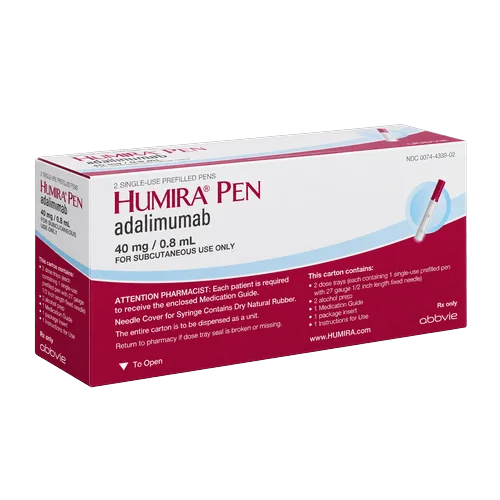
Adalimumab, the active ingredient of Humira, is a biologic TNF inhibitor delivered by subcutaneous injection. Humira is prescribed for adults and some children with immune-mediated inflammatory…

Guaranteed quality Original product
Delivery: from 4 days Discreet delivery
24/7 Support Always available
Active ingredient: Adalimumab
Select dosage:
Select pack Package Per tablet Price
Free Express Delivery £ 324.65 £ 649.30
Free Express Delivery £ 314.12 £ 1,298.60 £ 1,256.46 Save 3%
Best value Free Express Delivery £ 306.81 £ 2,597.20 £ 2,454.44 Save 5%
Free Express Delivery £ 424.84 £ 849.68
Free Express Delivery £ 411.08 £ 1,699.36 £ 1,644.32 Save 3%
Best value Free Express Delivery £ 401.73 £ 3,398.72 £ 3,213.82 Save 5%

Free delivery on orders from £ 172.00, free express delivery from £ 258.00

Secure payment methods:
VISA AMEX JCB DISCOVER

Adalimumab, the active ingredient of Humira, is a biologic TNF inhibitor delivered by subcutaneous injection. Humira is prescribed for adults and some children with immune-mediated inflammatory diseases affecting the joints, skin, eyes or bowel. By blocking TNF-alpha, it reduces inflammatory signalling that can cause pain, swelling and tissue damage.

Product information

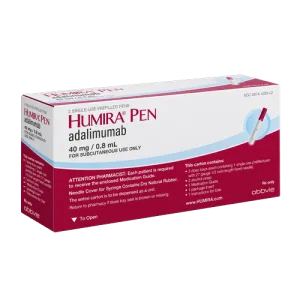
Humira contains adalimumab, a recombinant human monoclonal antibody. The supplied injector contains adalimumab for subcutaneous use. Adalimumab belongs to the tumour necrosis factor-alpha, or TNF-alpha, inhibitor group. Dosing differs between strengths and between users, so there is no single amount that suits everyone.

Biologic therapy and conventional DMARDs

Traditional small-molecule medicines are usually absorbed through the digestive tract and act on several biochemical pathways. Adalimumab is a large protein molecule, so it is given by injection rather than as an ordinary tablet.

The UK prescribing information describes adalimumab as a disease-modifying antirheumatic drug and biologic therapy [1].

What it is used for

Humira is used for chronic inflammatory diseases in which the immune system causes persistent or damaging inflammation. It is not prescribed for every type of pain, rash, back pain or bowel disturbance.

Rheumatological uses include rheumatoid arthritis, psoriatic arthritis, juvenile idiopathic arthritis and axial spondyloarthritis. In these conditions, treatment aims to reduce inflammation and prevent progressive damage, not merely to provide short-term pain relief.

Dermatological use includes moderate-to-severe plaque psoriasis and hidradenitis suppurativa. The treatment can reduce inflammatory skin lesions, although response may take several weeks and skin improvement can vary between body areas.

Gastrointestinal indications include Crohn’s disease and ulcerative colitis. Treatment may reduce abdominal pain, diarrhoea, rectal bleeding and other signs of active inflammation when the condition is suitable for anti-TNF therapy.

Ophthalmology specialists may use adalimumab for selected cases of non-infectious uveitis. Eye inflammation requires close monitoring because vision can be threatened by the disease itself and by complications unrelated to skin or joint symptoms.

Age matters. Some paediatric indications use weight-based regimens, while adult indications often use fixed prefilled-pen strengths. The prescriber selects the schedule for the diagnosed condition, the patient’s age and body weight, and the response to treatment.

Ingredients

Humira contains adalimumab, a recombinant human monoclonal antibody. The supplied injector contains adalimumab for subcutaneous use. Adalimumab belongs to the tumour necrosis factor-alpha, or TNF-alpha, inhibitor group. Dosing differs between strengths and between users, so there is no single amount that suits everyone.

How it affects the body

Adalimumab attaches directly to TNF-alpha. This prevents TNF-alpha from activating receptors on immune and tissue cells. The result is reduced release of inflammatory mediators, less movement of inflammatory cells into affected tissues and lower activity of several processes involved in joint, skin and bowel inflammation.

The treatment does not suppress every part of the immune system equally. It targets one major inflammatory messenger. That focused action explains why Humira can help several different diseases that share TNF-driven inflammation, while also explaining why infections such as tuberculosis can become more serious during therapy. This mechanism does not eliminate infection risk. Clinical monitoring remains necessary throughout treatment.

The European Medicines Agency describes adalimumab as binding specifically to TNF and reducing the biological activity of this cytokine [2]. Symptom relief may occur before the full disease-modifying benefit becomes clear. Joint stiffness, bowel urgency, skin plaques or eye inflammation can improve at different speeds.

Keep a record of symptom changes before treatment starts, including morning stiffness, bowel frequency, skin involvement or eye symptoms. A simple baseline makes gradual improvement easier to recognise.

How to use it

Humira is administered by subcutaneous injection using a single-use prefilled pen. The pen is designed for injection into fatty tissue, commonly the abdomen or thigh, with injection sites rotated to reduce local irritation.

Dosing differs between strengths and between users, so there is no single amount that suits everyone. Rheumatoid arthritis, psoriasis, inflammatory bowel disease and paediatric conditions can use different loading or maintenance schedules.

Treatment may be prescribed as:

  • Humira alone
  • Humira with methotrexate
  • Humira with another conventional DMARD
  • A loading regimen followed by maintenance injections
  • A condition-specific schedule selected by a specialist
Allow the injector to reach room temperature naturally before use if instructed by the clinical team. Do not use external heat, hot water or a microwave to warm it.

A missed injection should not be replaced with two injections. The usual approach is to administer the missed dose when remembered and then continue the established schedule, unless the prescribing team has given a different plan.

What is the correct technique for using the Humira injector?

Humira is injected under the skin, usually into the abdomen or thigh, with injection sites rotated between doses. The skin should be clean and dry, and the injector should be held against the skin according to the device instructions provided during training. The full dose should be allowed to enter before the injector is removed. MHRA patient-safety guidance available in 2025 supports device training for biologic self-injection rather than relying on memory alone.

How soon can the effect of Humira become noticeable?

The timing depends on the disease being treated, its severity and the treatment schedule. Some people notice reduced stiffness, pain, bowel symptoms or skin inflammation within several weeks, while the full response may take longer. Lack of early improvement does not automatically prove failure, but persistent or worsening disease requires clinical reassessment. EMA information available in 2024 describes response evaluation according to the specific approved indication rather than one universal time point.

Comparison

A TNF inhibitor may be favoured when the clinical features fit TNF-driven disease and previous treatment has not controlled inflammation. A non-TNF biologic may be selected when there is inadequate response, a specific comorbidity or a reason to avoid TNF blockade.

Conventional DMARDs remain important. They are often used before a biologic, alongside it or after a biologic is stopped. The choice is based on disease pattern, pregnancy plans, infection history, vaccination status, liver health and other medicines.

Biosimilars are biologic medicines with no clinically meaningful differences from the reference biologic in quality, biological activity, efficacy or safety. Switching between adalimumab products is a clinical decision recorded by the treating service; it should not be treated as an informal self-directed change.

Common mistakes

Several errors can reduce treatment benefit or increase risk:

  • Injecting into irritated, bruised or scarred skin
  • Using the same injection site repeatedly
  • Stopping after one uncomfortable injection-site reaction without reporting it
  • Doubling the next dose after a missed injection
  • Starting treatment during a fever or untreated infection
  • Forgetting to mention biologic treatment before surgery or dental procedures
  • Receiving a live vaccine without checking its suitability
  • Assuming improved symptoms mean monitoring is no longer needed
  • Keeping the injector in unsuitable conditions, such as direct sunlight or excessive heat
  • Changing the injection schedule without a documented clinical plan

Storage matters for a biologic. Humira is normally kept refrigerated and protected from light, with temperature excursions handled according to the product’s approved instructions. It should not be frozen. During travel, a validated cold-storage method is needed, especially when the journey includes long periods outside a refrigerator.

Write the planned injection date in a calendar immediately after each dose. This prevents two common errors: forgetting the next dose and administering it earlier than intended.

Pain can sometimes be reduced by allowing the skin to dry fully after cleaning and by avoiding injection into areas that are already tender. Never rub the site vigorously after the injection.

Who should not use it

Humira is not suitable for everyone. The treatment is generally ruled out or requires specialist reconsideration in the following situations:

  • Active tuberculosis
  • Another serious active infection, including sepsis
  • A known serious hypersensitivity to adalimumab or an excipient
  • Moderate-to-severe heart failure
  • A history of severe or recurrent infection requiring careful risk assessment
  • Active hepatitis B infection without an appropriate management plan
  • Certain neurological demyelinating disorders
  • A current cancer history requiring specialist review

TNF inhibitors can interact clinically with other immune-suppressing treatments. Combining adalimumab with another biologic immune therapy or certain targeted immune medicines may increase infection risk without providing additional benefit. Medicines such as methotrexate may be combined deliberately, but only within a monitored treatment plan.

When this is not for you

This is not for you if you have an untreated serious infection, active tuberculosis or a previous severe allergic reaction to adalimumab. It is also unsuitable for unsupervised combination with another biologic immune suppressant.

Tell the prescribing team about tuberculosis exposure, recurrent infections, hepatitis, cancer, multiple sclerosis, heart failure and planned surgery. Pregnancy and breastfeeding require an individual assessment because disease control and infant exposure both affect treatment decisions.

Possible side effects

Injection-site reactions are among the more common problems. These can include redness, itching, swelling, bruising or discomfort around the injection area. Upper respiratory infections, headache, nausea and abdominal symptoms may also occur.

Because adalimumab affects TNF-alpha, infections can become more severe or recur more easily. Tuberculosis is a central safety concern, including latent tuberculosis that produces no symptoms. Hepatitis B reactivation, serious bacterial infections, fungal infections and opportunistic infections have also been reported.

Serious warning signs include:

  • Persistent fever or chills
  • New cough, night sweats or unexplained weight loss
  • Breathlessness or chest pain
  • Painful skin lesions that rapidly worsen
  • Severe abdominal pain or repeated vomiting
  • Yellowing of the skin or eyes
  • New neurological symptoms
  • Unusual bruising or bleeding
  • Swelling of the legs with breathlessness

Long-term immune-modifying treatment has also been associated with rare malignancies, including lymphoma. The absolute risk varies with age, disease activity, previous immune-suppressing treatment and other factors. Heart failure can worsen with TNF blockade, and adalimumab is not suitable for every person with cardiac disease.

The MHRA advises clinicians to assess infection risks and relevant medical history before and during biologic treatment. Screening commonly includes tuberculosis assessment, hepatitis testing and review of vaccination status, depending on the treatment plan.

A mild injection-site mark can be photographed with the date if it is difficult to remember its size. Rapidly expanding redness, severe pain or fever needs prompt medical assessment rather than another injection at the same site.

One practical point is easy to miss: vaccines made from live organisms may be unsuitable during adalimumab treatment. Inactivated vaccines may still be recommended, but the timing should be planned around the treatment schedule and the individual’s condition.

What doctors say

In clinical practice, physicians usually judge Humira by disease control rather than by a single symptom. A rheumatologist may track swollen joints, inflammatory markers, morning stiffness and physical function. A gastroenterologist may follow bowel symptoms, faecal calprotectin, blood tests and endoscopic findings. A dermatologist may assess plaque thickness, surface area and itch.

Doctors also look for a pattern of response. A partial improvement can justify reassessment of the diagnosis, injection technique, adherence, drug levels or the need for a different treatment approach. Loss of response after earlier benefit may occur through immune responses against the biologic or through a change in the inflammatory disease.

The National Institute for Health and Care Excellence recommends treat-to-target principles in several inflammatory diseases, meaning that treatment is adjusted toward a defined clinical goal rather than continued indefinitely without review [3]. Patients often gain more from regular monitoring than from judging the treatment after one injection.

A physician would also distinguish inflammation from permanent structural damage. Humira may reduce active inflammation, but established joint deformity, scarring or bowel complications may not reverse fully.

Common questions

What is the correct technique for using the Humira injector?

Humira is injected under the skin, usually into the abdomen or thigh, with injection sites rotated between doses. The skin should be clean and dry, and the injector should be held against the skin according to the device instructions provided during training. The full dose should be allowed to enter before the injector is removed. MHRA patient-safety guidance available in 2025 supports device training for biologic self-injection rather than relying on memory alone.

How soon can the effect of Humira become noticeable?

The timing depends on the disease being treated, its severity and the treatment schedule. Some people notice reduced stiffness, pain, bowel symptoms or skin inflammation within several weeks, while the full response may take longer. Lack of early improvement does not automatically prove failure, but persistent or worsening disease requires clinical reassessment. EMA information available in 2024 describes response evaluation according to the specific approved indication rather than one universal time point.

How should the Humira injector be cleaned and handled?

The injector should remain intact and should not be opened, dismantled or reused. The injection area is cleaned with an appropriate alcohol swab and allowed to dry before administration; the injector itself is not washed. Used injectors require disposal in a suitable sharps container. NHS guidance in 2025 supports safe sharps disposal at home through locally approved arrangements.

Which condition rules out Humira?

Active tuberculosis is a clear reason not to start Humira until the infection has been assessed and treated through an appropriate specialist plan. A serious active infection, severe hypersensitivity to adalimumab or certain forms of heart failure can also rule out treatment. Previous hepatitis B, recurrent infections or demyelinating disease require careful evaluation rather than automatic continuation. WHO tuberculosis guidance from 2022 identifies immune-modifying treatment as a factor requiring attention during tuberculosis risk assessment.

What should happen after a missed Humira dose?

A missed dose should not be replaced by taking two injections together. The usual approach is to administer the missed dose when remembered and then follow the established schedule, unless the prescriber has given different instructions. The next date may need adjustment when the delay is long or when an infection occurred around the planned dose. The EMA product information current in 2024 advises that missed-dose management should preserve the prescribed interval as far as possible.

Can Humira be used by people under 18?

Humira is approved for selected inflammatory conditions in children and adolescents, including some forms of juvenile idiopathic arthritis, Crohn’s disease, plaque psoriasis and uveitis. Paediatric doses may depend on body weight, age and the diagnosed condition. A child should not use an adult schedule without a paediatric prescribing plan. NICE guidance from 2024 supports specialist-led biologic treatment for children with severe inflammatory disease when standard therapy is insufficient.

Which diet, exercise or habits can help or hinder Humira’s results?

No single diet replaces adalimumab or guarantees a response. Regular, suitable physical activity can support joint mobility, muscle strength and general function, while smoking can worsen inflammatory disease and impair treatment goals. People with inflammatory bowel disease may need an individual diet plan during active symptoms, whereas restrictive diets can create nutritional problems. WHO physical-activity guidance published in 2020 supports gradual activity adapted to health status, fatigue and physical ability.

Do you offer anonymous delivery?

Your order will be securely packed and shipped within 24 hours. This is exactly what your package will look like (images of an actual item sent). It has the size and look of a regular private letter (24x11x0.7 cm) and its contents cannot be seen.

Comparison

All options for Immunosuppressants at a glance

Reviews: Humira

Based on 4 reviews

Stuart, 41 Verified
Rating: 5 out of 5

The first improvement was less morning stiffness, not instant pain relief. By about week six I could manage the stairs more easily. I had a red patch after two injections, but it became smaller when I rotated sites.

Reading Three months 23 Oct 2026
Jessica, 45 Verified
Rating: 3 out of 5

Bowel urgency eased during the first month and I slept better. I still had occasional abdominal discomfort, so the treatment was not a complete answer. The pen itself was easier to use after a nurse demonstrated the angle.

Manchester Three months 29 Oct 2026
Daniel S., 39 Verified
Rating: 5 out of 5

The plaques on my elbows became thinner and less itchy. I noticed headaches after two early doses, then they stopped. I had expected clear skin within days, so the gradual change was useful to understand.

Milton Keynes Four months 30 Sept 2026
Laura, 62 Verified
Rating: 3 out of 5

My hands felt less swollen after several weeks, though the injection bruised twice. I missed one dose during a chest infection and restarted only after the clinical team confirmed it was appropriate. The improvement was worthwhile, but the monitoring was more involved than I first expected.

Coventry Five months 11 Oct 2026

Sources

  1. U.S. Food and Drug Administration (2023). HUMIRA (adalimumab) Prescribing Information
  2. European Medicines Agency (2024). Humira: EPAR — Product Information
  3. National Institute for Health and Care Excellence (2018). Rheumatoid arthritis in adults: management, NICE guideline NG100
Get our free app Shop faster and track your orders 3.5 · 225 reviews Install