Skip to content
Fast & Discreet Delivery Save up to 80%
In Stock Nitroglycerin
Cardiovascular Health

Nitroglycerin

Nitroglycerin provides rapid relief for angina pectoris, the chest pain caused by reduced blood flow to the heart muscle. It is intended for adults using an individually determined treatment plan.

Guaranteed quality Original product
Delivery: from 4 days Discreet delivery
24/7 Support Always available
Active ingredient: Glyceryl trinitrate
Select dosage:
Select pack Package Per tablet Price
£ 2.84 £ 85.14
£ 2.28 £ 170.28 £ 136.74 Save 20%
Free Standard Delivery £ 2.08 £ 255.42 £ 187.48 Save 27%
Free Standard Delivery £ 1.99 £ 340.56 £ 239.08 Save 30%
Free Express Delivery £ 1.90 £ 510.84 £ 341.42 Save 33%
Free Express Delivery £ 1.83 £ 766.26 £ 494.50 Save 35%
Best value Free Express Delivery £ 1.80 £ 1,021.68 £ 647.58 Save 37%
£ 2.95 £ 88.58
£ 2.34 £ 177.16 £ 140.18 Save 21%
Free Standard Delivery £ 2.13 £ 265.74 £ 191.78 Save 28%
Free Standard Delivery £ 2.02 £ 354.32 £ 242.52 Save 32%
Free Express Delivery £ 1.92 £ 531.48 £ 345.72 Save 35%
Free Express Delivery £ 1.85 £ 797.22 £ 500.52 Save 37%
Best value Free Express Delivery £ 1.82 £ 1,062.96 £ 655.32 Save 38%
£ 0.72 £ 18.06
£ 0.69 £ 36.12 £ 34.40 Save 5%
Best value £ 0.68 £ 54.18 £ 50.74 Save 6%

Free delivery on orders from £ 172.00, free express delivery from £ 258.00

Secure payment methods:
VISA AMEX JCB DISCOVER

Nitroglycerin provides rapid relief for angina pectoris, the chest pain caused by reduced blood flow to the heart muscle. It is intended for adults using an individually determined treatment plan.

Product information

Nitroglycerin belongs to the nitrate class of cardiovascular medicines. It is supplied as sublingual tablets.

What it is used for

Nitroglycerin belongs to the nitrate class of cardiovascular medicines. It is used for acute angina pectoris and for preventing predictable chest discomfort before exertion or another known trigger. Angina may feel like pressure, tightness, squeezing, burning, or heaviness in the chest, and pain can spread to the arm, shoulder, neck, jaw, or back.

The product is supplied as sublingual tablets. The tablet is placed beneath the tongue, where the active ingredient enters the bloodstream rapidly without depending on normal gastrointestinal absorption. This route suits episodes that require prompt treatment.

Nitroglycerin does not remove the underlying cause of coronary artery disease. It relieves the temporary mismatch between the heart’s oxygen requirement and the oxygen delivered through the coronary circulation. NICE and the European Society of Cardiology include short-acting nitrates among treatments used for immediate relief of angina symptoms [1].

Primary role in angina management

Nitroglycerin can be prescribed for:

  • Relief of an established angina attack.
  • Prevention of angina before planned exertion, such as walking uphill or climbing stairs.
  • Short-term treatment while the person follows an established cardiac care plan.
  • Reduction of cardiac workload through venous and arterial relaxation.

Chest pain that is new, more severe, lasts longer than expected, or occurs with breathlessness, sweating, nausea, collapse, or marked weakness requires urgent medical assessment rather than repeated self-treatment.

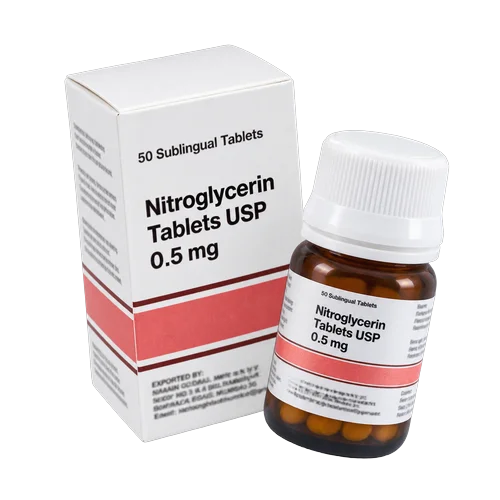
Ingredients

Each sublingual tablet contains nitroglycerin. The dose is decided individually, taking age, other medicines, and health conditions into account.

How it affects the body

Nitroglycerin is converted within vascular smooth muscle to nitric oxide or nitric-oxide-related signalling molecules. Nitric oxide activates soluble guanylate cyclase, an enzyme that increases cyclic guanosine monophosphate, also written as cGMP.

The rise in cGMP activates protein kinase pathways. These pathways reduce calcium-dependent contraction and promote dephosphorylation of myosin light chains. Vascular smooth muscle relaxes, producing vasodilation.

The strongest effect usually occurs in the venous circulation. More blood remains in the veins, reducing venous return to the heart. This lowers ventricular filling pressure, or preload, and reduces the amount of work required from the heart.

Nitroglycerin can also relax arterial vessels. Reduced systemic vascular resistance lowers afterload, while coronary vessel relaxation may improve blood flow to areas affected by narrowed coronary arteries. The combined result is a lower myocardial oxygen demand.

The biochemical sequence is:

  • Nitroglycerin enters vascular smooth muscle.
  • Nitric oxide signalling increases.
  • Guanylate cyclase activity rises.
  • cGMP concentration increases.
  • Myosin light-chain contraction decreases.
  • Vascular smooth muscle relaxes.

A useful clinical distinction is mechanism. Nitrates reduce cardiac workload through vascular relaxation, while beta-blockers lower heart rate and contractility, and calcium-channel blockers alter vascular tone or cardiac conduction depending on the medicine selected.

How to use it

Nitroglycerin tablets are used under the tongue, not swallowed whole as an ordinary tablet.

  • Sit or lie down before administration.
  • Place the prescribed tablet under the tongue.
  • Allow it to dissolve.
  • Do not chew or swallow it immediately.
  • Avoid eating, drinking, or rinsing the mouth until it has dissolved.
  • Use the individual dose plan supplied by the prescriber.
  • Do not increase the number of tablets because relief feels slower than expected.
  • If pain continues, worsens, or is accompanied by warning symptoms, seek emergency help.

The dose is decided individually, taking age, other medicines and health conditions into account. A missed dose is not usually “made up” later because this product is generally used for an acute symptom or before a predictable trigger, rather than as an ordinary once-daily tablet.

Do not place the tablet on top of the tongue and swallow it with water. The sublingual route is central to the intended rapid action.

Comparison

Nitroglycerin is selected when rapid vascular relaxation is required. Other anti-anginal categories work through different physiological pathways and may be chosen for prevention, heart-rate control, or longer-term symptom management.

Treatment category Main physiological action Typical clinical role
Sublingual nitroglycerin Venous and arterial vasodilation through nitric oxide–cGMP signalling Rapid relief or prevention of predictable angina
Beta-blocker Slows heart rate and reduces contractility Long-term reduction of exertional cardiac workload
Calcium-channel blocker Relaxes arteries and may reduce cardiac rate or contractility Angina prevention when vascular or rate control is needed

A nitrate may be useful when symptoms occur suddenly, while a beta-blocker or calcium-channel blocker may be used as part of longer-term prevention. Some people receive more than one anti-anginal category, but the combination requires attention to blood pressure, pulse, conduction problems, and dizziness.

Nitroglycerin is not a replacement for emergency treatment of suspected myocardial infarction. A heart attack can occur with pain that resembles previous angina, and the distinction cannot be made reliably from symptoms alone.

Common mistakes

Several mistakes reduce the value of sublingual nitroglycerin or increase the risk of harm:

  • Swallowing the tablet instead of allowing it to dissolve under the tongue.
  • Standing immediately after taking it.
  • Taking extra tablets because the first dose caused no instant sensation.
  • Combining it with a phosphodiesterase type 5 inhibitor.
  • Drinking alcohol while treating an episode.
  • Using it for chest pain that is different from the established pattern.
  • Carrying tablets loose where heat, moisture, or crushing can affect them.
  • Sharing the medicine with another person who reports similar chest discomfort.
  • Driving before dizziness or blurred vision has resolved.
  • Treating a prolonged attack at home instead of seeking emergency help.

One subtle mistake is assuming that the absence of headache means the medicine has not worked. Headache is a possible adverse effect, not a required sign of therapeutic action.

Another is confusing relief with diagnosis. Pain may ease temporarily even when a serious cardiac problem remains. New, prolonged, or unusually intense symptoms need urgent evaluation.

Who should not use it

Situations requiring avoidance or specialist assessment

  • Use of sildenafil, tadalafil, vardenafil, avanafil, or another phosphodiesterase type 5 inhibitor.
  • Use of riociguat or another soluble guanylate cyclase stimulator.
  • Severe hypotension or shock.
  • Severe anaemia that has not been assessed.
  • Raised intracranial pressure.
  • Certain forms of hypertrophic obstructive cardiomyopathy.
  • Severe aortic or mitral valve narrowing.
  • Suspected right-sided myocardial infarction unless directed by emergency clinicians.
  • Known allergy to nitrates.
  • Pregnancy or breastfeeding unless a prescriber has assessed the specific clinical need.
  • Childhood or adolescence without specialist direction.

The interaction with phosphodiesterase type 5 inhibitors can cause a profound and potentially life-threatening fall in blood pressure. MHRA safety communications have repeatedly stressed that nitrates must not be combined with these medicines [2].

When this is not for you

Nitroglycerin is not for you if you have been advised to avoid nitrates, have a serious allergy to the active ingredient, or have a condition in which a sudden reduction in blood pressure would be dangerous.

Tell the prescribing clinician about any medicine for erectile dysfunction before using nitroglycerin. Do not rely on spacing the doses by a few hours unless emergency guidance specifically confirms that it is safe.

Possible side effects

Headache is the most recognisable adverse effect of nitrate treatment. It results from blood-vessel dilation and may occur soon after administration. Dizziness, flushing, weakness, nausea, blurred vision, palpitations, and low blood pressure can also occur.

The likelihood of troublesome effects rises when nitroglycerin is combined with alcohol, dehydration, hot environments, or other medicines that lower blood pressure. Standing quickly after administration is a common cause of avoidable light-headedness.

A person using nitroglycerin may experience:

  • Throbbing or pressure-like headache.
  • Light-headedness or unsteadiness.
  • Facial flushing or warmth.
  • Nausea.
  • Rapid heartbeat caused by reflex tachycardia.
  • Low blood pressure.
  • Fainting.
  • Rarely, methemoglobinaemia or severe circulatory collapse.

Headache alone may settle as the body adapts, but severe or persistent headache should be discussed within the treatment plan. Do not stop long-term cardiovascular medicines abruptly without a planned change, since the wider cardiac regimen may be affected.

A tablet that produces marked dizziness should not be followed by walking around, climbing stairs, or operating equipment. The combination of nitrate-related hypotension and physical movement can cause a fall.

What doctors say

In clinical practice, doctors treat nitroglycerin as a symptom-relief medicine within a broader cardiovascular plan. It may reduce angina quickly, but it does not widen a blocked coronary artery permanently or prevent every future cardiac event.

A physician will usually want to know how often the tablets are needed, what activity triggers symptoms, how long relief takes, and whether the pattern has changed. Increasing frequency of use can signal worsening coronary disease, uncontrolled blood pressure, anaemia, arrhythmia, or another condition requiring review.

The practical target is predictable symptom control without repeated episodes of hypotension. Blood pressure, pulse, kidney and liver function, other medicines, and the person’s history of fainting all influence the treatment plan.

The World Health Organization describes ischaemic heart disease as a major cause of morbidity and mortality worldwide, which is why recurrent chest pain should not be managed only by repeatedly taking symptom-relief tablets [3].

Common questions

Can alcohol be used while taking Nitroglycerin?

Alcohol can intensify nitroglycerin-related dizziness, flushing, faintness, and low blood pressure. The risk is greater when the person is dehydrated or taking other medicines that lower blood pressure. NHS cardiovascular guidance in 2023 advised caution with alcohol during nitrate treatment because symptoms can become harder to predict. Avoid alcohol during an active angina episode and while assessing how the tablets affect you. Follow the prescriber's instructions about alcohol and nitrate treatment.

How should Nitroglycerin be stored at home and while travelling?

Keep the tablets tightly closed in a cool, dry place away from children, direct sunlight, heat, and steam. During travel, do not leave the bottle in a parked car or checked luggage where temperature exposure may be substantial. MHRA medicines-storage advice published in 2022 supports protecting medicines from heat and moisture to preserve their quality. Keep the container accessible during travel, especially when the medicine forms part of an established angina plan.

Can Nitroglycerin affect driving, concentration, or work with machinery?

Nitroglycerin may cause dizziness, blurred vision, headache, weakness, or faintness, especially soon after a dose. Do not drive, cycle in traffic, climb, or operate machinery until you know that you remain alert and steady after administration. The MHRA’s 2024 patient-safety guidance treats medicine-related dizziness as a practical driving risk, even when the medicine is used correctly. Sit down during an episode and wait until symptoms have resolved before resuming hazardous activity.

Can people under 18 use Nitroglycerin?

Use in people under 18 requires a specialist decision because paediatric angina-like symptoms need careful investigation. Chest pain in a child or teenager may have a different cause and should not be treated by sharing an adult’s tablets. The EMA paediatric medicines framework, referenced in 2023, requires age-specific evidence and dosing considerations for medicines used in younger patients. Parents and carers should obtain urgent clinical advice for significant or unexplained chest pain rather than administer an adult dose.

Which symptoms mean stopping and seeking urgent medical help?

Seek emergency help for chest pain that is severe, new, prolonged, worsening, or different from the established angina pattern. Urgent symptoms also include breathlessness, collapse, fainting, cold sweating, severe weakness, confusion, blue lips, or pain spreading to the jaw, back, shoulder, or arm. NICE guidance updated in 2023 treats these features as possible signs of acute coronary syndrome requiring immediate assessment. Do not keep repeating nitroglycerin while delaying emergency care.

Do you offer anonymous delivery?

Your order will be securely packed and shipped within 24 hours. This is exactly what your package will look like (images of an actual item sent). It has the size and look of a regular private letter (24x11x0.7 cm) and its contents cannot be seen.

Comparison

All options for Cardiovascular Health at a glance

Other clinical applications of nitroglycerin

Hospital formulations of intravenous nitroglycerin may be used under continuous monitoring for selected situations involving severe hypertension, cardiac ischaemia, or controlled reduction of cardiac filling pressures. Intravenous treatment is titrated by trained clinical staff using blood pressure, heart rate, symptoms, and the patient’s underlying condition.

Topical nitroglycerin ointment has a separate use in some treatment protocols for chronic anal fissure. Its local vasodilator effect may reduce internal anal sphincter pressure and improve local blood flow. This does not mean that sublingual tablets should be applied to the skin or used for anal fissure.

The form matters. Sublingual tablets are designed for rapid systemic absorption, while hospital infusions and topical preparations have different concentrations, dosing methods, monitoring needs, and indications.

Never substitute one nitroglycerin formulation for another. A sublingual tablet, infusion, patch, and ointment are not interchangeable by volume, strength, or route.

Storage and handling

Keep the tablets tightly closed and protected from heat, moisture, and excessive light. A bathroom cabinet is often unsuitable because repeated exposure to steam can damage medicines.

Keep the bottle in a stable, accessible place away from children. When travelling, protect it from direct sunlight and hot cars, and keep it with the medicines you may need rather than leaving it in checked luggage.

Do not transfer sublingual tablets into an unlabelled pill organiser for long-term storage. The bottle and closure are part of the product’s protection from environmental exposure.

A hot car, a steamy bathroom, and a loose pocket are poor storage locations for nitroglycerin tablets. Choose a cool, dry place and close the container promptly after use.

Reviews: Nitroglycerin

Based on 5 reviews

Matthew, 40 Verified
Rating: 3.5 out of 5

The chest pressure became easier to control when I used it early. I had a strong headache at first, so I sat down each time and avoided driving until I knew how it affected me.

Sunderland Several weeks 30 Sept 2026
Jack, 37 Verified
Rating: 3 out of 5

The tablet helped during two attacks, but the third episode felt different and lasted longer. I did not keep repeating doses; I went for urgent assessment instead.

Milton Keynes Several months 13 Oct 2026
Alan, 53 Verified
Rating: 3 out of 5

It gave me confidence before walking to the shops. The downside was dizziness if I stood up quickly, and I had to change that habit.

Leeds Three months 15 Oct 2026
James G., 43 Verified
Rating: 3 out of 5

The relief was useful, although the headache was unpleasant during the first week. My doctor reviewed the timing and other medicines rather than telling me to take more.

Sheffield Several weeks 24 Oct 2026
Steven, 54 Verified
Rating: 3.5 out of 5

The medicine sometimes reduced the pressure, but I still needed a cardiac review because the attacks were becoming more frequent. It was useful for symptoms, not a substitute for finding out why they were changing.

Hull Several months 28 Oct 2026

Sources

  1. National Institute for Health and Care Excellence (NICE) (2016). Stable angina: management, Clinical Guideline CG126
  2. Medicines and Healthcare products Regulatory Agency (MHRA) (2018). PDE-5 inhibitors and nitrates: reminder of contraindication
  3. World Health Organization (WHO) (2023). Cardiovascular diseases
Get our free app Shop faster and track your orders 3.5 · 225 reviews Install