The first few mornings were slow, and my mouth was very dry. After about a month, the burning in my foot was less distracting and I slept more consistently.
Oxford Several weeks 20 Oct 2026
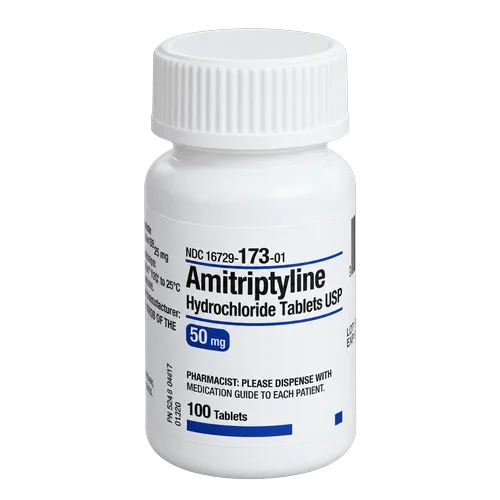
Amitriptyline
Patients with neuropathic pain, chronic pain, or recurrent migraine may be prescribed Amitriptyline when daily prevention or altered pain signalling is needed. Amitriptyline tablets act on central…
Patients with neuropathic pain, chronic pain, or recurrent migraine may be prescribed Amitriptyline when daily prevention or altered pain signalling is needed. Amitriptyline tablets act on central nervous system messengers and can reduce abnormal nerve signals, improve sleep, and lower migraine frequency.
Product information
Amitriptyline belongs to the tricyclic antidepressant class. Its active ingredient, amitriptyline hydrochloride, changes the handling of noradrenaline and serotonin in the nervous system. These chemical messengers influence pain processing, mood, alertness, and sleep.
What it is used for
Management of neuropathic and chronic pain
Neuropathic pain develops when nerves become damaged or overactive. Burning, electric-shock sensations, pins and needles, stabbing pain, and marked sensitivity to touch are typical examples. Amitriptyline reduces the amplification of these signals within the spinal cord and brain rather than acting like a simple painkiller.
NICE lists amitriptyline among the medicines that may be offered for neuropathic pain in adults, alongside other prescription approaches [1]. It may be used for pain associated with diabetic neuropathy, nerve injury, post-herpetic neuralgia, or other persistent nerve disorders. A prescriber may also consider it when chronic pain is disrupting sleep.
Amitriptyline does not repair a damaged nerve. Its role is symptom control.
Pain relief can make movement, sleep, and daily activities more manageable, although the response differs widely between patients.
Pain relief and sleep
Poor sleep can intensify pain sensitivity. Amitriptyline’s sedating effect may help some people sleep for longer, especially when pain causes repeated night waking. This benefit can appear before the full analgesic effect.
Morning grogginess is a common trade-off. Some patients describe a heavy or dry feeling on waking during the first week, while others find that sedation persists and limits daytime function.
Amitriptyline can be used as a preventive treatment for migraine and some chronic headache patterns. It is taken regularly, even on headache-free days. It is not an acute rescue tablet designed to stop an established migraine immediately.
Preventive therapy aims to reduce the number of attacks, shorten their duration, or make them easier to manage. NHS information describes amitriptyline as an option for preventing migraine and treating certain types of long-lasting pain [2].
Prophylactic mechanisms for chronic headaches
Amitriptyline may reduce heightened sensitivity in pain pathways and influence serotonin and noradrenaline signalling. These effects can lower the tendency of the nervous system to generate or maintain migraine pain. Its sedative action may also improve sleep, and irregular sleep can worsen migraine for some people.
The benefit develops gradually. A person may notice improved sleep first, followed by fewer or less intense headaches after several weeks of regular treatment. Keeping a headache diary helps distinguish a genuine change from normal fluctuations.
A practical diary can record:
- headache days and approximate duration;
- pain intensity and associated nausea or light sensitivity;
- menstrual timing, sleep disruption, missed meals, and dehydration;
- the number of acute pain medicines used;
- unwanted effects after each dose change.
Amitriptyline is not suitable for every migraine pattern. A prescriber may choose another preventive approach when anticholinergic effects, heart rhythm concerns, glaucoma, urinary symptoms, or severe daytime sedation make the balance unfavourable.
Ingredients
Amitriptyline hydrochloride is a tricyclic compound with analgesic, sedative, and antidepressant properties. The tablets are intended for oral use. Dosing differs between strengths and between users, so there is no single amount that suits everyone. They should be swallowed with water.
How it affects the body
The medicine blocks the reuptake of noradrenaline and serotonin at nerve junctions. It also affects muscarinic, histamine, and alpha-adrenergic receptors. Those additional actions help explain dry mouth, constipation, blurred vision, dizziness, increased appetite, and drowsiness.
How to use it
Amitriptyline dosing differs between strengths and between users, so there is no single amount that suits everyone. The prescriber’s directions determine the amount, frequency, and length of treatment.
Common administration principles include:
- take the prescribed dose by mouth, usually once daily when used for pain or migraine prevention;
- take it at the time selected by the prescriber, often in the evening because sleepiness is common;
- swallow the tablet with water;
- maintain the same daily schedule unless the prescriber changes it;
- if a dose is missed, follow the specific missed-dose instructions provided by the prescriber or dispensing service;
- do not take extra tablets to compensate for a missed dose;
- do not stop long-term treatment suddenly without a planned reduction.
The tablet strength does not mean every person should take one whole tablet. A prescriber may require a different strength, a smaller amount, or a gradual titration schedule.
Do not combine Amitriptyline with other sedating medicines unless the combination has been prescribed. Opioids, sleeping tablets, sedating antihistamines, and some medicines for anxiety can increase drowsiness and breathing impairment.
Comparison
The choice depends on the pain mechanism, migraine pattern, other illnesses, and tolerability. Drug categories differ in their main benefits and limitations.
| Treatment approach | Main clinical role | Main limitation |
|---|---|---|
| Amitriptyline | Neuropathic pain, chronic pain, migraine prevention, sleep disturbance linked to pain | Dry mouth, constipation, sedation, dizziness, and cardiac cautions |
| Antidepressant with mainly serotonin activity | Depression and selected anxiety-related conditions | Less established analgesic value for some neuropathic pain patterns; sexual and gastrointestinal effects may occur |
| Anticonvulsant used for nerve pain | Neuropathic pain and selected neuralgias | Dizziness, swelling, weight change, and cognitive effects may limit use |
Amitriptyline may suit a patient whose pain and poor sleep occur together. Another category may be preferred when daytime alertness is essential, when anticholinergic effects are risky, or when a different psychiatric indication is the primary concern.
NICE guidance supports selecting treatment according to the pain diagnosis, co-existing conditions, adverse effects, and patient preference [3]. A medication that helps one pain pattern may provide little benefit for another.
Common mistakes
- taking Amitriptyline only when pain appears, despite a preventive prescription;
- increasing the dose quickly because the first few days feel ineffective;
- stopping suddenly after several weeks or months;
- drinking alcohol while still experiencing sedation or dizziness;
- driving before understanding the individual reaction;
- combining it with non-prescription sleep aids or sedating antihistamines;
- ignoring constipation, urinary difficulty, palpitations, or fainting;
- judging success only by pain intensity and not by sleep or daily function;
- taking a missed dose alongside the next scheduled dose without specific instructions.
Do not share Amitriptyline with another person. The same tablet strength can be inappropriate for someone with heart disease, glaucoma, epilepsy, or interacting treatment.
Who should not use it
- previous allergy to amitriptyline or a tablet ingredient;
- recent heart attack, significant heart disease, or known rhythm abnormality;
- untreated narrow-angle glaucoma;
- urinary retention or severe prostate-related obstruction;
- seizure disorders;
- severe liver disease;
- bipolar disorder, mania, or a history of antidepressant-triggered mood elevation;
- pregnancy or breastfeeding, where individual benefit and infant exposure require assessment;
- use of monoamine oxidase inhibitors, or recent treatment with them.
Monoamine oxidase inhibitors must not be combined with Amitriptyline because serious toxicity can occur. Other antidepressants, tramadol, linezolid, lithium, and medicines that prolong the QT interval may also require careful review.
Medicines that inhibit CYP2D6 or CYP2C19 can increase amitriptyline exposure. Examples include some selective serotonin reuptake inhibitors and certain antiarrhythmics. The MHRA highlights the need to consider interactions, overdose toxicity, and cardiac risk with tricyclic antidepressants [4].
When this is not for you
Amitriptyline may not be suitable if you have heart-rhythm problems, glaucoma, difficulty passing urine, severe sedation, or a condition that could be worsened by its effects. Tell the prescriber if you have epilepsy, severe liver disease, bipolar disorder, are pregnant or breastfeeding, or take antidepressants, tramadol, lithium, heart medicines, or other treatments that affect alertness or heart rhythm.
Possible side effects
Sleepiness, dry mouth, constipation, blurred vision, dizziness, sweating, and appetite changes are recognised effects of Amitriptyline. They result from the medicine’s activity at several receptor types, not only from its antidepressant action.
Early side effects may become less troublesome after the body adapts. Persistent or severe effects need review because a useful pain benefit is not enough if daily functioning deteriorates.
Potentially serious symptoms include:
- fainting, palpitations, or a fast or irregular heartbeat;
- severe confusion, agitation, fever, muscle stiffness, or marked tremor;
- inability to pass urine;
- severe eye pain with blurred vision;
- swelling of the face or difficulty breathing;
- thoughts of self-harm or a sudden severe deterioration in mood;
- seizures.
Amitriptyline can be dangerous in overdose.
Tablets should be kept away from children and anyone at risk of taking more than prescribed. Tricyclic medicines can produce serious heart rhythm problems when excessive amounts are taken.
One practical detail is easy to overlook: constipation can become significant when Amitriptyline is combined with opioid pain medicines. Reduced bowel movements, abdominal swelling, or vomiting deserves prompt medical assessment rather than repeated self-treatment.
Another is dental dryness. Reduced saliva can increase discomfort and tooth decay risk, especially when treatment continues for months. Regular fluids, sugar-free gum, and careful oral hygiene may help, provided fluid intake is medically appropriate.
What doctors say
Doctors often explain that Amitriptyline is judged by function, not by complete elimination of every symptom. Better sleep, longer walking distance, fewer migraine days, or less reliance on rescue medicine can all represent useful improvement.
A patient may feel no clear change during the first few days, while sedation appears immediately. That mismatch can cause premature discontinuation. Clinical assessment usually considers benefit after an adequate trial at a tolerated dose rather than after one or two tablets.
A prescriber would also review the full medication list. Antidepressants, opioid analgesics, antihistamines, heart medicines, and medicines for bladder symptoms can alter the risk profile.
For persistent pain, clinicians commonly reassess the diagnosis if the expected benefit does not develop. A failed trial does not prove that the pain is imaginary; it may mean the pain mechanism requires another treatment strategy.
Common questions
How long can an Amitriptyline course last, and is long-term use acceptable?
The NHS explains that Amitriptyline may be continued for months or longer when it provides sustained benefit for pain or migraine and remains well tolerated. A 2023 NHS review of patient guidance supports regular reassessment rather than an automatic stop date. Long-term treatment should include review of sedation, constipation, falls, heart symptoms, mood, and the continuing need for the medicine. Stopping after prolonged use is usually planned gradually. The prescriber should review the ongoing benefit at follow-up.
Is Amitriptyline suitable for older adults?
NICE guidance advises extra caution with medicines that cause sedation, anticholinergic effects, or postural hypotension in older adults. A 2023 NICE review of medicines associated with falls supports checking balance, alertness, constipation, urinary symptoms, and interactions before continuing treatment. Older people may require a slower dose increase and closer follow-up. The potential benefit must be weighed against falls, confusion, and cardiac effects.
Can people under 18 use Amitriptyline?
The NHS states that age restrictions depend on the condition and prescribing decision, rather than applying one rule to every use. Guidance reviewed by NICE in 2025 supports specialist assessment when a tricyclic medicine is considered for a child or adolescent. Amitriptyline should not be given to someone under 18 from another person’s supply. A paediatric prescriber must select the indication, dose, and monitoring plan.
Can Amitriptyline be taken with food or on an empty stomach?
NHS patient guidance states that Amitriptyline tablets may generally be taken with or without food. Information reviewed by the MHRA in 2024 supports taking doses consistently because routine timing helps reduce missed doses and makes side effects easier to assess. Food may be useful if the tablet causes stomach discomfort. Alcohol is a separate concern because it can intensify sedation.
Can an Amitriptyline tablet be split, crushed, or chewed?
The NHS advises swallowing tablets with water and following the formulation-specific instructions supplied by the prescriber or dispensing service. Product information reviewed by the MHRA in 2024 should be used to determine whether a particular tablet can be divided, since score lines and formulations differ. Chewing can make swallowing unpleasant and may alter how the tablet is taken. Do not crush or split a tablet unless the medicine’s instructions and prescriber support that method.
How soon does the effect of Amitriptyline become noticeable?
NHS guidance describes drowsiness as an effect that may occur early, while pain or migraine prevention often takes longer to assess. NICE guidance reviewed in 2020 supports allowing an adequate treatment trial before deciding that a neuropathic-pain medicine has failed. Some patients notice sleep improvement first, with pain reduction developing over subsequent weeks. A headache or pain diary gives a more reliable measure than day-to-day impressions.
Can alcohol be used while taking Amitriptyline?
The NHS advises avoiding alcohol when starting Amitriptyline because the combination can increase sleepiness and dizziness. MHRA safety information reviewed in 2024 supports caution with substances that impair alertness, coordination, or breathing. Even after adjustment, alcohol may worsen falls, confusion, and next-day sedation. Do not drive or operate machinery if either Amitriptyline or alcohol affects alertness.
Do you offer anonymous delivery?
Your order will be securely packed and shipped within 24 hours. This is exactly what your package will look like (images of an actual item sent). It has the size and look of a regular private letter (24x11x0.7 cm) and its contents cannot be seen.
Comparison
Amitriptyline Current
Anafranil
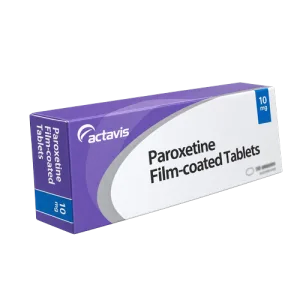
Paroxetine
Prozac
Zoloft
Support networks and resources for chronic pain
Chronic pain can affect sleep, employment, mobility, mood, and relationships. Medical treatment works best when patients can also access practical support, pacing strategies, physical rehabilitation, and psychological help where needed.
The British Pain Society provides professional and public-facing information about pain medicine, multidisciplinary care, and pain services. Pain Concern offers information and support for people living with persistent pain, including communication strategies and coping resources.
Support organisations can help patients prepare useful information for appointments:
- the location and quality of pain;
- activities that worsen or ease symptoms;
- sleep disruption and daytime fatigue;
- medication effects and missed doses;
- changes in walking, work, exercise, or social activity.
A symptom record is more useful than a general statement that pain is “better” or “worse”. It helps the prescribing team judge whether Amitriptyline is improving function as well as reducing symptoms.
Patient support organisations for migraine management
The Migraine Trust provides education about migraine triggers, preventive treatment, acute treatment, and communication with healthcare teams. Its resources can help patients understand why daily preventive therapy differs from a tablet taken during an attack.
Migraine support also includes practical trigger management. Regular meals, hydration, stable sleep, moderate caffeine intake, and attention to hormonal or sensory triggers may reduce avoidable fluctuations. These measures do not replace prescribed treatment.
Headache diaries should include the number of migraine days and acute medicine days. Frequent use of acute pain medicines can itself contribute to medication-overuse headache, so the pattern should be discussed with the prescriber.
Reviews: Amitriptyline
Based on 5 reviews
I expected it to stop an attack straight away, so I was disappointed at first. After several weeks, I had fewer headache days, although increased appetite was annoying.
Leicester Several weeks 26 Oct 2026Sleep improved, but I felt unsteady when standing during the first week. The dose was reviewed, and I stopped driving until the dizziness had settled.
London The first week 30 Sept 2026The pain reduction was modest rather than dramatic. Constipation became a problem when another pain medicine was added, so the combination needed attention.
Liverpool 6 Oct 2026It took time to judge. By the second month, attacks were less frequent, but I still needed a separate plan for breakthrough migraine.
Plymouth The second month 14 Oct 2026Sources
- NICE (2020). Neuropathic pain in adults: pharmacological management in non-specialist settings, Clinical Guideline CG173
- NHS (2023). About amitriptyline for pain and migraine
- NICE (2020). Medicines associated with dependence or withdrawal symptoms: safe prescribing and withdrawal management, NG215
- MHRA (2020). Antidepressants: risk of suicidal thinking and behaviour in young people