I was prescribed 20mg for generalised anxiety after a stressful year at work. First two weeks were rough, nausea and really vivid dreams, but by week five the constant background worry had eased off noticeably. I still get the odd dry mouth but nothing I can't live with.
Ipswich 31 Oct 2026
Paroxetine
Paroxetine is prescribed for adults with depression and several anxiety-related disorders. As a selective serotonin reuptake inhibitor, it raises serotonin activity in the brain to help stabilise…
Paroxetine is prescribed for adults with depression and several anxiety-related disorders. As a selective serotonin reuptake inhibitor, it raises serotonin activity in the brain to help stabilise mood over several weeks of regular use.
Product information
Paroxetine tablets are taken by mouth, usually once a day in the morning, with or without food. Paroxetine belongs to the selective serotonin reuptake inhibitor (SSRI) class and is prescribed for adults with depression, generalised anxiety, obsessive-compulsive disorder, post-traumatic stress disorder, and panic disorder.
What it is used for
Paroxetine is approved for a defined set of psychiatric conditions, each with its own symptom pattern and treatment expectations.
| Condition | Core symptoms targeted | Typical patient profile |
|---|---|---|
| Major depressive disorder | Low mood, loss of interest, fatigue, sleep disturbance | Adults with persistent depressive symptoms lasting 2+ weeks |
| Generalised anxiety disorder | Excessive worry, restlessness, muscle tension | Adults with chronic, hard-to-control anxiety |
| Obsessive-compulsive disorder | Intrusive thoughts, repetitive compulsive behaviours | Adults with OCD symptoms affecting daily function |
| Post-traumatic stress disorder | Flashbacks, hypervigilance, avoidance behaviour | Adults following a traumatic event |
| Panic disorder | Recurrent panic attacks, fear of future attacks | Adults with recurring, unpredictable panic episodes |
| Premenstrual dysphoric disorder | Severe mood symptoms tied to the menstrual cycle | Women with PMDD unresponsive to lifestyle measures |
Depression responds to paroxetine through its sustained effect on serotonin signalling, typically assessed over a minimum six to eight week trial. Anxiety-spectrum conditions, including generalised anxiety disorder and panic disorder, often need a longer stabilisation period before benefits become noticeable. Premenstrual dysphoric disorder is sometimes treated intermittently, dosed only during the luteal phase of the cycle, a strategy some clinicians favour over continuous dosing.
Ingredients
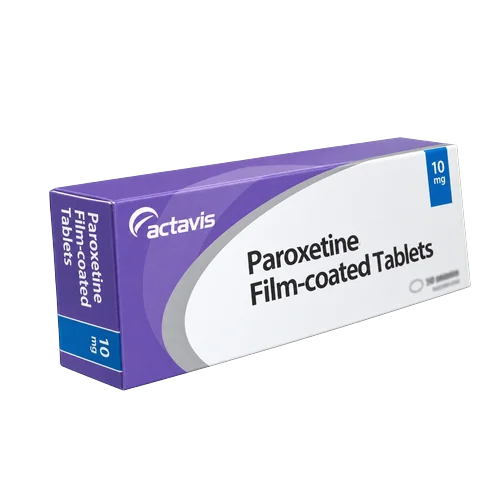
Paroxetine tablets contain paroxetine as the active medicine and belong to the selective serotonin reuptake inhibitor (SSRI) class. They are film-coated tablets marked Actavis and Paroxetine Film-coated Tablets.
How it affects the body
Paroxetine blocks the serotonin transporter protein responsible for pulling serotonin back into the neuron that released it. With reuptake slowed, serotonin lingers longer in the synaptic cleft and keeps signalling to neighbouring neurons. This is the same broad mechanism shared across SSRIs, though paroxetine binds the transporter with especially high affinity compared with some others in its class.
How to use it
- Take the tablet by mouth with a glass of water.
- Take it usually once a day, preferably in the morning.
- Take it with or without food.
- Swallow the tablet whole rather than using it by another route.
- The exact tablet strength in milligrams and treatment duration are not specified here; confirm the prescribed strength and duration with a healthcare professional before starting.
Comparison
Paroxetine is an oral, single-ingredient SSRI tablet used for several adult psychiatric conditions. Its category and mechanism differ from non-SSRI approaches because it works by increasing serotonin activity in the brain, while the tablet form is taken by mouth rather than applied topically.
Common mistakes
- Stopping abruptly once feeling better, rather than tapering under medical guidance
- Taking it irregularly — skipping doses on "good days" and doubling up on "bad days"
- Not mentioning other medicines, including over-the-counter painkillers like tramadol, to the prescriber
- Expecting full effect within the first week and giving up too early
- Drinking alcohol heavily while adjusting to the medicine, which worsens sedation and lowers the seizure threshold
Who should not use it
| Interaction class | Interacting agents | Clinical consequence |
|---|---|---|
| MAOIs | Marplan, Nardil, Parnate, Rasagiline, Eldepryl | Risk of severe serotonin syndrome; absolute contraindication |
| Serotonergic agents | Tramadol, linezolid, methylene blue | Additive serotonin toxicity risk |
| CYP2D6-metabolised drugs | Pimozide, thioridazine, atomoxetine, tamoxifen, propafenone | Raised blood levels of the other drug, increased toxicity risk |
Combining paroxetine with a monoamine oxidase inhibitor such as Marplan, Nardil, Parnate, or the Parkinson's drugs rasagiline (Azilect) and selegiline (Eldepryl) is contraindicated outright. These combinations can trigger a sudden, severe serotonin syndrome within hours. A washout period of at least two weeks is generally required between stopping one drug and starting the other.
Pimozide and thioridazine, both used for psychiatric conditions, can reach toxic blood levels when paroxetine blocks their breakdown — this combination is specifically contraindicated due to cardiac rhythm risk.
When this is not for you
Not for you if you have a contraindicated interaction, cannot follow a tapering plan, or need treatment without medical monitoring.
Possible side effects
Potential benefits include once-daily dosing and established use across several anxiety and mood disorders. Treatment may reduce depressive or anxiety symptoms when prescribed and monitored appropriately. Potential drawbacks include nausea, sexual dysfunction, withdrawal symptoms, and clinically significant drug interactions.
Most people on paroxetine experience mild, temporary side effects as the body adjusts. A smaller group experiences more serious reactions that need urgent medical attention.
| Severity | Examples | Typical onset |
|---|---|---|
| Common | Nausea, dry mouth, drowsiness, sweating, sexual dysfunction | First 1-2 weeks |
| Less common | Weight changes, dizziness, vivid dreams, mild tremor | Weeks 2-6 |
| Serious | Serotonin syndrome, severe allergic reaction, abnormal bleeding | Any time, dose-dependent |
Serotonin syndrome is rare but dangerous. Warning signs include agitation, high fever, muscle rigidity, rapid heartbeat, and confusion — this combination needs emergency care, not a wait-and-see approach. Allergic reactions, though uncommon, can present as rash, swelling of the face or throat, or difficulty breathing. Paroxetine also affects platelet function, which raises the risk of unusual bruising or bleeding, especially when combined with aspirin, NSAIDs, or anticoagulants.
A detail many patients miss: sexual side effects, including reduced libido and delayed orgasm, are among the most commonly reported but least commonly volunteered to doctors. They're worth mentioning at a follow-up appointment rather than quietly stopping the tablets.
What doctors say
In clinical practice, prescribers tend to start paroxetine at a low dose and increase it gradually, watching closely during the first fortnight when anxiety can temporarily spike before it settles. Patients switching from another SSRI often ask why their old medicine "worked differently" — paroxetine's shorter half-life means blood levels change faster, for better and for worse. Clinicians generally advise against stopping it abruptly, given how commonly discontinuation symptoms appear compared with longer half-life SSRIs like fluoxetine.
Pharmacists frequently flag the CYP2D6 interaction profile during dispensing checks, since paroxetine shows up unexpectedly in polypharmacy reviews for older patients on multiple cardiac or psychiatric medicines.
Common questions
Is Paroxetine safe to take during pregnancy or while breastfeeding?
Paroxetine is generally avoided in the first trimester of pregnancy due to an association with foetal heart defects noted in MHRA safety communications. Use later in pregnancy has also been linked to neonatal adaptation symptoms after birth, including jitteriness and feeding difficulties. The EMA advises that any decision to continue or start paroxetine during pregnancy should weigh the risk of untreated depression against these foetal risks on a case-by-case basis. Small amounts pass into breast milk, so breastfeeding mothers should discuss monitoring with their prescriber rather than stopping treatment unilaterally. The EMA product information available in 2025 supports an individual risk-benefit discussion.
Can I drink alcohol while taking Paroxetine?
Alcohol is not strictly forbidden with paroxetine, but the combination intensifies drowsiness and can impair coordination and judgement more than either substance alone. The MHRA product guidance for SSRIs advises caution with alcohol, especially during the first weeks of treatment or after a dose increase. Heavy or regular drinking can also blunt the antidepressant effect over time and worsen underlying mood symptoms. Occasional, modest drinking once stabilised on a steady dose is generally better tolerated than drinking during the adjustment period. MHRA guidance available in 2025 continued to advise caution during treatment initiation and dose changes.
What happens if I stop taking Paroxetine, and do I need to taper the dose?
Stopping paroxetine abruptly commonly triggers discontinuation symptoms, including dizziness, irritability, electric shock sensations, and vivid dreams, due to its comparatively short half-life among SSRIs. The WHO and MHRA both recommend a gradual dose reduction over several weeks rather than sudden cessation, with the exact taper schedule set by the prescribing clinician. Symptoms, when they occur, typically begin within a few days of stopping and resolve within one to two weeks. Reintroducing a small dose and tapering more slowly usually resolves severe discontinuation symptoms if they appear. WHO guidance available in 2025 supported gradual withdrawal planning with a prescriber.
Can I drive or operate machinery while taking Paroxetine?
Paroxetine can cause drowsiness, dizziness, or blurred vision, particularly in the first two weeks of treatment or following a dose change. UK driving guidance under the Driver and Vehicle Licensing Agency framework advises against driving until you know how the medicine affects you individually. Operating heavy machinery carries the same caution, since impaired alertness is not always obvious to the person experiencing it. Most patients find these effects fade as the body adjusts, but caution is warranted at the start of treatment and after any dose adjustment. DVLA guidance available in 2025 continued to recommend assessing individual alertness before driving.
How long does a single daily dose of Paroxetine keep working?
Paroxetine has a half-life of around 24 hours, which supports once-daily dosing and keeps blood levels relatively steady across the day. This is shorter than some other SSRIs, which explains why missed doses are felt more quickly and why discontinuation symptoms appear sooner if the drug is stopped abruptly. Steady-state blood levels, where the drug's concentration plateaus with daily dosing, are typically reached after about one to two weeks of consistent use. Taking the dose at a consistent time each day helps maintain stable levels and more predictable symptom control. The EMA SmPC available in 2025 continued to support once-daily administration.
Which symptoms on Paroxetine mean I should stop and see a doctor urgently?
Agitation, high fever, muscle rigidity, rapid heart rate, and confusion together can indicate serotonin syndrome, a medical emergency requiring immediate attention. Swelling of the face, lips, or throat, difficulty breathing, or a widespread rash points to a serious allergic reaction and needs urgent care. Unusual bruising, unexplained bleeding, or blood in urine or stool should also prompt an urgent medical review given paroxetine's effect on platelet function. Any new or worsening suicidal thoughts, especially in the first few weeks of treatment or after a dose change, require contacting a doctor without delay. MHRA safety information available in 2025 continued to emphasise prompt clinical assessment of these symptoms.
Do you offer anonymous delivery?
Your order will be securely packed and shipped within 24 hours. This is exactly what your package will look like (images of an actual item sent). It has the size and look of a regular private letter (24x11x0.7 cm) and its contents cannot be seen.
Comparison
Amitriptyline
Anafranil
Paroxetine Current
Prozac
Zoloft
Reviews: Paroxetine
Based on 3 reviews
Took paroxetine for about four months for depression. It helped with my mood but the sexual side effects were a real problem and I ended up discussing alternatives with my GP. Didn't regret trying it, just wasn't the long-term fit for me.
Cardiff About four months 5 Oct 2026Started on a low dose for OCD-related intrusive thoughts. Took a good six weeks before I noticed a real shift, which tested my patience. Weight gain has been the main downside, about a stone over eight months, but the intrusive thoughts are far more manageable now.
Milton Keynes Eight months 18 Oct 2026